
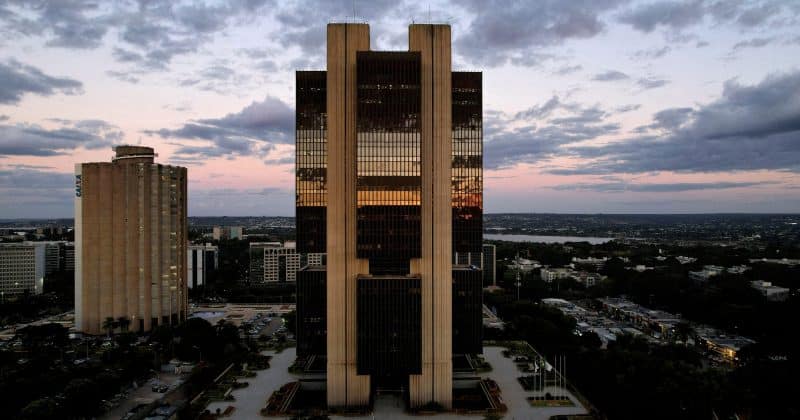
Brazil central bank cuts key interest rate by 25 basis points for third straight meeting
The Selic rate drops to 14.25% as policymakers begin unwinding a near 20-year high despite inflation running well above target
Brazil’s central bank just made it three in a row. The Copom, Brazil’s monetary policy committee, cut the benchmark Selic rate by 25 basis points to 14.25% at its June 17 meeting, continuing a cautious easing cycle that began earlier this year after nearly a decade’s worth of rate-hiking pain.
The decision was unanimous under the leadership of central bank president Gabriel Galípolo. Market prediction platforms had priced in over 90% probability for the cut heading into the meeting.
The long road down from 15%
The Selic rate sat at 15%, a near 20-year high, for nine straight months from April 2025 through January 2026. The first cut came in March, bringing the rate to 14.75%, followed by another trim to 14.50% in April.
Now at 14.25%, Brazil is three steps into what the central bank has carefully described as a “calibration” strategy. Inflation expectations for 2026 are projected at approximately 4.9%, well above the central bank’s 3% target.
Domestically, the economy has been surprisingly resilient. Growth has held up, labor markets remain tight, and consumer spending hasn’t cratered the way some economists feared during the peak-rate period.
Policymakers have pointedly avoided giving firm forward guidance about future cuts. The stated reason: external uncertainties, particularly geopolitical tensions stemming from the US-Israel-Iran conflict and the resulting volatility in oil prices.
Macro, rates, and crypto—what moved markets and what matters next.
Daily. Free. Join 34,000+ readers across crypto, finance, and policy.
What 14.25% still means in practice
The pace of easing, 25 basis points per meeting, signals that the central bank is content to take the stairs rather than the elevator. Each quarter-point reduction is being treated as a discrete decision rather than part of a predetermined path, which gives Galípolo and his colleagues maximum flexibility to pause or accelerate depending on how the data evolves.
All three cuts have been unanimous under Galípolo’s leadership, which suggests internal cohesion at the central bank.
What this means for investors
When the Selic rate was parked at 15%, Brazilian government bonds offered yields that attracted capital away from riskier plays. As those yields compress with each cut, the opportunity cost of holding risk assets decreases.
Brazil has one of the most active retail crypto trading populations in Latin America, and cheaper borrowing costs tend to encourage risk-taking behavior that benefits speculative markets.
Geopolitical tensions, particularly anything that sends oil prices surging, could force the central bank to pause its easing cycle abruptly. A meaningful spike in energy costs would feed directly into Brazilian inflation, potentially forcing Galípolo to choose between supporting growth and fighting price pressures.