
59% of Britons say FIFA erred in Folarin Balogun ban decision, and the controversy reveals how political pressure reshapes global institutions

59% of Britons say FIFA erred in Folarin Balogun ban decision, and the controversy reveals how political pressure reshapes global institutions

The Trump-Infantino phone call that let a suspended US striker play in the World Cup has implications far beyond football, touching on institutional integrity and the precedent of political interference in rule-based systems

Nearly six out of ten British adults believe FIFA made the wrong call when it effectively let US striker Folarin Balogun dodge a mandatory one-match World Cup suspension. According to a YouGov poll, 59% of Britons view the decision as an error, a sentiment that cuts across football fans and casual observers alike.

What actually happened

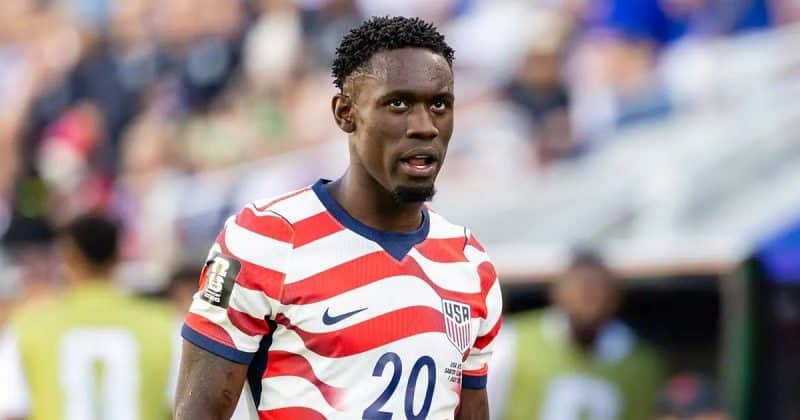
Balogun, a 25-year-old forward playing for the US Men’s National Team, received a straight red card for serious foul play during the USA’s 2-0 Round of 32 victory over Bosnia and Herzegovina on July 1, 2026. VAR confirmed the decision. Under FIFA’s own regulations, a red card for serious foul play triggers an automatic one-match suspension.

Advertisement

On July 5, FIFA’s Disciplinary Committee announced it would impose the one-match ban but suspend it on probation for one year, paired with a $40K fine. Balogun was free to play in the Round of 16 match against Belgium.

Reports indicate that US President Donald Trump contacted FIFA President Gianni Infantino directly to urge a review of the red card decision. UEFA described the ruling as “unprecedented, incomprehensible and unjustifiable.” Belgium filed an appeal against Balogun’s eligibility. FIFA denied it.

The political spillover

The fallout crossed the English Channel almost immediately. British MPs began calling for similar treatment for England’s Jarell Quansah, arguing that if FIFA was willing to bend rules for one nation’s player following political pressure, the same courtesy should extend to others.

The $40K fine imposed on Balogun is worth noting as context. For a professional footballer competing at the World Cup level, that amount is essentially a rounding error. It functions as a fig leaf, a nominal penalty that allows FIFA to claim it took disciplinary action while delivering the outcome that was politically requested.

Belgium’s denied appeal adds another layer. When the affected party — the team that had to face a player who should have been suspended — has no recourse within the system, the system is telling you something about whose interests it serves.

Disclosure: This article was edited by Editorial Team. For more information on how we create and review content, see our Editorial Policy.

59% of Britons say FIFA erred in Folarin Balogun ban decision, and the controversy reveals how political pressure reshapes global institutions

59% of Britons say FIFA erred in Folarin Balogun ban decision, and the controversy reveals how political pressure reshapes global institutions

The Trump-Infantino phone call that let a suspended US striker play in the World Cup has implications far beyond football, touching on institutional integrity and the precedent of political interference in rule-based systems

Nearly six out of ten British adults believe FIFA made the wrong call when it effectively let US striker Folarin Balogun dodge a mandatory one-match World Cup suspension. According to a YouGov poll, 59% of Britons view the decision as an error, a sentiment that cuts across football fans and casual observers alike.

What actually happened

Balogun, a 25-year-old forward playing for the US Men’s National Team, received a straight red card for serious foul play during the USA’s 2-0 Round of 32 victory over Bosnia and Herzegovina on July 1, 2026. VAR confirmed the decision. Under FIFA’s own regulations, a red card for serious foul play triggers an automatic one-match suspension.

Advertisement

On July 5, FIFA’s Disciplinary Committee announced it would impose the one-match ban but suspend it on probation for one year, paired with a $40K fine. Balogun was free to play in the Round of 16 match against Belgium.

Reports indicate that US President Donald Trump contacted FIFA President Gianni Infantino directly to urge a review of the red card decision. UEFA described the ruling as “unprecedented, incomprehensible and unjustifiable.” Belgium filed an appeal against Balogun’s eligibility. FIFA denied it.

The political spillover

The fallout crossed the English Channel almost immediately. British MPs began calling for similar treatment for England’s Jarell Quansah, arguing that if FIFA was willing to bend rules for one nation’s player following political pressure, the same courtesy should extend to others.

The $40K fine imposed on Balogun is worth noting as context. For a professional footballer competing at the World Cup level, that amount is essentially a rounding error. It functions as a fig leaf, a nominal penalty that allows FIFA to claim it took disciplinary action while delivering the outcome that was politically requested.

Belgium’s denied appeal adds another layer. When the affected party — the team that had to face a player who should have been suspended — has no recourse within the system, the system is telling you something about whose interests it serves.

Disclosure: This article was edited by Editorial Team. For more information on how we create and review content, see our Editorial Policy.