
US Customs and Border Protection announces $20.6B in tariff refunds for importers
The massive disbursement follows a Supreme Court ruling that invalidated IEEPA tariffs, with up to $85B in total refunds still on the table.
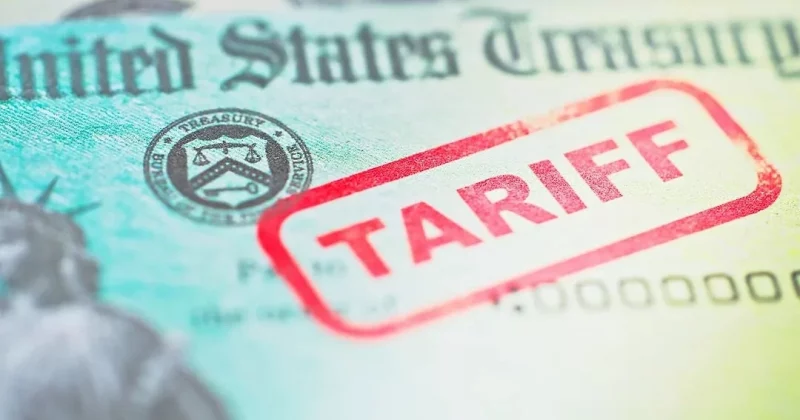
The US government is cutting checks. Big ones. US Customs and Border Protection has certified $20.6 billion in tariff refunds to importers who filed claims through a newly launched web portal, marking the first major wave of reimbursements after the Supreme Court struck down tariffs imposed under the International Emergency Economic Powers Act (IEEPA) earlier this year.
Here’s the thing: this $20.6 billion is just the opening act. CBP estimates that total refunds could reach up to $85 billion across multiple phases, a figure that would represent a significant chunk of the roughly $166 billion originally collected under the now-invalidated IEEPA tariffs.
How the refund machine works
To handle the sheer volume of claims, CBP built something called the Consolidated Administration and Processing of Entries system, or CAPE. It lives inside the existing Automated Commercial Environment (ACE) that importers already use for trade documentation. CAPE went live on April 20, 2026, and by May 22, it had already processed the $20.6 billion in certified refunds sent to the Treasury for disbursement.
Instead of forcing importers to file refund requests one shipment at a time across potentially thousands of entries, CAPE lets them upload bulk CSV files covering multiple entries at once. The scale of the underlying problem explains why this kind of infrastructure was necessary. The original IEEPA tariff collections spanned approximately 330,000 importers and 53 million individual entries. CBP is also not charging any fees for processing the refunds.
Phase 1 eligibility is limited to specific unliquidated or recently liquidated entries, meaning not every importer will see money immediately. But the system is designed to expand in subsequent phases, gradually working through the mountain of claims until the full estimated $85 billion has been addressed.
Macro, rates, and crypto—what moved markets and what matters next.
Daily. Free. Join 34,000+ readers across crypto, finance, and policy.
The legal backstory
The refunds trace back to a Supreme Court ruling in February 2026 that invalidated the IEEPA tariffs. IEEPA was originally designed as a national security tool, giving the president broad authority to regulate international economic transactions during declared emergencies. When the Supreme Court weighed in, it determined that the tariffs imposed under IEEPA’s authority were invalid, immediately creating a legal obligation to refund duties that had been collected under what turned out to be an unconstitutional framework. The $166 billion in total collections suddenly became $166 billion in potential liabilities for the US government.
What this means for markets and investors
The businesses receiving these refunds are primarily large-volume traders, companies that move significant quantities of goods across US borders. Retailers, manufacturers relying on imported components, and wholesale distributors stand to benefit most directly.
The gap between the $20.6 billion already certified and the $85 billion total estimate means roughly $65 billion in additional refunds are still pending. Companies that haven’t yet filed, or whose entries weren’t eligible in Phase 1, could see material balance sheet improvements in coming quarters.