
Central banks bought 244 tonnes of gold in Q1 2026 as storage strategies shift toward domestic vaults
A record 45% of central banks plan to grow gold reserves over the next year, with Poland and China leading the charge
Central banks aren’t just buying gold. They’re buying a lot of it, and they’re getting increasingly particular about where they keep it.
In the first quarter of 2026, central banks globally scooped up 244 tonnes of gold, a 3% increase compared to the same period last year and comfortably above the five-year quarterly average. Poland led the pack with 31 tonnes, followed by Uzbekistan at 25 tonnes. And according to the World Gold Council’s June 2026 Central Bank Gold Reserves Survey, a record 45% of central banks intend to add more gold to their reserves over the next 12 months.
The numbers behind the gold rush
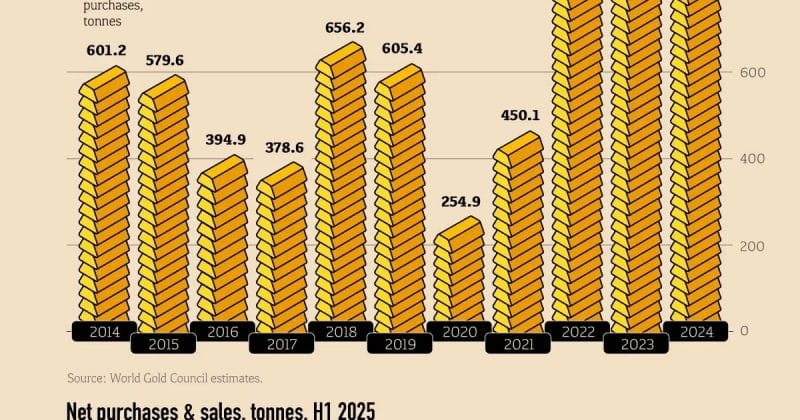
Central banks purchased over 1,000 tonnes annually during the 2022-2024 stretch, then dialed back slightly to 863 tonnes in 2025. Goldman Sachs estimates that central banks will continue buying at a clip of roughly 60 tonnes per month through the remainder of 2026, a projection that underpins the bank’s bullish year-end gold price forecast of $5,400 per ounce.
Poland’s National Bank has been especially aggressive. In April 2026 alone, it added another 14 tonnes, bringing its year-to-date total to 45 tonnes. The country’s broader strategy aims to push its total gold reserves toward 700 tonnes. The People’s Bank of China purchased 8 tonnes in April, extending an uninterrupted buying streak that now spans 18 months. Other consistent accumulators include Kazakhstan and Brazil. Meanwhile, 89% of central banks surveyed by the World Gold Council expect global central bank gold reserves to grow over the coming year.
Where you store it matters as much as what you buy
Over the past year, 9% of central banks increased their domestic gold storage, up from just 5% previously. At the same time, 10% diversified their overseas storage locations, a sharp jump from 2%. The Bank of England remains the most popular overseas vault, used by 57% of central banks.
Macro, rates, and crypto—what moved markets and what matters next.
Daily. Free. Join 34,000+ readers across crypto, finance, and policy.
The crypto angle: Tether’s quiet gold empire
Tether, the company best known for issuing the USDT stablecoin, has quietly become a meaningful player in the global gold market. The firm’s gold holdings through its XAUt (Tether Gold) token are estimated between 116 and 148 tonnes, placing Tether’s gold reserves on par with those of smaller central banks.
Total central bank gold holdings were valued at approximately $4 trillion by early 2026.
What this means for investors
Goldman Sachs’ $5,400 per ounce year-end forecast reflects institutional demand and suggests the bank sees no near-term slowdown. Central banks purchased 863 tonnes in 2025, down from the 1,000-plus tonne annual pace of 2022-2024. If the Q1 2026 run rate of 244 tonnes holds, that projects to roughly 976 tonnes for the full year. The storage trend also carries implications: as central banks pull gold back to domestic vaults and diversify their overseas holdings, the concentration risk in traditional storage hubs like London shifts, which could affect gold lending markets and potentially introduce friction into the global gold trading infrastructure.