
Certara accelerates drug discovery with Nvidia BioNeMo toolkit as AI reshapes pharma R&D
Nvidia's new agent toolkit turns biomolecular models into callable skills for AI-driven drug discovery, and the implications for compute-hungry industries extend well beyond pharma
Nvidia just gave drug discovery its ChatGPT moment. At the BIO International Convention on June 23, the chipmaker unveiled its BioNeMo Agent Toolkit, a comprehensive suite that lets AI agents autonomously handle complex scientific workflows across biology, chemistry, genomics, and pharmaceutical development. Certara, a scientific data and workflow platform, is among the first wave of companies integrating the toolkit into its operations.
What the BioNeMo toolkit actually does
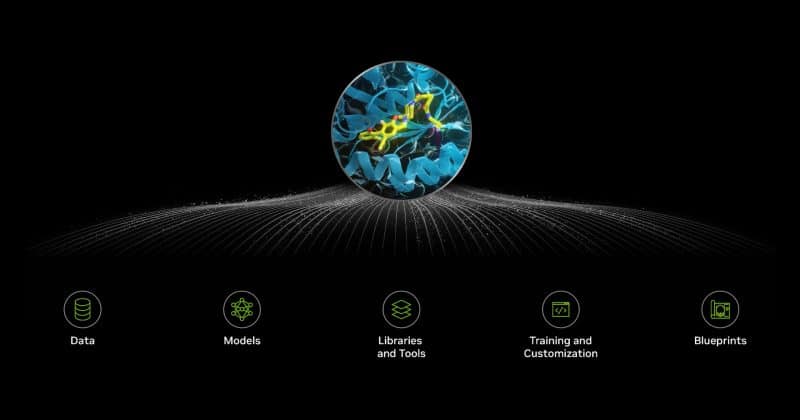
The toolkit packages over a decade’s worth of Nvidia’s life sciences libraries, open models, and specialized tools into a format where biomolecular models become “callable skills.” Instead of a scientist manually running protein structure predictions, virtual screening, molecular docking, and generative chemistry workflows, an AI agent can chain these tasks together autonomously.
Certara’s integration means the company can connect its existing scientific data systems with these AI capabilities, potentially compressing research timelines that have historically stretched across years and consumed enormous budgets.
The scale of what’s at stake
Global scientific R&D spending sits at approximately $3.8 trillion. Annual pharmaceutical budgets alone approach $300 billion. The partner list reinforces how seriously Nvidia is treating this launch. Anthropic, OpenAI, Eli Lilly, and Schrödinger are all working with the toolkit, and Nvidia expects more than 50 companies to adopt it.
AI, tech, and the markets they move—in one daily briefing.
Daily. Free. Join 34,000+ readers across crypto, finance, and policy.
Why crypto investors should care
Every new AI workload that Nvidia enables increases global demand for GPU compute. That demand dynamic directly affects the economics of decentralized compute networks like Render, Akash, and io.net, which position themselves as alternative marketplaces for GPU resources.
The risk, as always, is execution. The gap between “AI agent can theoretically run a drug discovery pipeline” and “AI agent consistently produces clinically meaningful results” is wide. Investors should watch adoption metrics from those 50-plus expected partners rather than taking the launch announcement at face value.