
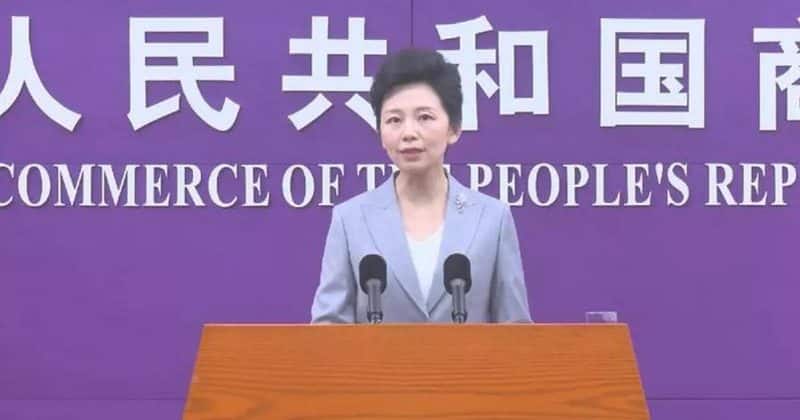
China commerce ministry adds 10 US entities to export control list

China commerce ministry adds 10 US entities to export control list

Beijing continues its tit-for-tat trade escalation with Washington, expanding restrictions on dual-use technology exports to American firms

China’s Ministry of Commerce has placed 10 more US entities on its export control list, restricting or outright prohibiting the export of dual-use items to the affected companies.

Dual-use items are civilian goods that could theoretically serve military purposes, such as advanced semiconductors, certain chemicals, or precision manufacturing equipment.

A pattern, not an incident

On January 2, 2025, MOFCOM added 28 US entities to its Export Control List. That same round of action saw 10 separate entities placed on China’s Unreliable Entities List. Then on March 4, 2025, another 15 US entities landed on the Export Control List. By April, 12 more followed. September brought smaller but continued additions, with batches of three entities each added to both lists in separate actions.

Advertisement

The common thread linking most of these additions: US arms sales to Taiwan or military cooperation that Beijing views as a direct threat to its sovereignty claims. Each time Washington approves a new defense package for Taipei or adds Chinese firms to the US Entity List, China’s commerce ministry fires back with its own restrictions.

What dual-use controls actually do

When an entity lands on China’s Export Control List, Chinese companies are effectively barred from shipping certain categories of goods to them without special government approval. The Unreliable Entities List goes a step further: companies on that list face restrictions on imports, exports, and investment activities related to China.

China remains a dominant supplier of rare earth minerals and a critical node in global electronics manufacturing. When MOFCOM restricts exports to specific entities, those companies have to find alternative suppliers, often at higher cost and longer lead times.

The aerospace and defense sectors are the most directly exposed. Companies involved in military contracts or dual-use technology development are the primary targets, and the restrictions can ripple through their supply chains.

What this means for investors

This particular action has no direct connection to crypto markets. No crypto-native firms are involved, and the restrictions target traditional defense and technology sectors.

Defense contractors and aerospace firms face a particularly complicated landscape. Increased geopolitical tension tends to boost defense spending, while losing access to Chinese supply chains for certain materials and components adds costs.

Dual-use export controls often target advanced chips and the equipment used to make them. Any disruption to global chip supply chains eventually touches the hardware that powers mining operations, data centers, and the infrastructure underlying decentralized networks.

Disclosure: This article was edited by Editorial Team. For more information on how we create and review content, see our Editorial Policy.

China commerce ministry adds 10 US entities to export control list

China commerce ministry adds 10 US entities to export control list

Beijing continues its tit-for-tat trade escalation with Washington, expanding restrictions on dual-use technology exports to American firms

China’s Ministry of Commerce has placed 10 more US entities on its export control list, restricting or outright prohibiting the export of dual-use items to the affected companies.

Dual-use items are civilian goods that could theoretically serve military purposes, such as advanced semiconductors, certain chemicals, or precision manufacturing equipment.

A pattern, not an incident

On January 2, 2025, MOFCOM added 28 US entities to its Export Control List. That same round of action saw 10 separate entities placed on China’s Unreliable Entities List. Then on March 4, 2025, another 15 US entities landed on the Export Control List. By April, 12 more followed. September brought smaller but continued additions, with batches of three entities each added to both lists in separate actions.

Advertisement

The common thread linking most of these additions: US arms sales to Taiwan or military cooperation that Beijing views as a direct threat to its sovereignty claims. Each time Washington approves a new defense package for Taipei or adds Chinese firms to the US Entity List, China’s commerce ministry fires back with its own restrictions.

What dual-use controls actually do

When an entity lands on China’s Export Control List, Chinese companies are effectively barred from shipping certain categories of goods to them without special government approval. The Unreliable Entities List goes a step further: companies on that list face restrictions on imports, exports, and investment activities related to China.

China remains a dominant supplier of rare earth minerals and a critical node in global electronics manufacturing. When MOFCOM restricts exports to specific entities, those companies have to find alternative suppliers, often at higher cost and longer lead times.

The aerospace and defense sectors are the most directly exposed. Companies involved in military contracts or dual-use technology development are the primary targets, and the restrictions can ripple through their supply chains.

What this means for investors

This particular action has no direct connection to crypto markets. No crypto-native firms are involved, and the restrictions target traditional defense and technology sectors.

Defense contractors and aerospace firms face a particularly complicated landscape. Increased geopolitical tension tends to boost defense spending, while losing access to Chinese supply chains for certain materials and components adds costs.

Dual-use export controls often target advanced chips and the equipment used to make them. Any disruption to global chip supply chains eventually touches the hardware that powers mining operations, data centers, and the infrastructure underlying decentralized networks.

Disclosure: This article was edited by Editorial Team. For more information on how we create and review content, see our Editorial Policy.