
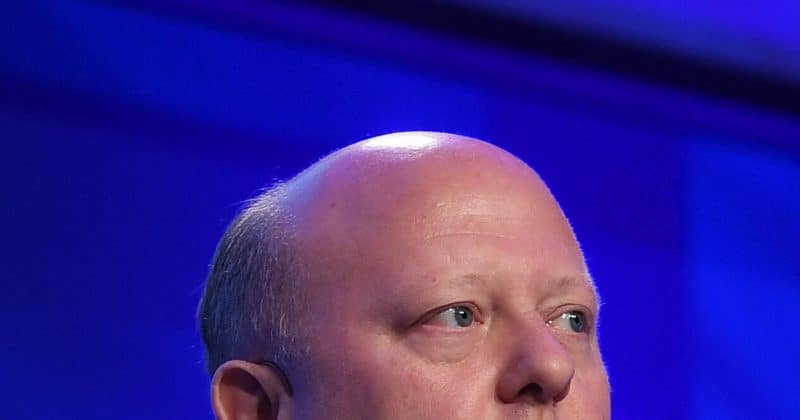
Circle CEO Jeremy Allaire addresses challenges for Open Standard Dollar after CRCL falls 16%

Circle CEO Jeremy Allaire addresses challenges for Open Standard Dollar after CRCL falls 16%

Allaire defends USDC's dominance as a 140-company consortium launches a rival stablecoin that promises to share reserve earnings with partners

Circle’s stock took a beating on June 30, dropping more than 16% after a consortium of over 140 companies, including Visa, Stripe, Coinbase, Mastercard, and BlackRock, unveiled a new stablecoin called Open USD (OUSD). Circle CEO Jeremy Allaire responded by making the case that OUSD will struggle to compete with USDC’s entrenched network effects, deep liquidity, and regulatory infrastructure.

A who’s-who of global finance and payments backing a stablecoin designed to redistribute most of its reserve earnings to partners. But whether OUSD can actually dent USDC’s roughly $73-74B market cap is a question with a complicated answer.

What Allaire is actually saying

Allaire’s defense was pointed and specific. He called USDC “the most trusted, widely adopted, institutional-ready stablecoin in the world.”

Regulatory reach is where Allaire might have his strongest card. Circle went through the grueling process of going public on the NYSE. It holds state money transmitter licenses and has built relationships with regulators across multiple jurisdictions. OUSD’s licensing and operational structure remain unclear, with key details still pending ahead of its planned launch later in 2026.

Advertisement

The consortium playbook has been tried before

Consortium-backed stablecoins aren’t new territory. Paxos launched USDG with a similar value proposition, and it hovered around $3B in supply. Respectable, but not exactly a USDC killer.

There’s also the Meta-backed Diem (formerly Libra) precedent, which had even more firepower behind it and still collapsed under regulatory pressure and internal coordination problems.

OUSD’s key differentiator is its revenue-sharing model. Rather than Circle’s approach, where the issuer keeps most of the reserve yield, OUSD plans to redistribute that income to partner firms. Key details on ownership and revenue distribution remain unclear.

What this means for investors

The 16% drop in Circle’s stock price reflects genuine concern, but several analysts have suggested the market overreacted. The logic is straightforward: USDC has first-mover advantages that took years to build, and OUSD won’t launch until later in 2026 at the earliest.

Even if every one of those 140 consortium members integrates OUSD, many of them, Coinbase included, already support USDC. A company like Visa can support both stablecoins simultaneously, which means OUSD’s growth doesn’t automatically come at USDC’s expense.

The real risk for Circle is economic, not existential. If OUSD gains traction with its revenue-sharing model, it could force Circle to give up a larger share of its reserve income to retain distribution partners. That compresses margins without necessarily shrinking USDC’s market cap. For a company that just went public and needs to demonstrate profitability to public market investors, margin pressure is no small thing.

For investors watching Circle specifically, the key metrics to track over the coming months are USDC’s market cap trajectory relative to overall stablecoin supply, any changes to Circle’s revenue-sharing arrangements with existing partners like Coinbase, and concrete details on OUSD’s launch timeline and licensing status.

Disclosure: This article was edited by Editorial Team. For more information on how we create and review content, see our Editorial Policy.

Circle CEO Jeremy Allaire addresses challenges for Open Standard Dollar after CRCL falls 16%

Circle CEO Jeremy Allaire addresses challenges for Open Standard Dollar after CRCL falls 16%

Allaire defends USDC's dominance as a 140-company consortium launches a rival stablecoin that promises to share reserve earnings with partners

Circle’s stock took a beating on June 30, dropping more than 16% after a consortium of over 140 companies, including Visa, Stripe, Coinbase, Mastercard, and BlackRock, unveiled a new stablecoin called Open USD (OUSD). Circle CEO Jeremy Allaire responded by making the case that OUSD will struggle to compete with USDC’s entrenched network effects, deep liquidity, and regulatory infrastructure.

A who’s-who of global finance and payments backing a stablecoin designed to redistribute most of its reserve earnings to partners. But whether OUSD can actually dent USDC’s roughly $73-74B market cap is a question with a complicated answer.

What Allaire is actually saying

Allaire’s defense was pointed and specific. He called USDC “the most trusted, widely adopted, institutional-ready stablecoin in the world.”

Regulatory reach is where Allaire might have his strongest card. Circle went through the grueling process of going public on the NYSE. It holds state money transmitter licenses and has built relationships with regulators across multiple jurisdictions. OUSD’s licensing and operational structure remain unclear, with key details still pending ahead of its planned launch later in 2026.

Advertisement

The consortium playbook has been tried before

Consortium-backed stablecoins aren’t new territory. Paxos launched USDG with a similar value proposition, and it hovered around $3B in supply. Respectable, but not exactly a USDC killer.

There’s also the Meta-backed Diem (formerly Libra) precedent, which had even more firepower behind it and still collapsed under regulatory pressure and internal coordination problems.

OUSD’s key differentiator is its revenue-sharing model. Rather than Circle’s approach, where the issuer keeps most of the reserve yield, OUSD plans to redistribute that income to partner firms. Key details on ownership and revenue distribution remain unclear.

What this means for investors

The 16% drop in Circle’s stock price reflects genuine concern, but several analysts have suggested the market overreacted. The logic is straightforward: USDC has first-mover advantages that took years to build, and OUSD won’t launch until later in 2026 at the earliest.

Even if every one of those 140 consortium members integrates OUSD, many of them, Coinbase included, already support USDC. A company like Visa can support both stablecoins simultaneously, which means OUSD’s growth doesn’t automatically come at USDC’s expense.

The real risk for Circle is economic, not existential. If OUSD gains traction with its revenue-sharing model, it could force Circle to give up a larger share of its reserve income to retain distribution partners. That compresses margins without necessarily shrinking USDC’s market cap. For a company that just went public and needs to demonstrate profitability to public market investors, margin pressure is no small thing.

For investors watching Circle specifically, the key metrics to track over the coming months are USDC’s market cap trajectory relative to overall stablecoin supply, any changes to Circle’s revenue-sharing arrangements with existing partners like Coinbase, and concrete details on OUSD’s launch timeline and licensing status.

Disclosure: This article was edited by Editorial Team. For more information on how we create and review content, see our Editorial Policy.