
Nexo Earn with Nexo
Circle’s Dante Disparte says the open payments debate is over, and stablecoins won

Circle’s Dante Disparte says the open payments debate is over, and stablecoins won

Circle's chief strategy officer argues that stablecoin adoption by legacy payment giants has settled the question of whether open infrastructure can compete with closed networks.

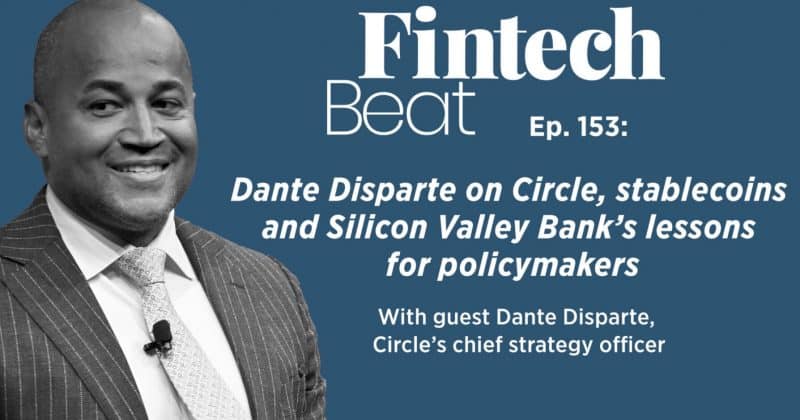
Dante Disparte, Circle’s Chief Strategy Officer and Head of Global Policy, argues that the debate about whether open payments infrastructure can compete with closed networks is now effectively resolved. The evidence, in his view, isn’t theoretical. It’s playing out in the corporate strategies of some of the biggest names in finance.

The incumbents are switching sides

PayPal, Stripe, Visa, and Mastercard have all begun integrating stablecoin functionalities into their payment systems. When the companies that essentially *are* the closed payment networks start bolting on open infrastructure, that tells you something about which direction the wind is blowing.

Circle’s USDC, a dollar-pegged stablecoin, sits at the center of this thesis. The company has positioned it not as a speculative asset but as programmable money, a building block for a new kind of financial plumbing that anyone can plug into.

Disparte, who has served as Circle’s Chief Strategy Officer since 2021, argues that stablecoins running on public blockchains are faster, cheaper, and more globally accessible than traditional payment rails.

Advertisement

From disruption to collaboration

Traditional financial players aren’t being displaced by stablecoin infrastructure. They’re adopting it. The result is an emerging hybrid ecosystem where open and closed payment frameworks coexist, and in many cases, complement each other.

Disparte took this message to the UK House of Lords on March 18, 2026, testifying before Parliament about the role stablecoins can play in modernizing payments.

During his advocacy in various policy settings, Disparte has consistently emphasized use cases that go well beyond simple person-to-person transfers. Machine-to-machine payments, where AI agents transact with each other autonomously, represent one frontier where stablecoins are argued to outperform traditional networks entirely. Legacy systems simply weren’t designed for software programs to pay each other in real time.

The programmable money thesis

Circle’s broader strategy hinges on what Disparte and others call the “open money” paradigm. The idea is that money itself should be programmable, composable, and interoperable, more like an internet protocol than a proprietary banking product.

The applications extend into cross-border transfers, where traditional remittance corridors still extract significant fees from some of the world’s most economically vulnerable populations. They extend into financial inclusion, giving anyone with a smartphone access to dollar-denominated savings and payments. And they extend into the growing universe of AI-driven commerce, where autonomous agents need programmable money to function.

What this means for investors

The stablecoin sector is evolving from crypto’s utility player into something that looks increasingly like critical financial infrastructure. For investors, the signal isn’t in USDC’s price, which is designed to stay at $1, but in the growing transaction volume and the expanding list of institutional partners building on top of it.

Circle isn’t the only player here. Tether’s USDT dominates in trading volume, PayPal has launched its own stablecoin, and several banks are exploring tokenized deposits. The question isn’t whether stablecoins will be adopted broadly. It’s which stablecoins, and which companies, will capture the most value from that adoption.

As governments worldwide move toward formal stablecoin frameworks, the companies that can navigate compliance requirements while maintaining the speed and cost advantages of open infrastructure will hold a significant edge. Circle has leaned heavily into regulatory engagement, and Disparte’s parliamentary testimony is part of that playbook.

Disclosure: This article was edited by Editorial Team. For more information on how we create and review content, see our Editorial Policy.

Circle’s Dante Disparte says the open payments debate is over, and stablecoins won

Circle’s Dante Disparte says the open payments debate is over, and stablecoins won

Circle's chief strategy officer argues that stablecoin adoption by legacy payment giants has settled the question of whether open infrastructure can compete with closed networks.

Dante Disparte, Circle’s Chief Strategy Officer and Head of Global Policy, argues that the debate about whether open payments infrastructure can compete with closed networks is now effectively resolved. The evidence, in his view, isn’t theoretical. It’s playing out in the corporate strategies of some of the biggest names in finance.

The incumbents are switching sides

PayPal, Stripe, Visa, and Mastercard have all begun integrating stablecoin functionalities into their payment systems. When the companies that essentially *are* the closed payment networks start bolting on open infrastructure, that tells you something about which direction the wind is blowing.

Circle’s USDC, a dollar-pegged stablecoin, sits at the center of this thesis. The company has positioned it not as a speculative asset but as programmable money, a building block for a new kind of financial plumbing that anyone can plug into.

Disparte, who has served as Circle’s Chief Strategy Officer since 2021, argues that stablecoins running on public blockchains are faster, cheaper, and more globally accessible than traditional payment rails.

Advertisement

From disruption to collaboration

Traditional financial players aren’t being displaced by stablecoin infrastructure. They’re adopting it. The result is an emerging hybrid ecosystem where open and closed payment frameworks coexist, and in many cases, complement each other.

Disparte took this message to the UK House of Lords on March 18, 2026, testifying before Parliament about the role stablecoins can play in modernizing payments.

During his advocacy in various policy settings, Disparte has consistently emphasized use cases that go well beyond simple person-to-person transfers. Machine-to-machine payments, where AI agents transact with each other autonomously, represent one frontier where stablecoins are argued to outperform traditional networks entirely. Legacy systems simply weren’t designed for software programs to pay each other in real time.

The programmable money thesis

Circle’s broader strategy hinges on what Disparte and others call the “open money” paradigm. The idea is that money itself should be programmable, composable, and interoperable, more like an internet protocol than a proprietary banking product.

The applications extend into cross-border transfers, where traditional remittance corridors still extract significant fees from some of the world’s most economically vulnerable populations. They extend into financial inclusion, giving anyone with a smartphone access to dollar-denominated savings and payments. And they extend into the growing universe of AI-driven commerce, where autonomous agents need programmable money to function.

What this means for investors

The stablecoin sector is evolving from crypto’s utility player into something that looks increasingly like critical financial infrastructure. For investors, the signal isn’t in USDC’s price, which is designed to stay at $1, but in the growing transaction volume and the expanding list of institutional partners building on top of it.

Circle isn’t the only player here. Tether’s USDT dominates in trading volume, PayPal has launched its own stablecoin, and several banks are exploring tokenized deposits. The question isn’t whether stablecoins will be adopted broadly. It’s which stablecoins, and which companies, will capture the most value from that adoption.

As governments worldwide move toward formal stablecoin frameworks, the companies that can navigate compliance requirements while maintaining the speed and cost advantages of open infrastructure will hold a significant edge. Circle has leaned heavily into regulatory engagement, and Disparte’s parliamentary testimony is part of that playbook.

Disclosure: This article was edited by Editorial Team. For more information on how we create and review content, see our Editorial Policy.