
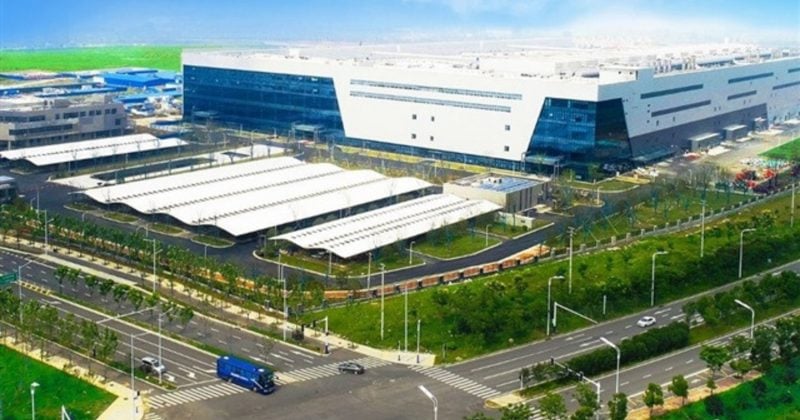
CXMT plans top-to-bottom supply chain to rival SK Hynix, Samsung, Micron

CXMT plans top-to-bottom supply chain to rival SK Hynix, Samsung, Micron

China's biggest DRAM maker is building a vertically integrated semiconductor ecosystem in Hefei, with plans to nearly triple production capacity and chase a 20% global market share by 2030

ChangXin Memory Technologies, China’s homegrown DRAM champion, is constructing an entire supply chain ecosystem from scratch. The goal: compete head-to-head with Samsung, SK Hynix, and Micron, the three companies that have dominated the global memory chip market for decades.

CXMT’s approach isn’t just about building better chips. It’s about building the entire world around those chips, clustering packaging firms, gas suppliers, wafer reclaim services, and equipment manufacturers in and around its home base of Hefei.

The Hefei playbook

The city’s municipal government has turned state-backed venture capital into something of an art form, previously nurturing BOE into a global display giant and helping rescue NIO when the EV maker was running on fumes. CXMT has been the beneficiary of that same playbook since 2016, receiving government-backed capital and infrastructure support designed to accelerate domestic chip self-sufficiency.

The strategy is straightforward: bring your suppliers so close to your fabs that the supply chain becomes almost a single organism. One of those suppliers, Xinfeng, reportedly derives over 99% of its revenue from CXMT’s operations.

Advertisement

Revenue that finally makes noise

CXMT’s revenue exceeded 55 billion yuan, roughly $8 billion, in 2025. That figure more than doubled from prior years. After nearly a decade of losses, the company posted its first annual profit in 2025.

In Q1 2026, CXMT reported revenue of 50.8 billion yuan in a single quarter, with net profit estimated between 25 and 33 billion yuan.

Current wafer production capacity sits at approximately 280,000 to 300,000 wafers per month across fabs in Hefei and Beijing. New facilities in Shanghai are expected to push that figure to around 600,000 wafers monthly. CXMT currently holds roughly 7-9% of the global DRAM market and has set a target of nearly 20% by 2030.

AI demand and the Tencent deal

CXMT’s product lineup now includes DDR5 memory with speeds up to 8000 MT/s, along with LPDDR5 variants and work on HBM, the high-bandwidth memory that has turned SK Hynix into Wall Street’s darling.

CXMT signed a long-term DRAM supply agreement with Tencent valued at over 20 billion yuan, approximately $2.9 billion.

CXMT is also preparing for a major IPO on the Shanghai STAR Market, China’s answer to Nasdaq.

What this means for investors

For holders of Samsung, SK Hynix, and Micron stock, CXMT’s rise introduces a pricing risk that hasn’t existed in years. The DRAM industry’s profitability has historically depended on disciplined supply management among a small number of producers. A fourth major player aggressively ramping capacity, backed by state capital with potentially different return thresholds, could pressure margins across the industry.

SK Hynix has enjoyed a premium valuation thanks to its dominance in HBM chips for AI applications. If CXMT can deliver competitive HBM products at scale, that premium could erode. Micron faces a more direct competitive threat in the commodity DRAM segments where CXMT is already shipping volume.

The risk factors are real, though. CXMT’s technology still trails the leading edge by at least one to two process generations. US sanctions could tighten further, restricting access to critical manufacturing equipment from ASML, Applied Materials, and others.

Disclosure: This article was edited by Editorial Team. For more information on how we create and review content, see our Editorial Policy.

CXMT plans top-to-bottom supply chain to rival SK Hynix, Samsung, Micron

CXMT plans top-to-bottom supply chain to rival SK Hynix, Samsung, Micron

China's biggest DRAM maker is building a vertically integrated semiconductor ecosystem in Hefei, with plans to nearly triple production capacity and chase a 20% global market share by 2030

ChangXin Memory Technologies, China’s homegrown DRAM champion, is constructing an entire supply chain ecosystem from scratch. The goal: compete head-to-head with Samsung, SK Hynix, and Micron, the three companies that have dominated the global memory chip market for decades.

CXMT’s approach isn’t just about building better chips. It’s about building the entire world around those chips, clustering packaging firms, gas suppliers, wafer reclaim services, and equipment manufacturers in and around its home base of Hefei.

The Hefei playbook

The city’s municipal government has turned state-backed venture capital into something of an art form, previously nurturing BOE into a global display giant and helping rescue NIO when the EV maker was running on fumes. CXMT has been the beneficiary of that same playbook since 2016, receiving government-backed capital and infrastructure support designed to accelerate domestic chip self-sufficiency.

The strategy is straightforward: bring your suppliers so close to your fabs that the supply chain becomes almost a single organism. One of those suppliers, Xinfeng, reportedly derives over 99% of its revenue from CXMT’s operations.

Advertisement

Revenue that finally makes noise

CXMT’s revenue exceeded 55 billion yuan, roughly $8 billion, in 2025. That figure more than doubled from prior years. After nearly a decade of losses, the company posted its first annual profit in 2025.

In Q1 2026, CXMT reported revenue of 50.8 billion yuan in a single quarter, with net profit estimated between 25 and 33 billion yuan.

Current wafer production capacity sits at approximately 280,000 to 300,000 wafers per month across fabs in Hefei and Beijing. New facilities in Shanghai are expected to push that figure to around 600,000 wafers monthly. CXMT currently holds roughly 7-9% of the global DRAM market and has set a target of nearly 20% by 2030.

AI demand and the Tencent deal

CXMT’s product lineup now includes DDR5 memory with speeds up to 8000 MT/s, along with LPDDR5 variants and work on HBM, the high-bandwidth memory that has turned SK Hynix into Wall Street’s darling.

CXMT signed a long-term DRAM supply agreement with Tencent valued at over 20 billion yuan, approximately $2.9 billion.

CXMT is also preparing for a major IPO on the Shanghai STAR Market, China’s answer to Nasdaq.

What this means for investors

For holders of Samsung, SK Hynix, and Micron stock, CXMT’s rise introduces a pricing risk that hasn’t existed in years. The DRAM industry’s profitability has historically depended on disciplined supply management among a small number of producers. A fourth major player aggressively ramping capacity, backed by state capital with potentially different return thresholds, could pressure margins across the industry.

SK Hynix has enjoyed a premium valuation thanks to its dominance in HBM chips for AI applications. If CXMT can deliver competitive HBM products at scale, that premium could erode. Micron faces a more direct competitive threat in the commodity DRAM segments where CXMT is already shipping volume.

The risk factors are real, though. CXMT’s technology still trails the leading edge by at least one to two process generations. US sanctions could tighten further, restricting access to critical manufacturing equipment from ASML, Applied Materials, and others.

Disclosure: This article was edited by Editorial Team. For more information on how we create and review content, see our Editorial Policy.