
Dangote Petroleum Refinery seeks $40B valuation in Nigeria’s largest IPO
Africa's biggest oil refinery is racing toward a September public listing, but Nigeria's securities regulator just pumped the brakes
Aliko Dangote, Africa’s richest man, is attempting something no Nigerian company has ever pulled off: a public listing that would value his petroleum refinery at roughly $39 billion.
The refinery already completed a $1 billion private placement in June 2026, offering 3 billion shares at $0.35 each. Demand for that placement reportedly exceeded $2 billion.
The road to listing just got a speed bump
On June 23, 2026, the Nigerian Securities and Exchange Commission issued a halt order on marketing the IPO. The reason: no formal application had been submitted or approved.
That’s a meaningful wrinkle for a company targeting a September 2026 public listing.
What exactly are investors buying into
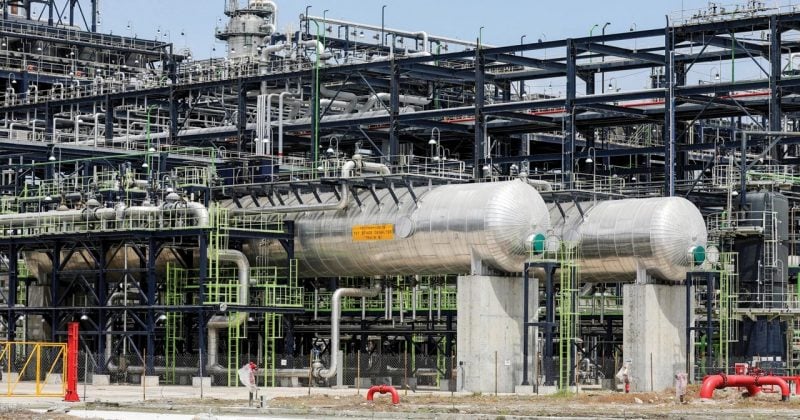
The Dangote Petroleum Refinery is located in Lagos’s Lekki Free Trade Zone, cost over $20 billion to construct, began commercial production in 2024, and reached full capacity of 650,000 barrels per day by February 2026.
Macro, rates, and crypto—what moved markets and what matters next.
Daily. Free. Join 34,000+ readers across crypto, finance, and policy.
That makes it the largest single-train refinery in the world. For a country that historically exported crude oil only to import refined gasoline and diesel at enormous cost, the refinery represents a structural shift in Nigeria’s energy economics.
The private placement valued the company at $39.1 billion. Some estimates have floated valuations as high as $50 billion for the eventual public offering.
Dangote’s bigger play
Aliko Dangote has outlined an ambitious $40 billion five-year industrial expansion plan that includes doubling the refinery’s capacity and quadrupling fertilizer output from his adjacent petrochemical complex.
For investors watching from the sidelines, there are several dynamics worth tracking. First, the regulatory timeline: the SEC halt order means the September target could slip. Second, crude oil prices: the refinery’s economics are directly tied to the spread between crude input costs and refined product output prices. Third, currency risk: Nigeria’s naira has been volatile, and foreign investors participating in a naira-denominated listing face exchange rate exposure.