
Kevin De Bruyne’s fitness return highlights crypto’s growing bet on elite athletes

Kevin De Bruyne’s fitness return highlights crypto’s growing bet on elite athletes

The Belgian midfielder's reassurance to Napoli fans comes as his long-standing Phemex ambassadorship continues bridging football and digital assets

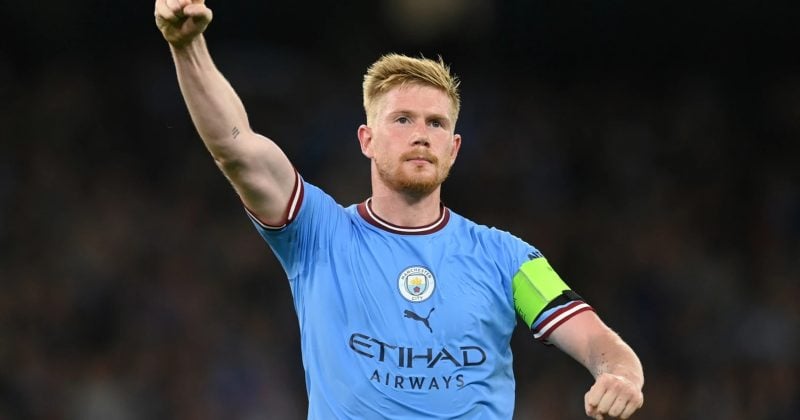
Kevin De Bruyne is back on the training pitch, and two very different audiences are paying attention. Football fans at SSC Napoli are breathing easier after the Belgian midfielder returned to the club’s training ground at Castel Volturno following roughly 128 days sidelined with a high-grade hamstring injury. But the crypto world has its own reasons to watch: De Bruyne has been a global brand ambassador for the Phemex exchange since May 2022, making him one of the most prominent athlete-crypto partnerships still standing.

The 34-year-old suffered a severe lesion in his right thigh muscle back in October 2025, shortly after completing his high-profile transfer from Manchester City to Napoli. His return to training on February 22-23, 2026, marks a significant milestone, both for a club navigating a difficult season and for a crypto exchange that has staked part of its brand identity on his image.

From the treatment table to Castel Volturno

De Bruyne’s injury was classified as high-grade, which in medical terms means substantial muscle fiber damage requiring extended rehabilitation. Napoli’s performance reportedly took a hit during De Bruyne’s absence, which makes his reassurance to fans that he will return to full fitness more than just a feel-good quote.

Advertisement

Belgium’s participation in the 2026 World Cup places De Bruyne at the center of their campaign. Conversations about his long-term future at Napoli have already surfaced, with the World Cup potentially serving as a pivot point for whatever comes next.

The Phemex connection and crypto’s athlete strategy

De Bruyne signed on as Phemex’s global ambassador in May 2022, a deal explicitly focused on educating sports audiences about cryptocurrency. That timing is worth noting: May 2022 was essentially the eve of crypto’s brutal bear market, when Terra/Luna was collapsing and the dominoes were just starting to fall across the industry.

Most athlete-crypto deals from that era aged poorly. FTX had Tom Brady and Steph Curry. Crypto.com had Matt Damon as its face. The fact that De Bruyne’s Phemex partnership has survived into 2026 makes it something of an outlier, a rare sports-crypto tie-up that didn’t end in lawsuits or uncomfortable silence.

The meme token problem

A token called KEVIN exists on the Solana blockchain, and it has absolutely no connection to De Bruyne himself. Its market cap sits around $3K with minimal liquidity, making it less a trading opportunity and more a cautionary tale written in real time.

The gap between De Bruyne’s legitimate Phemex ambassadorship and a near-zero-value meme token squatting on his name captures the full spectrum of how crypto interacts with sports celebrity. On one end, structured partnerships that bring institutional credibility. On the other, opportunistic cash grabs with the shelf life of a gas station sandwich.

What this means for investors

For Phemex, his on-pitch visibility directly correlates with brand exposure. Legitimate platform partnerships with verified athlete involvement can signal exchange stability and marketing sophistication. Unofficial tokens riding on athlete names, like the KEVIN token on Solana, signal the exact opposite. One deserves due diligence. The other deserves the block button.

Disclosure: This article was edited by Editorial Team. For more information on how we create and review content, see our Editorial Policy.

Kevin De Bruyne’s fitness return highlights crypto’s growing bet on elite athletes

Kevin De Bruyne’s fitness return highlights crypto’s growing bet on elite athletes

The Belgian midfielder's reassurance to Napoli fans comes as his long-standing Phemex ambassadorship continues bridging football and digital assets

Kevin De Bruyne is back on the training pitch, and two very different audiences are paying attention. Football fans at SSC Napoli are breathing easier after the Belgian midfielder returned to the club’s training ground at Castel Volturno following roughly 128 days sidelined with a high-grade hamstring injury. But the crypto world has its own reasons to watch: De Bruyne has been a global brand ambassador for the Phemex exchange since May 2022, making him one of the most prominent athlete-crypto partnerships still standing.

The 34-year-old suffered a severe lesion in his right thigh muscle back in October 2025, shortly after completing his high-profile transfer from Manchester City to Napoli. His return to training on February 22-23, 2026, marks a significant milestone, both for a club navigating a difficult season and for a crypto exchange that has staked part of its brand identity on his image.

From the treatment table to Castel Volturno

De Bruyne’s injury was classified as high-grade, which in medical terms means substantial muscle fiber damage requiring extended rehabilitation. Napoli’s performance reportedly took a hit during De Bruyne’s absence, which makes his reassurance to fans that he will return to full fitness more than just a feel-good quote.

Advertisement

Belgium’s participation in the 2026 World Cup places De Bruyne at the center of their campaign. Conversations about his long-term future at Napoli have already surfaced, with the World Cup potentially serving as a pivot point for whatever comes next.

The Phemex connection and crypto’s athlete strategy

De Bruyne signed on as Phemex’s global ambassador in May 2022, a deal explicitly focused on educating sports audiences about cryptocurrency. That timing is worth noting: May 2022 was essentially the eve of crypto’s brutal bear market, when Terra/Luna was collapsing and the dominoes were just starting to fall across the industry.

Most athlete-crypto deals from that era aged poorly. FTX had Tom Brady and Steph Curry. Crypto.com had Matt Damon as its face. The fact that De Bruyne’s Phemex partnership has survived into 2026 makes it something of an outlier, a rare sports-crypto tie-up that didn’t end in lawsuits or uncomfortable silence.

The meme token problem

A token called KEVIN exists on the Solana blockchain, and it has absolutely no connection to De Bruyne himself. Its market cap sits around $3K with minimal liquidity, making it less a trading opportunity and more a cautionary tale written in real time.

The gap between De Bruyne’s legitimate Phemex ambassadorship and a near-zero-value meme token squatting on his name captures the full spectrum of how crypto interacts with sports celebrity. On one end, structured partnerships that bring institutional credibility. On the other, opportunistic cash grabs with the shelf life of a gas station sandwich.

What this means for investors

For Phemex, his on-pitch visibility directly correlates with brand exposure. Legitimate platform partnerships with verified athlete involvement can signal exchange stability and marketing sophistication. Unofficial tokens riding on athlete names, like the KEVIN token on Solana, signal the exact opposite. One deserves due diligence. The other deserves the block button.

Disclosure: This article was edited by Editorial Team. For more information on how we create and review content, see our Editorial Policy.