
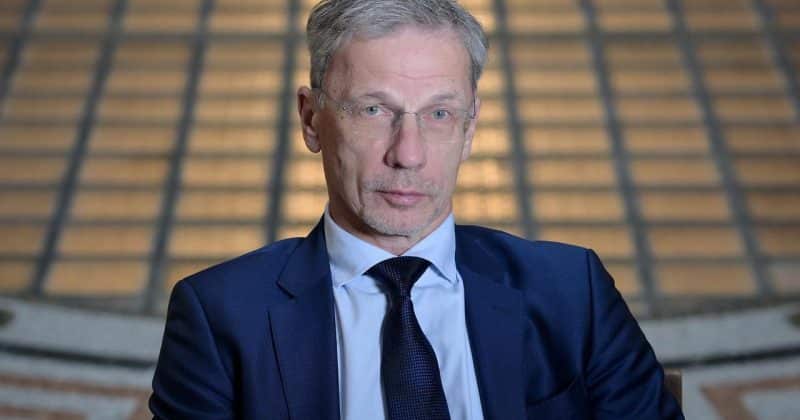
ECB Vice-President Boris Vujčić steers central banking forum toward innovation and digital future

ECB Vice-President Boris Vujčić steers central banking forum toward innovation and digital future

The annual ECB Forum in Sintra focused on AI, tokenisation, and Europe's growth challenges, with a digital euro rollout targeted for 2029.

The European Central Bank’s annual gathering in Sintra, Portugal wrapped up this week with a clear message: Europe’s central bankers are thinking hard about innovation, and they want everyone to know it. Boris Vujčić, who took over as ECB Vice-President in January 2026 after succeeding Luis de Guindos, chaired the multi-day event that ran from June 29 to July 1.

The theme this year was “Shaping Europe’s future: innovation, growth and stability.”

What actually happened in Sintra

Vujčić led multiple sessions on June 30, steering discussions on two topics: accelerating European growth through innovation and the impact of migration on productivity.

The forum also featured dedicated panels on artificial intelligence’s implications for financial stability. Tokenisation, the process of representing real-world assets as digital tokens on a blockchain, also got its own spotlight.

Advertisement

For all the talk about digital innovation, the forum didn’t produce any market-moving declarations. Vujčić avoided specific numeric forecasts on monetary policy during the event, and no direct references were made to individual cryptocurrencies or tokens.

Vujčić had actually addressed the euro area economic outlook a week earlier, on June 23, at the Barclays-CEPR Monetary Policy Forum in London.

The digital euro looms large

The ECB is targeting a digital euro rollout for 2029. A digital euro would function as a central bank digital currency, or CBDC, issued directly by the ECB.

The implications for Europe’s crypto landscape are significant. A state-backed digital currency would compete directly with private stablecoins, which have carved out a niche by offering digital dollar or euro equivalents without central bank involvement.

What this means for crypto investors

The ECB didn’t mention crypto by name at Sintra. Central bankers are choosing their words carefully right now, building a digital currency infrastructure while deliberately not engaging with the broader crypto market in public forums.

The Markets in Crypto-Assets regulation, known as MiCA, is already the most comprehensive crypto regulatory framework in any major jurisdiction. The ECB’s focus on its own digital currency project signals that the institution views public money, not private tokens, as the future of digital finance in Europe.

A digital euro backed by the ECB would offer something that no stablecoin currently can: direct central bank liability status. The 2029 digital euro timeline gives the market roughly three years to price in a fundamentally different competitive landscape for digital payments and stablecoins across the eurozone.

Disclosure: This article was edited by Editorial Team. For more information on how we create and review content, see our Editorial Policy.

ECB Vice-President Boris Vujčić steers central banking forum toward innovation and digital future

ECB Vice-President Boris Vujčić steers central banking forum toward innovation and digital future

The annual ECB Forum in Sintra focused on AI, tokenisation, and Europe's growth challenges, with a digital euro rollout targeted for 2029.

The European Central Bank’s annual gathering in Sintra, Portugal wrapped up this week with a clear message: Europe’s central bankers are thinking hard about innovation, and they want everyone to know it. Boris Vujčić, who took over as ECB Vice-President in January 2026 after succeeding Luis de Guindos, chaired the multi-day event that ran from June 29 to July 1.

The theme this year was “Shaping Europe’s future: innovation, growth and stability.”

What actually happened in Sintra

Vujčić led multiple sessions on June 30, steering discussions on two topics: accelerating European growth through innovation and the impact of migration on productivity.

The forum also featured dedicated panels on artificial intelligence’s implications for financial stability. Tokenisation, the process of representing real-world assets as digital tokens on a blockchain, also got its own spotlight.

Advertisement

For all the talk about digital innovation, the forum didn’t produce any market-moving declarations. Vujčić avoided specific numeric forecasts on monetary policy during the event, and no direct references were made to individual cryptocurrencies or tokens.

Vujčić had actually addressed the euro area economic outlook a week earlier, on June 23, at the Barclays-CEPR Monetary Policy Forum in London.

The digital euro looms large

The ECB is targeting a digital euro rollout for 2029. A digital euro would function as a central bank digital currency, or CBDC, issued directly by the ECB.

The implications for Europe’s crypto landscape are significant. A state-backed digital currency would compete directly with private stablecoins, which have carved out a niche by offering digital dollar or euro equivalents without central bank involvement.

What this means for crypto investors

The ECB didn’t mention crypto by name at Sintra. Central bankers are choosing their words carefully right now, building a digital currency infrastructure while deliberately not engaging with the broader crypto market in public forums.

The Markets in Crypto-Assets regulation, known as MiCA, is already the most comprehensive crypto regulatory framework in any major jurisdiction. The ECB’s focus on its own digital currency project signals that the institution views public money, not private tokens, as the future of digital finance in Europe.

A digital euro backed by the ECB would offer something that no stablecoin currently can: direct central bank liability status. The 2029 digital euro timeline gives the market roughly three years to price in a fundamentally different competitive landscape for digital payments and stablecoins across the eurozone.

Disclosure: This article was edited by Editorial Team. For more information on how we create and review content, see our Editorial Policy.