
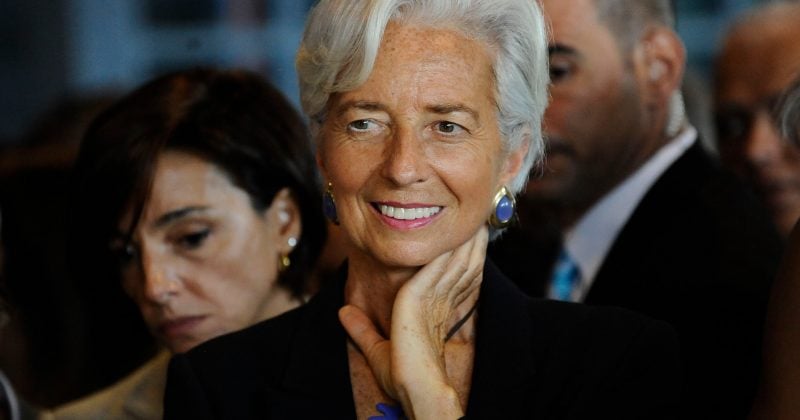
European Central Bank addresses AI risks to financial stability: Lagarde

European Central Bank addresses AI risks to financial stability: Lagarde

ECB president warns that artificial intelligence threats are 'moving faster and becoming more intrusive' as central bank mobilizes defenses

Christine Lagarde used a monetary policy press conference in Frankfurt on June 11 to lay out the European Central Bank’s growing concern about AI-powered threats targeting the financial system.

Her message was blunt: AI developments “are moving faster and becoming more intrusive.” The same technology powering chatbots and code assistants is also making cyberattacks smarter, cheaper, and harder to detect.

What the ECB is actually doing about it

Lagarde outlined two main response strategies. The first involves hardening the ECB’s own defenses and those of the broader Eurosystem, the network of eurozone central banks. The second focuses on using the Single Supervisory Mechanism, the ECB’s banking oversight arm, to push supervised institutions toward stronger protective measures.

Advertisement

She specifically named OpenAI and Anthropic as major AI developers whose rapid advances are contributing to the new threat landscape.

No immediate market-moving regulations were announced during the conference. The emphasis was squarely on preparedness rather than enforcement.

The broader context

Since 2024, the ECB has conducted multiple discussions examining both the risks and opportunities that artificial intelligence presents to the financial sector. Those conversations have repeatedly flagged systemic risks, particularly around operational vulnerabilities that could cascade through interconnected banking systems. The ECB has also identified risks associated with reliance on a concentrated number of AI service providers, raising concerns similar to those associated with institutions deemed “too big to fail.”

Lagarde’s comments arrive as European regulators are already navigating AI governance questions, including through the EU’s AI Act. The ECB’s focus on financial stability risks adds another regulatory layer that banks and fintech firms operating in Europe will need to account for.

The ECB’s efforts align with ongoing international discourse led by institutions such as the Bank for International Settlements and the Financial Stability Board, which are also investigating how AI could reshape financial intermediation and operational integrity within the sector.

What this means for investors

Cybersecurity companies stand to benefit as European financial institutions ramp up spending to meet whatever standards the ECB eventually codifies. Financial institutions themselves face margin pressure from upgrading cyber defenses, hiring AI security specialists, and overhauling systems to meet new supervisory expectations.

When the ECB’s supervisory arm issues guidance through the Single Supervisory Mechanism, compliance is not optional. Banks that fall short on AI-related security measures could face supervisory actions, additional capital requirements, or restrictions on certain activities.

Disclosure: This article was edited by Editorial Team. For more information on how we create and review content, see our Editorial Policy.

European Central Bank addresses AI risks to financial stability: Lagarde

European Central Bank addresses AI risks to financial stability: Lagarde

ECB president warns that artificial intelligence threats are 'moving faster and becoming more intrusive' as central bank mobilizes defenses

Christine Lagarde used a monetary policy press conference in Frankfurt on June 11 to lay out the European Central Bank’s growing concern about AI-powered threats targeting the financial system.

Her message was blunt: AI developments “are moving faster and becoming more intrusive.” The same technology powering chatbots and code assistants is also making cyberattacks smarter, cheaper, and harder to detect.

What the ECB is actually doing about it

Lagarde outlined two main response strategies. The first involves hardening the ECB’s own defenses and those of the broader Eurosystem, the network of eurozone central banks. The second focuses on using the Single Supervisory Mechanism, the ECB’s banking oversight arm, to push supervised institutions toward stronger protective measures.

Advertisement

She specifically named OpenAI and Anthropic as major AI developers whose rapid advances are contributing to the new threat landscape.

No immediate market-moving regulations were announced during the conference. The emphasis was squarely on preparedness rather than enforcement.

The broader context

Since 2024, the ECB has conducted multiple discussions examining both the risks and opportunities that artificial intelligence presents to the financial sector. Those conversations have repeatedly flagged systemic risks, particularly around operational vulnerabilities that could cascade through interconnected banking systems. The ECB has also identified risks associated with reliance on a concentrated number of AI service providers, raising concerns similar to those associated with institutions deemed “too big to fail.”

Lagarde’s comments arrive as European regulators are already navigating AI governance questions, including through the EU’s AI Act. The ECB’s focus on financial stability risks adds another regulatory layer that banks and fintech firms operating in Europe will need to account for.

The ECB’s efforts align with ongoing international discourse led by institutions such as the Bank for International Settlements and the Financial Stability Board, which are also investigating how AI could reshape financial intermediation and operational integrity within the sector.

What this means for investors

Cybersecurity companies stand to benefit as European financial institutions ramp up spending to meet whatever standards the ECB eventually codifies. Financial institutions themselves face margin pressure from upgrading cyber defenses, hiring AI security specialists, and overhauling systems to meet new supervisory expectations.

When the ECB’s supervisory arm issues guidance through the Single Supervisory Mechanism, compliance is not optional. Banks that fall short on AI-related security measures could face supervisory actions, additional capital requirements, or restrictions on certain activities.

Disclosure: This article was edited by Editorial Team. For more information on how we create and review content, see our Editorial Policy.