
Nexo Earn with Nexo
ECB President Lagarde positions digital euro as Europe’s answer to financial market transformation

ECB President Lagarde positions digital euro as Europe’s answer to financial market transformation

At a Frankfurt conference on payments innovation, Lagarde framed digitalisation and tokenisation as strategic imperatives while casting doubt on the case for euro-denominated stablecoins.

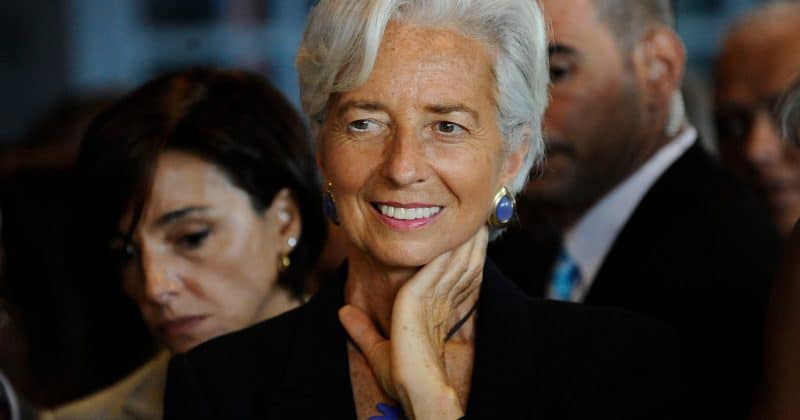
Christine Lagarde wants Europe to own its financial future, and she thinks the path runs through digital infrastructure. The European Central Bank president used a keynote address on June 15, 2026, to lay out her vision for how digitalisation and tokenisation are reshaping financial markets, and why Europe needs to be building the rails rather than riding on someone else’s.

The speech, delivered at the ECB’s “Money in transition: digitalisation and innovation in payments” conference in Frankfurt, framed these technological shifts not as abstract possibilities but as urgent strategic priorities. Integration, autonomy, innovation in public money: Lagarde’s three-word thesis for why the ECB is pushing so hard on digital settlement infrastructure.

Advertisement

The digital euro takes center stage

The ECB’s digital euro project moved into its next phase on October 30, 2025, following a preparation period that kicked off in November 2023. The digital euro is not designed to replace cash. The ECB has positioned it as a complement to physical currency, with goals that include consumer privacy, freedom of payment choice, and reducing Europe’s dependence on foreign payment systems.

The conference agenda reinforced this direction by spotlighting wholesale digital settlement assets. Think central bank money, tokenised deposits, and stablecoins, all examined through the lens of how they can make financial settlement more integrated and more automated.

Lagarde’s stablecoin skepticism

At the Bank of Spain’s LatAm Economic Forum on May 8, 2026, Lagarde argued that settlement in tokenised markets should be anchored to central bank money. She went further, describing the case for euro-denominated stablecoins as “weaker than they might seem.”

This stance aligns with the EU’s Markets in Crypto-Assets (MiCA) regulatory framework, which has been tightening the rules around stablecoin issuance within European borders.

What this means for crypto investors

No specific cryptocurrencies like Bitcoin or Ethereum were mentioned in the conference discussions. The EU’s Savings and Investment Union agenda, which the conference discussions explicitly connected to tokenisation trends, suggests that digital settlement assets will play a growing role in European capital markets.

Disclosure: This article was edited by Editorial Team. For more information on how we create and review content, see our Editorial Policy.

ECB President Lagarde positions digital euro as Europe’s answer to financial market transformation

ECB President Lagarde positions digital euro as Europe’s answer to financial market transformation

At a Frankfurt conference on payments innovation, Lagarde framed digitalisation and tokenisation as strategic imperatives while casting doubt on the case for euro-denominated stablecoins.

Christine Lagarde wants Europe to own its financial future, and she thinks the path runs through digital infrastructure. The European Central Bank president used a keynote address on June 15, 2026, to lay out her vision for how digitalisation and tokenisation are reshaping financial markets, and why Europe needs to be building the rails rather than riding on someone else’s.

The speech, delivered at the ECB’s “Money in transition: digitalisation and innovation in payments” conference in Frankfurt, framed these technological shifts not as abstract possibilities but as urgent strategic priorities. Integration, autonomy, innovation in public money: Lagarde’s three-word thesis for why the ECB is pushing so hard on digital settlement infrastructure.

Advertisement

The digital euro takes center stage

The ECB’s digital euro project moved into its next phase on October 30, 2025, following a preparation period that kicked off in November 2023. The digital euro is not designed to replace cash. The ECB has positioned it as a complement to physical currency, with goals that include consumer privacy, freedom of payment choice, and reducing Europe’s dependence on foreign payment systems.

The conference agenda reinforced this direction by spotlighting wholesale digital settlement assets. Think central bank money, tokenised deposits, and stablecoins, all examined through the lens of how they can make financial settlement more integrated and more automated.

Lagarde’s stablecoin skepticism

At the Bank of Spain’s LatAm Economic Forum on May 8, 2026, Lagarde argued that settlement in tokenised markets should be anchored to central bank money. She went further, describing the case for euro-denominated stablecoins as “weaker than they might seem.”

This stance aligns with the EU’s Markets in Crypto-Assets (MiCA) regulatory framework, which has been tightening the rules around stablecoin issuance within European borders.

What this means for crypto investors

No specific cryptocurrencies like Bitcoin or Ethereum were mentioned in the conference discussions. The EU’s Savings and Investment Union agenda, which the conference discussions explicitly connected to tokenisation trends, suggests that digital settlement assets will play a growing role in European capital markets.

Disclosure: This article was edited by Editorial Team. For more information on how we create and review content, see our Editorial Policy.