
European Central Bank raises rates for first time since 2023, becoming first G7 bank to hike since Iran war began
The ECB bumped its deposit rate to 2.25%, a preemptive strike against energy-driven inflation that could ripple through crypto and risk assets globally
The European Central Bank just did something no other G7 central bank has been willing to do yet. It raised interest rates.
On June 11, the ECB hiked its main deposit facility rate by 25 basis points, moving from 2% to 2.25%. It’s the first rate increase from Frankfurt since September 2023, and the first tightening move by any G7 central bank since the Iran war began sending energy prices on a very unwelcome upward trajectory.
What happened and why it matters
The catalyst is straightforward: war-driven energy costs. The ongoing conflict involving Iran has disrupted oil supply routes, particularly through the Strait of Hormuz, a chokepoint that handles a massive share of global crude shipments.
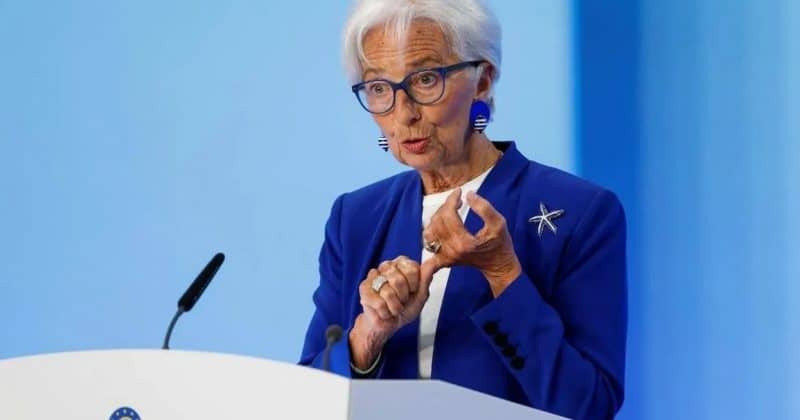
ECB President Christine Lagarde didn’t mince words about the reasoning.
“The war in the Middle East is generating inflation pressures.”
Lagarde indicated the decision to hike was robust across multiple economic scenarios, suggesting the governing council isn’t just reacting to one bad data point.
The ECB’s updated inflation projections tell the story in numbers. Eurozone inflation is now forecast at 3.0% for 2026, a meaningful upward revision. The outlook for 2027 sits at 2.3%, and the bank expects a return to its 2.0% target by 2028.
This isn’t a normal inflation problem you can fix by cooling consumer demand. It’s a supply shock, rooted in geopolitics. The ECB is essentially trying to keep energy-driven price increases from bleeding into core inflation, the stickier kind that embeds itself in wages, rents, and services.
The G7 context and what comes next
Other G7 central banks have meetings scheduled in the coming week. Market participants are watching the Fed and Bank of England closely for signals of similar action.
Financial markets are already pricing in more pain from Frankfurt. Current expectations point to two to three additional 25 basis point hikes by spring 2027. If those materialize, the deposit rate would land somewhere between 2.75% and 3%, a meaningful reversal of the easing cycle that dominated 2024 and early 2025.
What this means for crypto investors
Rate hikes are not a friend to risk assets. When central banks raise rates, they increase the yield on safe-haven instruments like government bonds. Money that might otherwise chase higher returns in speculative markets, including crypto, suddenly has a less volatile place to park.
There’s a counterargument worth considering. Some investors view Bitcoin specifically as an inflation hedge. But it’s a narrative that has performed inconsistently in practice. During 2022’s inflation surge, Bitcoin lost roughly two-thirds of its value while inflation was running hot.
Traders should also watch the euro itself. A rate hike typically strengthens the currency, which could create interesting dynamics for euro-denominated crypto pairs.
If the Fed or Bank of England follow the ECB’s lead, the market will reprice risk across every asset class simultaneously. If they hold steady, the ECB becomes an outlier, and the impact on global markets stays more contained.