
Elliptic and Thai police uncover $520M in suspicious crypto transactions spanning 32 blockchains
The joint investigation traced over 500 wallets linked to scams, thefts, and professional money laundering networks operating across Southeast Asia.
Half a billion dollars in suspicious crypto transactions. Over 500 wallets. Thirty-two different blockchains. The numbers alone tell a story of industrial-scale fraud, and blockchain analytics firm Elliptic just helped Thai law enforcement read every chapter.
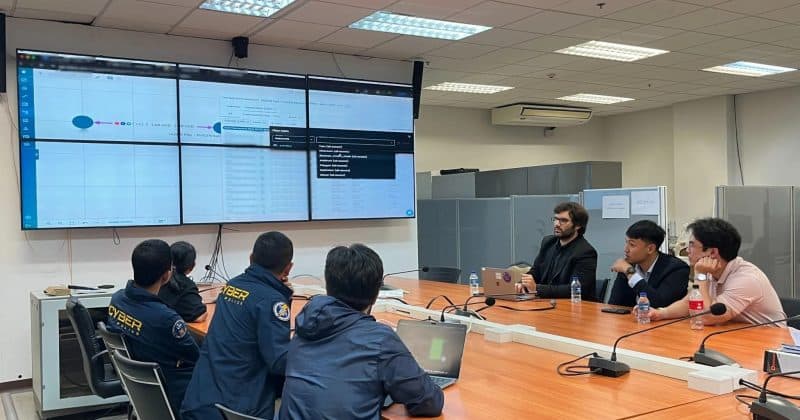
Elliptic revealed its partnership with the Royal Thai Police’s High-Tech Crime Division (HTCD), detailing how the two organizations traced $520 million (17.8 billion baht) in incoming transactions across a sprawling network of digital wallets. The investigation linked hundreds of victim accounts spanning from January 2022 to October 2025, documenting approximately $14 million in individual losses.
The anatomy of a half-billion-dollar network
The investigation identified activity across 32 separate blockchains involving more than 400 unique digital assets. Ethereum, TRON, and Bitcoin were the most heavily used networks, with USDT, ETH, and BTC serving as the primary currencies of choice for the illicit operations.
The criminal activities uncovered included scams totaling nearly $200 million. Among the most prominent were so-called “pig butchering” schemes, a category of fraud where scammers build trust with victims over weeks or months, often through fake romantic relationships or investment opportunities, before convincing them to pour money into fraudulent platforms.
Approximately $234 million of the flagged transactions had been previously identified in Elliptic’s systems. That means nearly half the suspicious volume was corroborated by existing intelligence.
The news moving money, markets, and the world—before your day starts.
Daily. Free. Join 34,000+ readers across crypto, finance, and policy.
North Korean links and Southeast Asian scam compounds
The investigation revealed connections to North Korean operatives who allegedly targeted Thai victims as part of a significant theft. The broader picture paints a troubling portrait of organized crime infrastructure operating out of scam centers in countries neighboring Thailand, particularly Cambodia and Myanmar.
The investigation highlighted how criminals are increasingly leveraging decentralized exchanges and cross-chain bridges to move funds across blockchains. Every time funds hop from one chain to another through a bridge, the connection between source and destination becomes harder to trace without specialized tools.
What this means for investors and the broader market
The gap between $520 million in suspicious transactions and $14 million in documented victim losses tells its own story. The vast majority of illicit volume represents the laundering infrastructure itself—the movement of money through layers of wallets and chains designed to obscure its origins.
The assets most frequently used in these schemes—USDT, ETH, and BTC—are also the most liquid and widely held tokens in crypto. Any regulatory action targeting their use in illicit finance could introduce short-term volatility, particularly if exchanges face new obligations around transaction monitoring or wallet screening.