
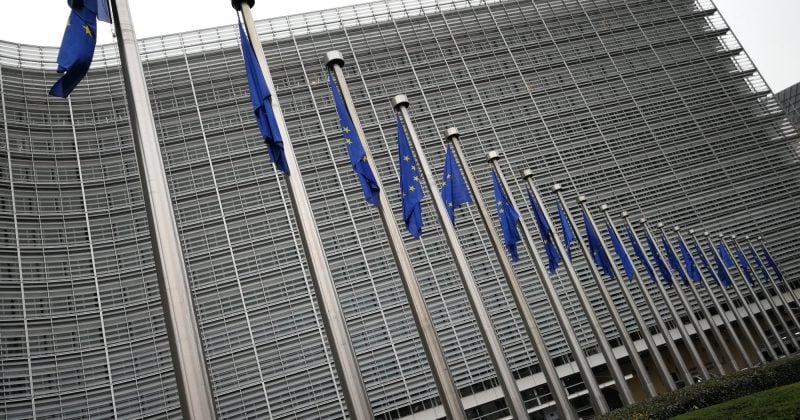
European Union debates tougher trade measures against China amid growing deficit

European Union debates tougher trade measures against China amid growing deficit

The bloc's trade gap with China has ballooned to roughly €1 billion per day, pushing EU leaders toward a more aggressive posture ahead of a June 18 summit

The European Union is bleeding roughly €1 billion per day in its goods trade deficit with China. That’s not a metaphor. It’s the actual math, and it’s forcing Brussels into what may become the most consequential trade policy shift in a generation.

EU leaders are set to debate a sweeping package of trade defense measures at a summit on June 18, 2026. The toolkit under discussion includes tariffs, import quotas, anti-dumping investigations, procurement rules, and subsidy regulations, all aimed at curbing what officials view as Chinese trade dominance fueled by state-backed overcapacity.

The numbers tell a brutal story

The EU-China trade deficit hit approximately €360 billion for the full year of 2025. The first quarter of 2026 alone registered a €98 billion deficit, the highest since late 2022. April 2026 added another €31.9 billion to the tally.

Every single one of the 27 EU member states reported a trade deficit with China in 2025. That was a first. Not one country managed to sell more to China than it bought.

Advertisement

The bloc’s deficit with China has more than doubled since 2019, driven by surging Chinese exports and declining EU shipments heading the other direction. US tariffs on Chinese goods have effectively redirected a wave of Chinese exports toward Europe, where they face comparatively lighter tariffs of just 2-3%.

What Brussels is putting on the table

The EU isn’t starting from zero. Tariffs on Chinese electric vehicles can already reach up to 35%, a measure implemented since 2024. Over 18 of the 21 recent EU anti-dumping and anti-subsidy investigations have targeted Chinese imports.

The measures being discussed ahead of the June 18 summit span a broad spectrum: new tariffs, safeguard mechanisms to protect domestic industries, retaliation tools designed to respond to unfair trade practices, tighter procurement rules that could limit Chinese firms’ access to public contracts, and updated subsidy regulations.

The focus areas include critical supply sectors where the EU has developed uncomfortable dependencies. Rare earths, essential for everything from smartphones to wind turbines, sit at the top of that list. Clean technology, steel, and chemicals are also in the crosshairs.

France has emerged as the most vocal advocate for a fortified trade stance. But internal divisions persist across the bloc, with some member states worried that aggressive measures could provoke Chinese retaliation disrupting supply chains that European manufacturers depend on.

What this means for investors

The sectors most directly in the firing line are electric vehicles, steel, chemicals, and clean technology. These are the industries where Chinese overcapacity has been most pronounced and where EU trade defenses are most likely to tighten.

Higher tariffs mean higher input costs for European companies that rely on Chinese components and materials. For industries with complex cross-border supply chains, unwinding Chinese dependencies isn’t a quarter-long project. China has historically responded to trade restrictions with targeted countermeasures, meaning European luxury goods, agricultural exports, and automotive brands with significant Chinese market exposure could find themselves on the wrong end of Beijing’s response.

Disclosure: This article was edited by Editorial Team. For more information on how we create and review content, see our Editorial Policy.

European Union debates tougher trade measures against China amid growing deficit

European Union debates tougher trade measures against China amid growing deficit

The bloc's trade gap with China has ballooned to roughly €1 billion per day, pushing EU leaders toward a more aggressive posture ahead of a June 18 summit

The European Union is bleeding roughly €1 billion per day in its goods trade deficit with China. That’s not a metaphor. It’s the actual math, and it’s forcing Brussels into what may become the most consequential trade policy shift in a generation.

EU leaders are set to debate a sweeping package of trade defense measures at a summit on June 18, 2026. The toolkit under discussion includes tariffs, import quotas, anti-dumping investigations, procurement rules, and subsidy regulations, all aimed at curbing what officials view as Chinese trade dominance fueled by state-backed overcapacity.

The numbers tell a brutal story

The EU-China trade deficit hit approximately €360 billion for the full year of 2025. The first quarter of 2026 alone registered a €98 billion deficit, the highest since late 2022. April 2026 added another €31.9 billion to the tally.

Every single one of the 27 EU member states reported a trade deficit with China in 2025. That was a first. Not one country managed to sell more to China than it bought.

Advertisement

The bloc’s deficit with China has more than doubled since 2019, driven by surging Chinese exports and declining EU shipments heading the other direction. US tariffs on Chinese goods have effectively redirected a wave of Chinese exports toward Europe, where they face comparatively lighter tariffs of just 2-3%.

What Brussels is putting on the table

The EU isn’t starting from zero. Tariffs on Chinese electric vehicles can already reach up to 35%, a measure implemented since 2024. Over 18 of the 21 recent EU anti-dumping and anti-subsidy investigations have targeted Chinese imports.

The measures being discussed ahead of the June 18 summit span a broad spectrum: new tariffs, safeguard mechanisms to protect domestic industries, retaliation tools designed to respond to unfair trade practices, tighter procurement rules that could limit Chinese firms’ access to public contracts, and updated subsidy regulations.

The focus areas include critical supply sectors where the EU has developed uncomfortable dependencies. Rare earths, essential for everything from smartphones to wind turbines, sit at the top of that list. Clean technology, steel, and chemicals are also in the crosshairs.

France has emerged as the most vocal advocate for a fortified trade stance. But internal divisions persist across the bloc, with some member states worried that aggressive measures could provoke Chinese retaliation disrupting supply chains that European manufacturers depend on.

What this means for investors

The sectors most directly in the firing line are electric vehicles, steel, chemicals, and clean technology. These are the industries where Chinese overcapacity has been most pronounced and where EU trade defenses are most likely to tighten.

Higher tariffs mean higher input costs for European companies that rely on Chinese components and materials. For industries with complex cross-border supply chains, unwinding Chinese dependencies isn’t a quarter-long project. China has historically responded to trade restrictions with targeted countermeasures, meaning European luxury goods, agricultural exports, and automotive brands with significant Chinese market exposure could find themselves on the wrong end of Beijing’s response.

Disclosure: This article was edited by Editorial Team. For more information on how we create and review content, see our Editorial Policy.