
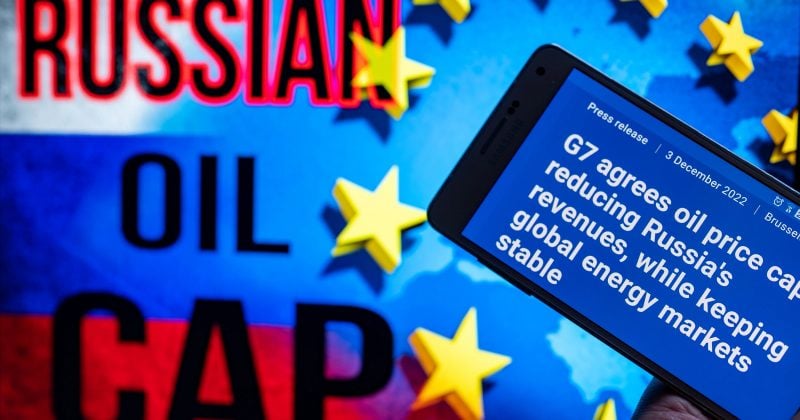
EU considers temporary freeze on Russian oil price cap amid Iran war
Brussels weighs pausing its sanctions mechanism as Brent crude tops $100 and Middle East conflict reshapes the global energy calculus.
The European Union is weighing a temporary freeze on its Russian oil price cap as the Iran conflict sends shockwaves through global energy markets.
The EU and the United Kingdom already lowered the Russian crude oil price cap to $44.10 per barrel, effective February 1, 2026. That figure represents 85% of the average price from the previous three months, a formula designed to keep Russian oil flowing while starving the Kremlin of windfall profits. But with Brent crude peaking above $100 amid the Iran conflict, the math behind that cap is getting increasingly uncomfortable for European policymakers.
A sanctions regime under pressure
The European Commission delayed a proposal for a permanent ban on Russian oil imports in March 2026 precisely because of the price surges tied to Middle East tensions.
The United States issued temporary sanctions waivers on certain Russian oil at sea, extending through April 11, 2026. Washington’s rationale was straightforward: prevent supply disruptions that could spike prices further.
German Chancellor Friedrich Merz labeled the waivers as detrimental to collective efforts against Russian aggression.
By late May 2026, Brent crude had dropped nearly 20% from its peak on ceasefire reports from the Middle East.
Macro, rates, and crypto—what moved markets and what matters next.
Daily. Free. Join 34,000+ readers across crypto, finance, and policy.
Russia’s crypto workaround
Russian firms are reportedly using Bitcoin, ether, and USDT to facilitate oil trades with China and India, effectively sidestepping the traditional financial channels where sanctions have teeth.
The use of USDT is particularly notable because Tether has historically cooperated with law enforcement requests to freeze wallets. But cooperation after the fact is different from prevention, and on-chain transactions can be layered through multiple wallets before anyone flags them.
What this means for investors
The $44.10 cap is already well below the current market price for crude. If the EU freezes this cap rather than adjusting it further, it essentially locks in a framework where Russian oil trades at a significant discount to global benchmarks. That discount has historically benefited buyers like China and India, who have been happy to purchase Russian crude at below-market rates regardless of Western preferences.
The nearly 20% drop in Brent from its peak on ceasefire reports is a reminder of how quickly Middle East headlines can reprice the entire energy complex.
If Russian oil-for-crypto trades are genuinely scaling, it represents one of the largest real-world use cases for digital assets in international commodity settlement. That’s bullish for the utility narrative around stablecoins and major layer-one tokens, but it also paints a target on those assets for regulatory crackdowns.