
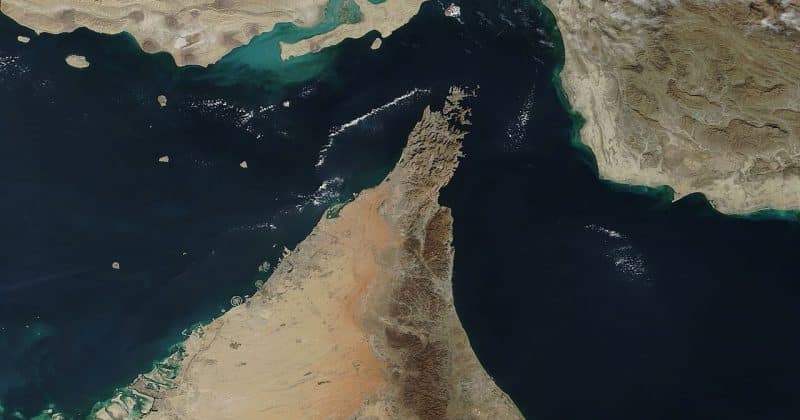
European countries accept transit fees for ships in Strait of Hormuz, with Bitcoin payments on the table
Iran and Oman's plan to charge vessels passing through the world's most important oil chokepoint could reshape energy costs and boost crypto's role in geopolitical finance
Some European countries have quietly accepted that ships passing through the Strait of Hormuz will pay transit fees to Iran and Oman, a seismic shift in how the world’s most critical oil chokepoint operates. The concession marks a break from decades of free passage through the narrow waterway that handles roughly a fifth of global oil supply.
Iran has been exploring the option of collecting those payments in Bitcoin and Chinese yuan, turning a maritime toll booth into one of the most consequential real-world use cases for cryptocurrency in geopolitical finance.
The end of free passage
Oman informed European officials in June 2026 that restoring pre-war conditions of free transit through the strait is simply no longer on the table. European officials still publicly champion the principle that international law prohibits tolls on international straits. But behind closed doors, some diplomats have indicated willingness to explore compliance options rather than rejecting the proposals outright.
The fees themselves are being framed as payments for navigational assistance and environmental protection services. Iran has already been collecting ad hoc fees reaching up to $2 million per voyage, so the infrastructure for extraction, if not the formal framework, already exists.
President Trump has labeled transit tolls for Hormuz passage as “unacceptable” under existing sanctions rules.
Macro, rates, and crypto—what moved markets and what matters next.
Daily. Free. Join 34,000+ readers across crypto, finance, and policy.
Bitcoin at the bottleneck
Iranian authorities have contemplated, and potentially enacted, fee collection in Bitcoin alongside the Chinese yuan. Bitcoin’s perceived advantages in anonymity and convenience make it an attractive option for a government seeking to circumvent US financial sanctions.
There are also proposals for a “Persian Gulf Strait Authority” that would formalize fee collection and potentially accept cryptocurrency or yuan as payment methods.
What this means for energy markets and your portfolio
The Strait of Hormuz handles roughly 20% of global crude oil supply. Analysts suggest the financial ramifications of formalized transit fees could contribute to broader inflationary pressure globally, with insurance premiums for vessels transiting the strait expected to climb as the fee structure introduces new layers of regulatory and geopolitical risk.
The split between US and European positions creates its own risks. If Washington maintains its hardline stance while European nations accommodate the fee regime, it could create a two-tier system where vessels face different regulatory exposures depending on their flag state.