
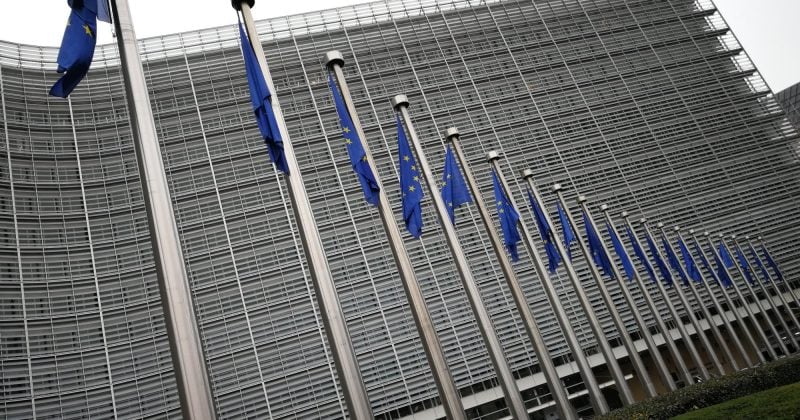
European Commission set to expand MiCA rules to tokenization and stablecoins
A public consultation launched in May 2026 signals the EU's push to close regulatory gaps around tokenized assets and foreign stablecoin issuers.
Europe’s crypto rulebook is about to get a rewrite. The European Commission has launched a formal review of the Markets in Crypto-Assets Regulation, known as MiCA, with the explicit goal of stretching its coverage to include tokenized assets and stablecoins that currently slip through the cracks.
The timing is deliberate. MiCA only reached full application on July 1, 2026, meaning the ink is barely dry, and regulators are already acknowledging that the framework needs another pass.
What the review actually covers
The Commission opened a public consultation in May 2026, giving stakeholders until September 30, 2026 to submit input. That feedback will shape potential regulatory revisions that could arrive as early as 2027.
The core problem the review is trying to solve is a jurisdictional mismatch. MiCA introduced solid oversight for two categories of tokens: asset-referenced tokens, which are backed by a basket of assets, and e-money tokens, which are pegged to a single fiat currency. Both now face strict reserve requirements, authorization hurdles, and supervisory scrutiny from the European Banking Authority for the larger issuers.
Tokenized securities, though, are a different story. Those assets, think stocks or bonds represented on a blockchain, still fall primarily under traditional securities law via MiFID II. In English: a tokenized share of a European company is regulated like a share, not like a crypto asset, which leaves a lot of ambiguous territory in between.
The Commission is also looking squarely at non-EU stablecoin issuers. As dollar-denominated stablecoins issued by American companies circulate freely across European markets, regulators want equivalence regimes that would hold foreign issuers to comparable standards, or restrict their market access if they don’t comply.
Macro, rates, and crypto—what moved markets and what matters next.
Daily. Free. Join 34,000+ readers across crypto, finance, and policy.
The review is, in part, a direct response to what’s happening in Washington. The U.S. GENIUS Act, which would establish a federal framework for stablecoin issuers, has changed the international regulatory calculus. Europe is watching closely, and the Commission appears unwilling to let a looser American framework undercut MiCA’s stricter requirements through regulatory arbitrage.
The tokenization surge making regulators nervous
On-chain tokenized stocks have reached an approximate market value of $2.16 billion, reflecting a nearly 45% month-on-month increase.
The broader tokenization market has been building momentum since MiCA first passed in June 2023. Exchanges have seen a steady uptick in tokenized assets listed, and stablecoins have gained meaningful traction as a settlement layer across the region.
There’s also a compliance gap worth noting. As of May 2026, only 17% of EU crypto firms had received full MiCA authorization as crypto-asset service providers. That means the vast majority of firms operating in the region are still navigating a transition period, and expanding the regulation’s scope before that transition is fully digested adds another layer of complexity for compliance teams.
What this means for investors and market participants
For stablecoin issuers, particularly those domiciled outside the EU, the equivalence regime discussion is the one to watch. If the Commission decides that third-country issuers must either meet MiCA-equivalent standards or register an EU-based entity, that could force significant restructuring among major dollar-stablecoin operators that currently serve European users without a local presence.