
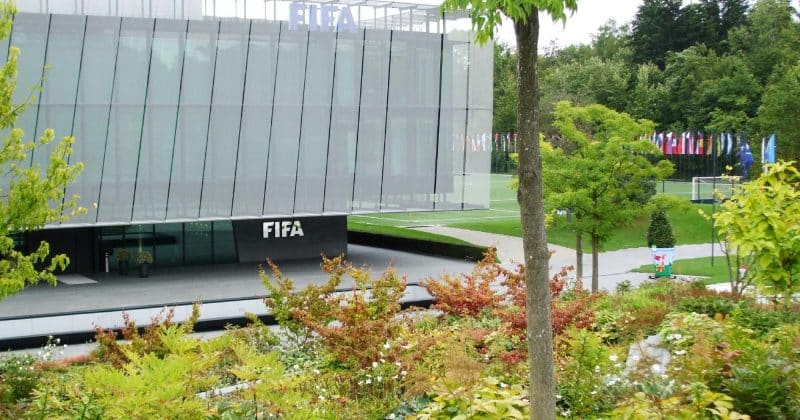
European soccer leaders rally behind Belgium against FIFA as crypto-sports ties face collateral damage

European soccer leaders rally behind Belgium against FIFA as crypto-sports ties face collateral damage

A brewing dispute over player eligibility at the 2026 World Cup is pulling European football's governing voices into a confrontation with FIFA, with implications rippling into the sports crypto sector.

The dispute centers on FIFA’s decision to let US forward Folarin Balogun play in a critical 2026 World Cup match against Belgium, despite receiving a red card in a previous game.

The Royal Belgian Football Association publicly condemned the ruling on July 5, 2026, calling it a violation of basic sporting integrity. Belgian coach Rudi Garcia went further, describing the decision as an “April Fools’ joke.”

Advertisement

What actually happened

FIFA apparently decided to clear Balogun to feature against Belgium in a match that carries serious stakes for both teams’ World Cup campaigns. The RBFA has made clear its objection isn’t just about competitive disadvantage. The federation has positioned itself as defending the broader principle of fair play, arguing that bending red card rules for one player undermines the credibility of the entire tournament.

The timing makes this particularly awkward for FIFA. Just days earlier, on June 29, 2026, a group of 50 Members of the European Parliament sent a letter to FIFA demanding an investigation into an ethics complaint against President Gianni Infantino. That complaint involved Infantino’s controversial decision to award a “FIFA Peace Prize” to Donald Trump.

The crypto angle nobody’s talking about

Belgium launched its official fan token, $BELG, on Socios.com on June 3, 2026. The token gives supporters digital voting rights and access to rewards tied to the national team.

Meanwhile, FIFA itself deepened its crypto ties on June 9, 2026, appointing Kraken as its Official Crypto Exchange Supporter.

Disclosure: This article was edited by Editorial Team. For more information on how we create and review content, see our Editorial Policy.

European soccer leaders rally behind Belgium against FIFA as crypto-sports ties face collateral damage

European soccer leaders rally behind Belgium against FIFA as crypto-sports ties face collateral damage

A brewing dispute over player eligibility at the 2026 World Cup is pulling European football's governing voices into a confrontation with FIFA, with implications rippling into the sports crypto sector.

The dispute centers on FIFA’s decision to let US forward Folarin Balogun play in a critical 2026 World Cup match against Belgium, despite receiving a red card in a previous game.

The Royal Belgian Football Association publicly condemned the ruling on July 5, 2026, calling it a violation of basic sporting integrity. Belgian coach Rudi Garcia went further, describing the decision as an “April Fools’ joke.”

Advertisement

What actually happened

FIFA apparently decided to clear Balogun to feature against Belgium in a match that carries serious stakes for both teams’ World Cup campaigns. The RBFA has made clear its objection isn’t just about competitive disadvantage. The federation has positioned itself as defending the broader principle of fair play, arguing that bending red card rules for one player undermines the credibility of the entire tournament.

The timing makes this particularly awkward for FIFA. Just days earlier, on June 29, 2026, a group of 50 Members of the European Parliament sent a letter to FIFA demanding an investigation into an ethics complaint against President Gianni Infantino. That complaint involved Infantino’s controversial decision to award a “FIFA Peace Prize” to Donald Trump.

The crypto angle nobody’s talking about

Belgium launched its official fan token, $BELG, on Socios.com on June 3, 2026. The token gives supporters digital voting rights and access to rewards tied to the national team.

Meanwhile, FIFA itself deepened its crypto ties on June 9, 2026, appointing Kraken as its Official Crypto Exchange Supporter.

Disclosure: This article was edited by Editorial Team. For more information on how we create and review content, see our Editorial Policy.