
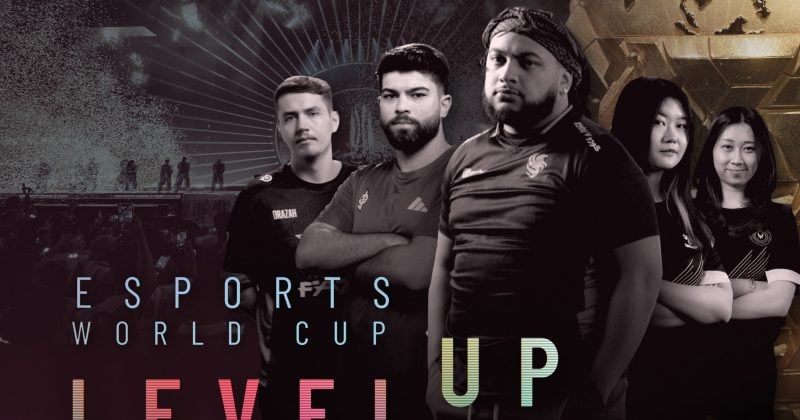
Esports World Cup 2026 draws crypto sponsors as $75M prize pool reshapes competitive gaming economics
The EWC's massive prize pools and cryptocurrency sponsorships signal a deepening relationship between esports and digital assets, even as individual match highlights like DarkMago's comeback steal the show.
The Esports World Cup 2026 is currently the biggest stage in competitive gaming, and the money involved is starting to look less like a niche tournament and more like a professional sports league. The overall event carries a $75 million total prize pool across multiple game titles, with the Dota 2 section alone offering $2 million. Those numbers have attracted cryptocurrency sponsorships to the festival, reinforcing a trend that’s been building for years: crypto and esports are increasingly sharing the same economic orbit.
One of the early storylines from the Dota 2 bracket came on July 7, when Peruvian midlaner DarkMago led his team PlayTime to a 1-1 draw against Team Liquid in a best-of-two Group B series. For context, Team Liquid is one of the most storied organizations in Dota 2 history. PlayTime clawing back to split the series is roughly the competitive equivalent of a mid-table club holding Real Madrid to a draw at the Bernabeu.
Why crypto keeps showing up at esports events
The EWC 2026 has attracted cryptocurrency sponsorships to the broader festival, though no specific tokens or protocols have been publicly tied to the Dota 2 portion of the event. That distinction matters. Esports prize pools have ballooned over the past decade, and that growth has created real financial plumbing problems. Prize distribution across international borders, currency conversion for players in developing regions, and instant settlement are all pain points that blockchain rails can theoretically solve. When you’re paying out $75 million across dozens of countries, the traditional banking system isn’t exactly known for its speed or cost-efficiency.
The EWC’s scale, with 24 teams competing in the Dota 2 bracket alone and matches running through July 19, gives sponsors extended visibility that a single weekend tournament can’t match.
DarkMago’s performance in context
DarkMago, whose real name is Oswaldo Gonzalo Herrera Martínez, is 27 years old and has built a reputation as one of the most consistent midlaners from South America. He holds the all-time record for professional matches on the hero Tiny with 143 games and 91 wins. He’s also logged 110 professional matches on Kunkka, winning 66 of those.
The news moving money, markets, and the world—before your day starts.
Daily. Free. Join 34,000+ readers across crypto, finance, and policy.
His PlayTime squad is positioned as an underdog in Group B, facing rosters with far deeper pockets and more established track records. The 1-1 result against Team Liquid doesn’t guarantee advancement, but it does put the rest of the group on notice. In Dota 2’s round-robin format, every series matters, and stealing a game from a favorite can be the difference between playoff qualification and an early flight home.
What this means for investors watching the esports-crypto intersection
A $75 million prize pool requires serious financial architecture. That’s real money flowing across borders, through multiple currencies, to players and organizations in dozens of jurisdictions. Every friction point in that process is a potential use case for stablecoins, cross-border payment protocols, or smart contract-based escrow systems.
The risk, as always, is that crypto sponsorships in esports remain superficial. Logo placement on a tournament overlay isn’t integration. It’s advertising. The projects worth watching are the ones building actual utility into the competitive gaming stack, whether that’s verifiable tournament results on-chain, player compensation infrastructure, or fan engagement tools that go beyond speculative token trading.
The EWC runs through July 19, and with 24 teams still in contention across the Dota 2 bracket, there will be plenty more upsets and storylines to track.