
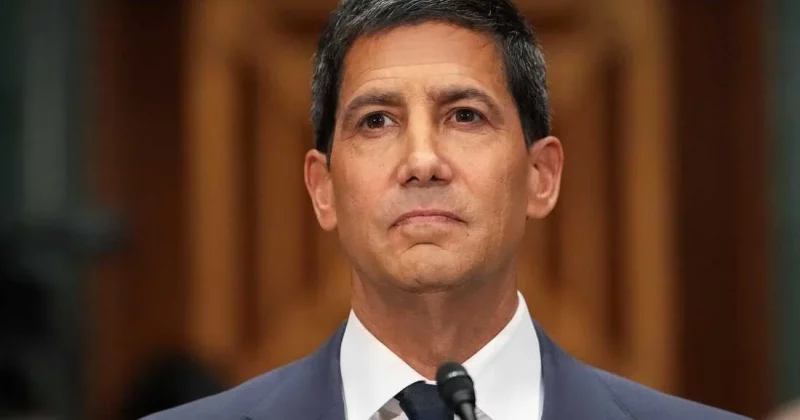
Federal Reserve Chair Kevin Warsh proposes communication reforms that could reshape market dynamics
The new Fed Chair wants officials to talk less, forecast less, and meet less often, a shift that could inject serious volatility into financial markets.
Kevin Warsh, who was sworn in as Federal Reserve Chair on May 22, 2026, is wasting no time signaling that the Powell era’s communication playbook is headed for the shredder. His first major initiative: fundamentally changing how the most powerful central bank on the planet talks to the world.
During his Senate confirmation hearing in April 2026, Warsh laid out a reform agenda that reads like the anti-thesis of modern central banking communication. He advocated for reducing public commentary by Fed officials, pulling back on forward guidance, and potentially cutting FOMC meetings from eight per year to just four.
Warsh has been blunt about why he thinks this matters. He’s argued that the constant stream of commentary from Fed officials has created more confusion than clarity, leading to what he describes as “misjudgments in policy-making.” His preferred framing centers on “truth-seeking” over forecasting, a not-so-subtle critique of the institution’s reliance on projections.
He served as a Federal Reserve Governor from 2006 to 2011, a period that included the financial crisis and its aftermath. The reforms also aim to minimize market expectations around asset purchases during periods of stress.
What Warsh’s broader agenda looks like
Communication is just the opening act. Warsh has also signaled interest in reopening the Fed’s monetary policy framework review, advocating for a more rules-based approach to policy, and establishing a revised focus on tools like the repo rate.
The news moving money, markets, and the world—before your day starts.
Daily. Free. Join 34,000+ readers across crypto, finance, and policy.
As of late May 2026, these proposals remain largely conceptual. No specific timelines for implementation have been announced.
What this means for investors
Fewer FOMC meetings creates another wrinkle. With only four meetings per year instead of eight, the gaps between policy decisions would stretch to roughly three months. Each meeting would carry significantly more weight, and the lead-up to each decision could see amplified market swings as traders try to front-run outcomes with less guidance to work with.
The reduction in expected asset purchases during market stress is perhaps the most consequential signal for risk assets broadly. If Warsh successfully resets expectations around the Fed put, assets that have benefited most from the assumption of central bank support may need to reprice for a world where the safety net is smaller.