
Nexo Earn with Nexo
Federal Reserve chief Kevin Warsh pledges overhaul of communications

Federal Reserve chief Kevin Warsh pledges overhaul of communications

The new Fed chair wants to kill the dot plot and bring back a Greenspan-era approach to monetary policy signaling

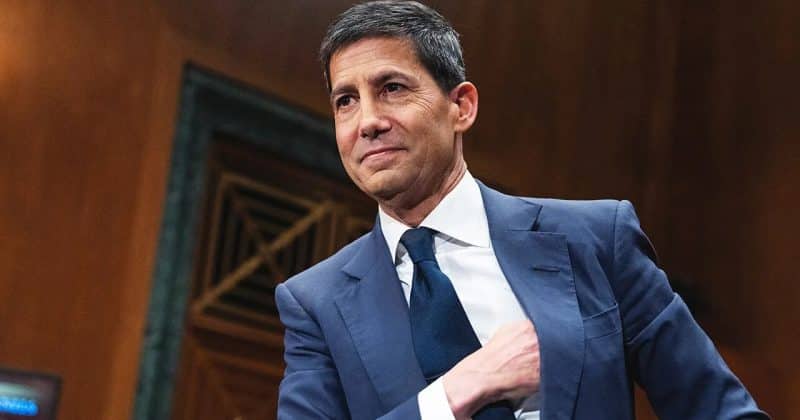
Kevin Warsh, the 17th Chair of the Federal Reserve, wants to fundamentally change how the central bank talks to markets. His target: the forward guidance playbook that has defined Fed communications for more than a decade.

Warsh was sworn in on May 22, 2026, after a Senate confirmation vote of 54-45 on May 13. He succeeds Jerome Powell. And he’s wasting no time signaling that the Powell era’s communication style is on its way out.

The case against the dot plot

Warsh has called for what he describes as “regime change” at the Fed. In practice, that means scaling back two tools that have become pillars of modern central banking: forward guidance and the dot plot.

For the uninitiated, the dot plot is a chart where each Fed official anonymously marks where they think interest rates should be at various points in the future. In English: it’s the Fed’s version of a group text where everyone shares their rate predictions, and markets obsess over every shift.

Advertisement

Warsh’s argument is that these tools box the committee in. When you tell markets exactly where rates are heading, you create expectations that become hard to walk back without triggering chaos. His preferred alternative is a more data-driven approach, reacting to economic conditions as they unfold rather than pre-committing to a path months in advance.

The model he’s channeling is Alan Greenspan’s Fed, which operated with far less transparency about its future intentions. Greenspan famously said that if people understood what he was saying, he must have misspoken. Warsh isn’t going quite that far, but the philosophical direction is clear: less prediction, more restraint.

A Fed chair with $192 million in crypto

Warsh is the first Federal Reserve chair with a significant personal stake in cryptocurrency. His disclosed holdings, combined with his spouse’s portfolio, exceed $192 million in cryptocurrencies and digital assets. That includes substantial investments across more than 30 crypto projects, with positions in Solana and Polymarket among them.

Warsh has taken a nuanced public stance on digital assets. He has described Bitcoin as something that doesn’t cause him nervousness, while simultaneously criticizing certain projects as fraudulent. His broader view is that digital currencies are becoming a fundamental part of the US financial system.

Warsh previously served as a Fed governor from 2006 to 2011, a period that included the global financial crisis. He has proposed narrowing the Fed’s focus to its dual mandate and shrinking the balance sheet, which sits around $6.7 trillion.

The first FOMC meeting looms

Warsh’s first Federal Open Market Committee meeting as chair is scheduled for June 16-17, 2026. It will be closely watched for any concrete changes to how the committee communicates its policy outlook.

What this means for crypto investors

On one hand, a communication overhaul that reduces the Fed’s habit of pre-announcing rate moves could actually dampen volatility in crypto. A significant portion of crypto market swings in recent years has been driven by reactions to Fed communications: dot plot surprises, hawkish press conference language, unexpected shifts in the Summary of Economic Projections.

On the other hand, Warsh’s hawkish inflation stance is a potential headwind. Crypto assets, particularly Bitcoin, have shown increased sensitivity to interest rate expectations. A Fed chair who prioritizes inflation containment over growth support is unlikely to deliver the aggressive rate cuts that tend to fuel risk-on rallies in digital assets.

The tension investors should watch is between Warsh’s personal comfort with crypto and his policy instincts on inflation. A tighter monetary stance would likely pressure risk assets broadly, including digital ones, even as his rhetorical openness to the sector sends the opposite signal on the regulatory front.

Disclosure: This article was edited by Editorial Team. For more information on how we create and review content, see our Editorial Policy.

Federal Reserve chief Kevin Warsh pledges overhaul of communications

Federal Reserve chief Kevin Warsh pledges overhaul of communications

The new Fed chair wants to kill the dot plot and bring back a Greenspan-era approach to monetary policy signaling

Kevin Warsh, the 17th Chair of the Federal Reserve, wants to fundamentally change how the central bank talks to markets. His target: the forward guidance playbook that has defined Fed communications for more than a decade.

Warsh was sworn in on May 22, 2026, after a Senate confirmation vote of 54-45 on May 13. He succeeds Jerome Powell. And he’s wasting no time signaling that the Powell era’s communication style is on its way out.

The case against the dot plot

Warsh has called for what he describes as “regime change” at the Fed. In practice, that means scaling back two tools that have become pillars of modern central banking: forward guidance and the dot plot.

For the uninitiated, the dot plot is a chart where each Fed official anonymously marks where they think interest rates should be at various points in the future. In English: it’s the Fed’s version of a group text where everyone shares their rate predictions, and markets obsess over every shift.

Advertisement

Warsh’s argument is that these tools box the committee in. When you tell markets exactly where rates are heading, you create expectations that become hard to walk back without triggering chaos. His preferred alternative is a more data-driven approach, reacting to economic conditions as they unfold rather than pre-committing to a path months in advance.

The model he’s channeling is Alan Greenspan’s Fed, which operated with far less transparency about its future intentions. Greenspan famously said that if people understood what he was saying, he must have misspoken. Warsh isn’t going quite that far, but the philosophical direction is clear: less prediction, more restraint.

A Fed chair with $192 million in crypto

Warsh is the first Federal Reserve chair with a significant personal stake in cryptocurrency. His disclosed holdings, combined with his spouse’s portfolio, exceed $192 million in cryptocurrencies and digital assets. That includes substantial investments across more than 30 crypto projects, with positions in Solana and Polymarket among them.

Warsh has taken a nuanced public stance on digital assets. He has described Bitcoin as something that doesn’t cause him nervousness, while simultaneously criticizing certain projects as fraudulent. His broader view is that digital currencies are becoming a fundamental part of the US financial system.

Warsh previously served as a Fed governor from 2006 to 2011, a period that included the global financial crisis. He has proposed narrowing the Fed’s focus to its dual mandate and shrinking the balance sheet, which sits around $6.7 trillion.

The first FOMC meeting looms

Warsh’s first Federal Open Market Committee meeting as chair is scheduled for June 16-17, 2026. It will be closely watched for any concrete changes to how the committee communicates its policy outlook.

What this means for crypto investors

On one hand, a communication overhaul that reduces the Fed’s habit of pre-announcing rate moves could actually dampen volatility in crypto. A significant portion of crypto market swings in recent years has been driven by reactions to Fed communications: dot plot surprises, hawkish press conference language, unexpected shifts in the Summary of Economic Projections.

On the other hand, Warsh’s hawkish inflation stance is a potential headwind. Crypto assets, particularly Bitcoin, have shown increased sensitivity to interest rate expectations. A Fed chair who prioritizes inflation containment over growth support is unlikely to deliver the aggressive rate cuts that tend to fuel risk-on rallies in digital assets.

The tension investors should watch is between Warsh’s personal comfort with crypto and his policy instincts on inflation. A tighter monetary stance would likely pressure risk assets broadly, including digital ones, even as his rhetorical openness to the sector sends the opposite signal on the regulatory front.

Disclosure: This article was edited by Editorial Team. For more information on how we create and review content, see our Editorial Policy.