
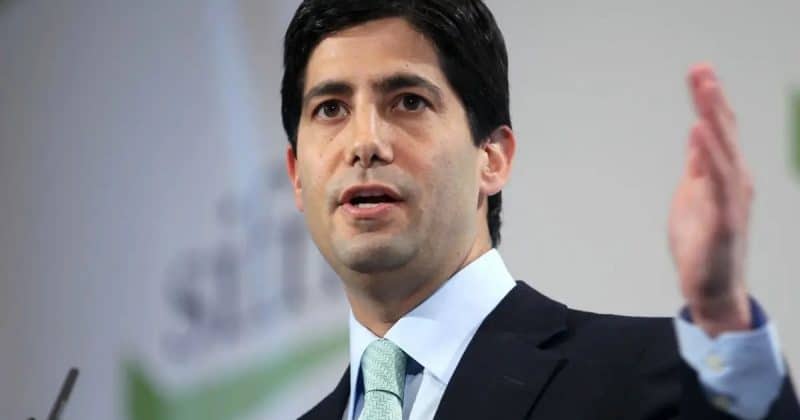
Federal Reserve Chair Kevin Warsh signals openness to new economic data sources
The new Fed chair wants to modernize how the central bank measures the economy, and his crypto background makes the implications worth watching
The Federal Reserve’s new boss thinks the central bank is working with stale ingredients. Kevin Warsh, who took the helm on May 22, 2026, told staff in an internal message that the Fed considers some of its economic data to be outdated and needs to find better alternatives.
In a note circulated on June 2, Warsh laid out a vision for the Fed that sounds less like a central bank memo and more like a tech company’s product roadmap. The institution responsible for steering the world’s largest economy, he argued, must evolve beyond conventional practices to keep pace with faster technological advancements.
What Warsh is actually proposing
Warsh has assembled a data task force that’s developing recommendations for how official statistics get produced. The task force is working directly with the Bureau of Labor Statistics and the Department of Commerce, the two agencies responsible for the inflation readings, jobs reports, and GDP figures that move markets every month.
The goal isn’t to throw out existing data. It’s to supplement it with newer, potentially more accurate measures of what’s happening in the real economy. Warsh’s note specifically referenced the need for improved ways to evaluate productivity and inflation, two metrics that have been notoriously tricky to measure in an increasingly digital economy.
This data modernization effort sits within a broader reform agenda. Warsh has also signaled plans to overhaul Fed communications and address the central bank’s $6.7 trillion balance sheet, a figure that ballooned during successive rounds of quantitative easing and pandemic-era interventions.
The crypto elephant in the room
During his confirmation process, Warsh disclosed more than 30 investments in crypto-related assets. Warsh has publicly acknowledged that digital assets play an integral role in US financial services.
To be clear about what has and hasn’t been said: no specific cryptocurrency tokens were mentioned in connection with the data-source discussions. There are no explicit ties to blockchain technologies or token-specific data in Warsh’s statements so far.
What this means for investors
If the Fed adopts more sophisticated, real-time economic measures, it could theoretically respond faster to changing conditions. For crypto markets, which have historically been hypersensitive to rate expectations, this could mean a different volatility regime altogether.
Warsh was sworn in for a four-year term, which gives him meaningful runway to implement changes. The data task force’s recommendations could take months or years to materialize into actual policy shifts.
The risk to watch is political. Any perception that a Fed chair with significant crypto holdings is steering data policy in ways that benefit digital assets would invite intense scrutiny. Warsh will need to walk a careful line between modernization and the appearance of conflicts of interest.