
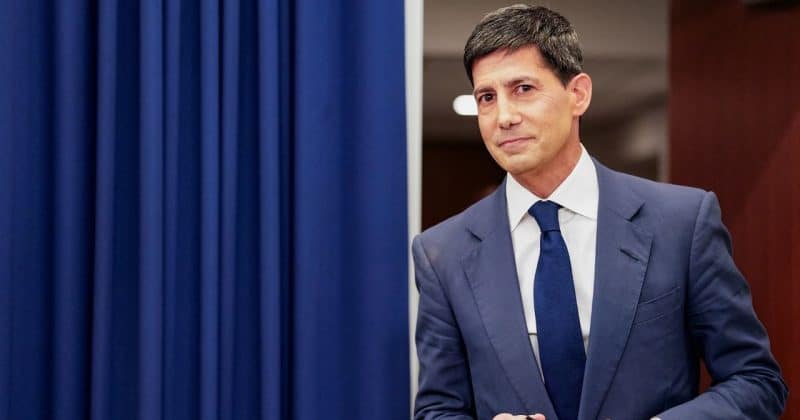
Federal Reserve Chairman Kevin Warsh initiates policy changes with five task forces
The new Fed chair held rates steady at his first FOMC meeting while launching a sweeping review of how the central bank operates
Kevin Warsh just finished his first FOMC meeting as Federal Reserve Chairman, and he’s already reshaping the institution from the inside. The committee held the federal funds rate steady at 3.25% to 3.75%, but the real news was what came alongside it: five task forces designed to fundamentally reassess how the Fed communicates, manages its balance sheet, sources data, thinks about artificial intelligence, and frames its approach to inflation.
The task forces and what they signal
The five task forces cover a surprisingly wide range of Fed operations. One will focus on communication efficiency. Another will examine balance sheet management. A third task force will review how the Fed sources its data. The fourth task force tackles artificial intelligence’s impact on productivity and jobs. The fifth task force will reassess the frameworks the Fed uses to manage inflation.
Warsh reportedly emphasized that the FOMC is united in pursuing the 2% inflation target.
How Warsh got here
Warsh was confirmed by the Senate on May 13, 2026, with a vote of 54-45. He was sworn in on May 22, 2026, for a four-year term that runs through May 2030. His first FOMC meeting took place on June 16-17, 2026.
Warsh served as a governor on the Board from 2006 to 2011, a stretch that included the 2008 financial crisis.
Macro, rates, and crypto—what moved markets and what matters next.
Daily. Free. Join 34,000+ readers across crypto, finance, and policy.
What this means for crypto and broader markets
The communication efficiency review is particularly worth watching. If Warsh tightens the Fed’s messaging cadence, reducing the frequency or detail of public guidance, it could reduce the market’s dependence on Fed-watching as a trading strategy.
For crypto markets specifically, the absence of any mention of digital assets or cryptocurrencies in Warsh’s initial policy framework is notable. The Fed under Jerome Powell had increasingly engaged with digital asset questions, from stablecoin regulation to central bank digital currencies.
Warsh’s explicit commitment to reaching the 2% inflation target introduces a longer-term variable. If the committee decides to adopt a more rigid interpretation of the 2% target, abandoning some of the flexibility that characterized the average inflation targeting framework adopted in 2020, it would mean tighter policy for longer.
The AI productivity task force is a wildcard. If the Fed concludes that artificial intelligence is meaningfully boosting economic output without proportionally increasing inflationary pressure, it could justify keeping rates lower than traditional models would suggest.