
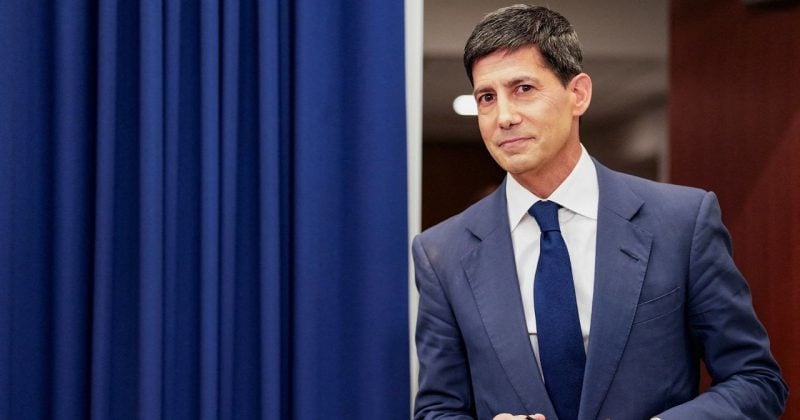
Federal Reserve Chair Kevin Warsh to testify on monetary policy July 15
The new Fed chair's first congressional testimony will signal how he plans to fight inflation, and crypto markets are paying close attention
Kevin Warsh is about to have his first real conversation with Congress since taking the most powerful seat in global monetary policy. The newly installed Federal Reserve Chair is scheduled to appear before the Senate Banking Committee on July 15, a day after his House Financial Services Committee testimony on July 14, marking his inaugural semiannual monetary policy address to lawmakers.
This is the moment markets have been waiting for since Warsh officially became the 17th Fed Chair on May 22, 2026. His confirmation was not exactly a landslide: the Senate approved him 54-45, a margin thin enough to suggest the political headwinds that will follow him into the job.
Who is Kevin Warsh, and why does it matter
Warsh is not a stranger to the Fed. He served as a Fed Governor from 2006 to 2011, which means he had a front-row seat to the 2008 financial crisis. He was the youngest appointee to that role at the time.
He succeeds Jerome Powell, who steered the Fed through the pandemic-era rate hiking cycle that reshaped global markets. Warsh steps in at a moment where inflation is running at around 3.3% annually, which is above the Fed’s 2% target.
His first FOMC meeting in June 2026 gave markets an early read. Warsh kept rates unchanged, signaling caution rather than aggression, but his public comments made clear that fighting inflation remains the primary objective.
The crypto angle nobody expected
At his April 2026 Senate confirmation hearing, Warsh stated that digital assets are becoming integral to the U.S. financial services landscape.
The news moving money, markets, and the world—before your day starts.
Daily. Free. Join 34,000+ readers across crypto, finance, and policy.
His financial disclosures go further. Warsh has personal investments in cryptocurrencies, including Bitcoin, which he has described as “an important asset.”
Warsh’s confirmation and these upcoming testimonies represent a structural shift in how the Federal Reserve engages with the digital asset space. Powell’s Fed was largely reactive on crypto, treating it as a regulatory and stability question. Warsh appears positioned to treat it as a legitimate financial category.
What to watch in the testimony
Traditional macro analysts will focus on any signal about when the Fed might cut rates, since inflation at 3.3% with steady rates implies the committee is not in a hurry to ease.
Crypto-focused observers will watch for how Warsh characterizes the Fed’s evolving role in digital asset oversight. His confirmation hearing comments suggest he is open to engaging constructively with the sector.
Lawmakers on both committees will almost certainly ask about stablecoins, given that Congress has been actively debating stablecoin legislation. Warsh’s response will signal whether the Fed intends to play a proactive or passive role in shaping that regulatory framework.