
Federal Reserve’s Lisa Cook highlights small business AI adoption at Stanford symposium

Federal Reserve’s Lisa Cook highlights small business AI adoption at Stanford symposium

Over 70% of small businesses report unchanged labor costs despite AI implementation, according to new Fed survey data

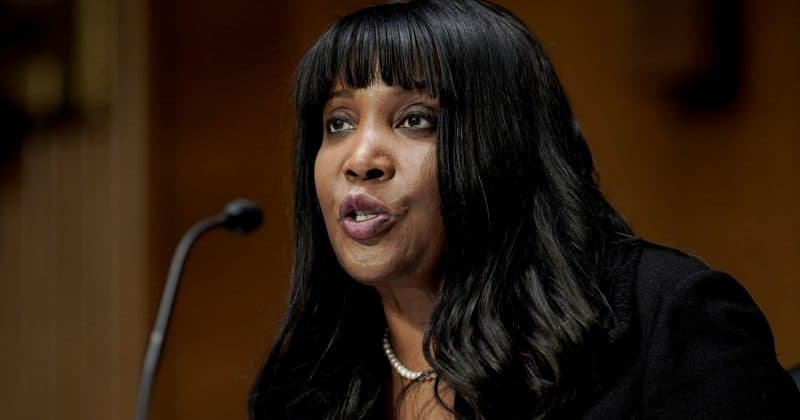
Federal Reserve Governor Lisa D. Cook took the stage at Stanford’s Institute for Economic Policy Research on May 27 to deliver a message that should matter to anyone watching the intersection of AI and the real economy: small businesses are adopting artificial intelligence at a meaningful clip, and so far, the labor market isn’t breaking a sweat over it.

The speech came at a symposium specifically designed to examine AI’s opportunities and risks for the broader economy and financial system. Cook’s focus on Main Street rather than Silicon Valley was deliberate, and the data she brought with her tells an interesting story about where AI adoption actually stands.

What the small business survey found

Cook drew heavily from the 2025 Small Business Credit Survey, conducted by the Federal Reserve itself. The headline number: over 70% of small business respondents said their labor costs had not substantially changed as a result of implementing AI tools.

Advertisement

Cook linked these findings to broader themes around small business vitality. Small businesses remain the backbone of US job creation, and their willingness to experiment with new technology is one reason US GDP growth has been robust, exceeding pre-pandemic productivity averages according to Cook’s remarks.

The macro backdrop matters

Cook’s speech didn’t exist in a vacuum. She delivered it against a backdrop where the unemployment rate sat at 4.3% as of April 2026, a level that’s historically low but slightly elevated from the tightest readings of the post-pandemic recovery.

Cook’s policy stance reflects that breathing room. Her analysis favors holding interest rates steady, a position that balances lingering inflation risks against an economy that appears to be growing without overheating. The stable labor cost data from the small business survey essentially gives her cover to stay patient.

Total announced investment in data-center plans has now surpassed $1.5 trillion, a figure Cook referenced to underscore just how much capital is flowing into AI infrastructure.

Why this matters for markets

The small business angle is worth watching for anyone tracking the real economy beneath the surface-level AI hype. Small businesses represent roughly 44% of US economic activity. If they’re adopting AI and seeing productivity gains without labor disruption, that’s a more durable growth story than another chatbot wrapper raising a Series B.

The rate-hold signal is perhaps the most immediately tradeable takeaway. Bitcoin and other risk assets have generally performed well in environments where the Fed is on pause rather than actively tightening. Cook’s comfort with the current economic trajectory suggests no surprise hikes are on the near-term horizon.

Investors should watch future iterations of the Small Business Credit Survey as a leading indicator for whether AI’s benign impact on employment holds up or starts to crack.

Disclosure: This article was edited by Editorial Team. For more information on how we create and review content, see our Editorial Policy.

Federal Reserve’s Lisa Cook highlights small business AI adoption at Stanford symposium

Federal Reserve’s Lisa Cook highlights small business AI adoption at Stanford symposium

Over 70% of small businesses report unchanged labor costs despite AI implementation, according to new Fed survey data

Federal Reserve Governor Lisa D. Cook took the stage at Stanford’s Institute for Economic Policy Research on May 27 to deliver a message that should matter to anyone watching the intersection of AI and the real economy: small businesses are adopting artificial intelligence at a meaningful clip, and so far, the labor market isn’t breaking a sweat over it.

The speech came at a symposium specifically designed to examine AI’s opportunities and risks for the broader economy and financial system. Cook’s focus on Main Street rather than Silicon Valley was deliberate, and the data she brought with her tells an interesting story about where AI adoption actually stands.

What the small business survey found

Cook drew heavily from the 2025 Small Business Credit Survey, conducted by the Federal Reserve itself. The headline number: over 70% of small business respondents said their labor costs had not substantially changed as a result of implementing AI tools.

Advertisement

Cook linked these findings to broader themes around small business vitality. Small businesses remain the backbone of US job creation, and their willingness to experiment with new technology is one reason US GDP growth has been robust, exceeding pre-pandemic productivity averages according to Cook’s remarks.

The macro backdrop matters

Cook’s speech didn’t exist in a vacuum. She delivered it against a backdrop where the unemployment rate sat at 4.3% as of April 2026, a level that’s historically low but slightly elevated from the tightest readings of the post-pandemic recovery.

Cook’s policy stance reflects that breathing room. Her analysis favors holding interest rates steady, a position that balances lingering inflation risks against an economy that appears to be growing without overheating. The stable labor cost data from the small business survey essentially gives her cover to stay patient.

Total announced investment in data-center plans has now surpassed $1.5 trillion, a figure Cook referenced to underscore just how much capital is flowing into AI infrastructure.

Why this matters for markets

The small business angle is worth watching for anyone tracking the real economy beneath the surface-level AI hype. Small businesses represent roughly 44% of US economic activity. If they’re adopting AI and seeing productivity gains without labor disruption, that’s a more durable growth story than another chatbot wrapper raising a Series B.

The rate-hold signal is perhaps the most immediately tradeable takeaway. Bitcoin and other risk assets have generally performed well in environments where the Fed is on pause rather than actively tightening. Cook’s comfort with the current economic trajectory suggests no surprise hikes are on the near-term horizon.

Investors should watch future iterations of the Small Business Credit Survey as a leading indicator for whether AI’s benign impact on employment holds up or starts to crack.

Disclosure: This article was edited by Editorial Team. For more information on how we create and review content, see our Editorial Policy.