
Federal Reserve minutes loom as analysts debate whether Warsh will gut the Fed’s transparency playbook
The new Fed chair's first meeting produced a 130-word statement that said almost nothing, and the upcoming minutes release could follow suit.
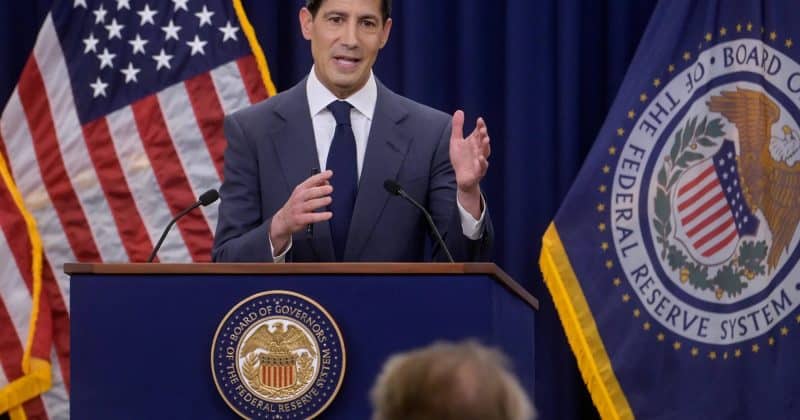
Kevin Warsh’s first act as Federal Reserve Chair was essentially telling markets to figure things out for themselves. His debut FOMC statement in June clocked in at roughly 130 words, stripped of the forward guidance that traders have treated as a cheat sheet for decades. Now, with the minutes from that June 16-17 meeting set for release on July 8, analysts are asking a pointed question: will the detailed play-by-play of internal Fed debates get the same haircut?
The case for strategic ambiguity
The old Fed communication model had a specific theory behind it. Give markets clear guidance on where rates are headed, and you reduce surprise-driven volatility. The problem, as Warsh sees it, is that this approach also locks the central bank into policy paths that sometimes turn out to be catastrophically wrong.
The 2021-2022 inflation episode is the textbook example. The Fed spent months insisting inflation was “transitory” while prices spiraled, then had to execute the most aggressive rate-hiking cycle in a generation. Forward guidance didn’t prevent volatility. It just delayed it and made the eventual correction worse.
Warsh’s solution is what he’s calling “strategic ambiguity.” Where previous statements ran north of 300 words with carefully calibrated language about the “balance of risks” and future rate paths, Warsh’s version read more like a telegram.
The FOMC voted unanimously, 12-0, to hold the federal funds rate steady at 3.50% to 3.75%. The harder read is the dot plot: nine of 18 economic participants projected at least one rate hike in 2026, excluding Warsh himself.
Five task forces and a philosophical overhaul
Warsh has launched five task forces at the June meeting to reassess how the Fed communicates, how it uses data, and how it thinks about inflation frameworks. This is a systematic rebuild of the institution’s methodology, not a cosmetic tweak.
The task forces signal that Warsh views the Fed’s post-2008 transparency revolution, pioneered by Ben Bernanke and extended by Janet Yellen and Jerome Powell, as having outlived its usefulness. The quarterly Summary of Economic Projections, the dot plot, the press conferences, the minutes themselves: all of these became market-moving events that, in Warsh’s apparent view, constrained rather than empowered the central bank.
Why crypto traders should care more than most
The intersection of Warsh’s Fed and digital assets is unusually direct. His financial disclosures revealed holdings in DeFi protocols, Bitcoin Lightning startups, and Ethereum scaling solutions. A Fed chair with skin in the crypto game is genuinely unprecedented.
The more immediate concern for crypto investors is what strategic ambiguity does to trading dynamics. Bitcoin and Ethereum have increasingly traded as macro assets, moving in response to rate expectations and Fed commentary. When the Fed was offering clear forward guidance, crypto traders could position around FOMC meetings with reasonable confidence about the direction of travel. Remove that guidance, and the anchor disappears.
What replaces it is raw economic data. Jobs reports, CPI prints, PCE readings: these become the primary drivers of rate expectations when the Fed refuses to telegraph its moves.
With nine of 18 participants already projecting rate hikes in 2026, the macro backdrop isn’t exactly friendly to risk assets. A rate at 3.50% to 3.75% with upside bias is a meaningful headwind for Bitcoin, which has historically performed best during easing cycles or when markets anticipate easing.
Investors who’ve been using FOMC meetings as a playbook for risk-on or risk-off positioning will need to recalibrate entirely. The old model was: read the statement, parse the language changes, trade the implied direction. The new model under Warsh appears to be: watch the data, ignore the Fed’s words (because there won’t be many), and accept that the range of possible outcomes at any given meeting just got wider.