
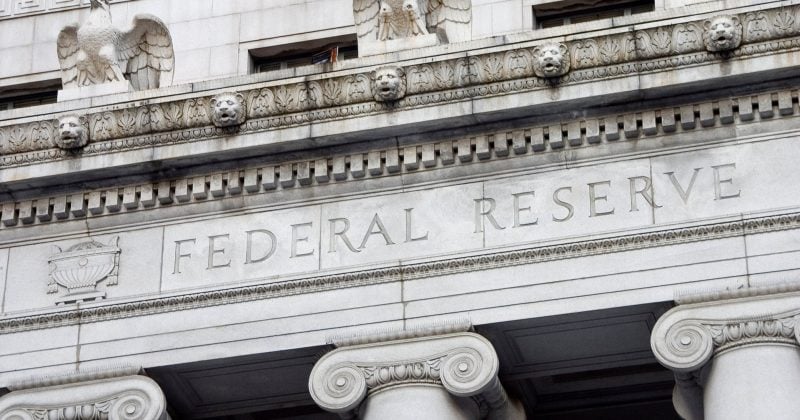
Fed may hold rates as policymakers resist one time increase
Markets see roughly a one in three chance of an increase, but policymakers may be reluctant to raise rates unless they are prepared to begin a broader tightening cycle.


The Federal Reserve may be less likely to raise interest rates this week than futures markets suggest.
The central bank began its two day policy meeting Tuesday and will announce its decision at 2 p.m. Eastern Time on Wednesday. The benchmark rate has remained between 3.50% and 3.75% since December.
Markets were pricing roughly a one in three chance of a quarter point increase, with most traders still expecting policymakers to leave rates unchanged.
The decision marks the second meeting led by Fed Chair Kevin Warsh, who has emphasized the importance of returning inflation to the central bank’s 2% target but has offered little guidance about his preferred timing for higher rates.
A major obstacle to a July increase is that Fed policy shifts rarely consist of a single move. Once officials begin raising or cutting rates after an extended pause, they generally continue in the same direction over several meetings.
Former St. Louis Fed President James Bullard said policymakers would effectively need to decide whether they are prepared to commit to a sequence of increases rather than treat a July hike as an isolated move. He said the committee may not be ready to make that commitment.
Recent inflation data has also weakened the immediate case for tightening.
Consumer prices rose 3.5% from a year earlier in June, down from 4.2% in May. Core inflation, which excludes food and energy, slowed to 2.6% from 2.9%.
The labor market has remained relatively stable. Employers added 57,000 jobs in June, while the unemployment rate declined to 4.2%. Wage growth of 3.5% suggested that employment conditions were not generating significant additional inflation pressure.
The news moving money, markets, and the world—before your day starts.
Daily. Free. Join 34,000+ readers across crypto, finance, and policy.
However, inflation has remained above the Fed’s 2% target for more than five years, and renewed increases in oil prices have revived concerns that price pressures could spread beyond energy and food.
Strong investment in artificial intelligence infrastructure is also supporting demand in parts of the economy, adding to arguments that monetary policy may need to remain restrictive.
At the Fed’s June meeting, all voting officials supported holding rates steady, although nine of 18 policymakers projected that rates would finish 2026 above their current level.
Economists expect several officials could dissent in favor of an increase this week, potentially preparing markets for a move at the September meeting.
Capital Economics said September remains its base case for the first hike, when the Fed will have more evidence about whether inflationary pressures are persisting. Markets have already assigned a much higher probability to an increase by that meeting.
Other analysts argue Warsh could push for an immediate increase to reinforce the Fed’s commitment to controlling inflation.
Wrightson ICAP said the decision could go either way but viewed a quarter point hike as slightly more likely than holding rates steady.
A surprise increase would carry a broader signal for markets. Investors could interpret it as the beginning of a conventional tightening cycle involving several hikes rather than a limited response to temporary inflation.
The last time the Fed raised rates without delivering another increase soon afterward was in 2015, when the central bank waited a year before continuing its normalization campaign.
The clearest isolated increase occurred in March 1997. The Fed ultimately did not follow through as inflation remained contained, and it began cutting rates the following year amid financial market stress.
Bank of America analysts said the central question is therefore not simply whether the Fed raises rates Wednesday, but whether officials are ready to begin a broader cycle that could include at least three increases.
Holding rates steady would leave September as the most likely starting point while giving policymakers additional time to assess inflation, energy prices, and economic growth.