
Nexo Earn with Nexo
Federal Reserve Bank of Kansas City president Jeff Schmid doubles down on inflation fight

Federal Reserve Bank of Kansas City president Jeff Schmid doubles down on inflation fight

The hawkish Fed official sees persistent inflation as the biggest threat to the US economy, signaling higher-for-longer interest rates that could weigh on risk assets including crypto.

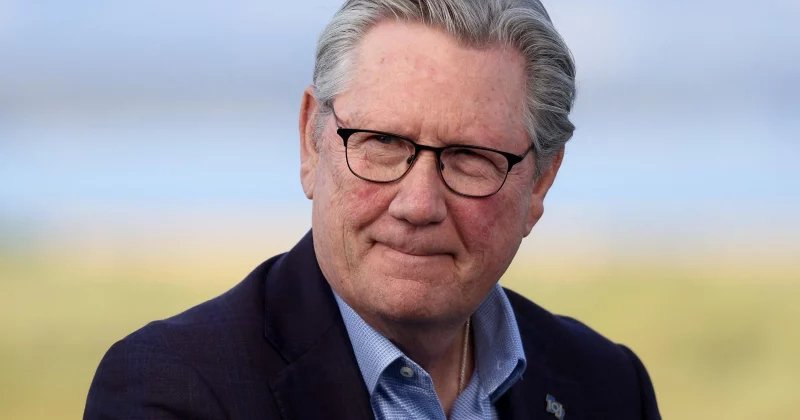
Kansas City Fed President Jeff Schmid isn’t backing down. Speaking at a banking conference on May 14, the central banker identified persistent inflation as the single most pressing risk facing the US economy, reinforcing his position as one of the Federal Reserve’s most vocal hawks.

With inflation hovering around 3%, well above the Fed’s 2% target, Schmid’s message was clear: restrictive monetary policy needs to stay in place.

A track record of dissent

He dissented against the Fed’s 0.25 percentage point rate cut in December 2025, arguing that inflation hadn’t cooled enough to justify easing. He also voted against a rate cut in October 2025, warning that loosening policy too early risked entrenching higher prices into the economy’s baseline.

Advertisement

His argument boils down to something straightforward: the economy still has momentum, the labor market remains balanced, and demand growth is strong enough that cutting rates would effectively pour gasoline on an inflationary fire that hasn’t been fully extinguished.

Service prices, in particular, have proven stubbornly resistant to decline. Goods inflation can fall when supply chains normalize, but service-sector inflation tends to be driven by wages and structural costs that don’t reverse easily.

What Schmid’s stance means for monetary policy

His public statements emphasize the necessity for maintaining restrictive monetary conditions rather than pivoting toward further easing. That puts him at odds with market participants who have been betting on rate cuts throughout 2026.

The gap between where inflation sits, around 3%, and where the Fed wants it, at 2%, might not sound like much. But that final percentage point has historically been the hardest to close. Schmid appears determined not to repeat the lesson the Fed learned the hard way in the 1970s, when premature easing allowed inflation to become embedded in expectations.

What this means for investors

For crypto markets, Schmid’s hawkish posture is a headwind. Higher borrowing costs reduce the amount of capital flowing into speculative investments, and they make yield-bearing alternatives like Treasury bonds relatively more attractive.

Sectors sensitive to interest rate fluctuations, including leveraged DeFi strategies and speculative altcoins, face the most pressure in this environment.

Schmid’s consistency matters. He’s articulating a framework: inflation is too high, the economy is strong enough to handle tight conditions, and easing prematurely would be a policy error.

Disclosure: This article was edited by Editorial Team. For more information on how we create and review content, see our Editorial Policy.

Federal Reserve Bank of Kansas City president Jeff Schmid doubles down on inflation fight

Federal Reserve Bank of Kansas City president Jeff Schmid doubles down on inflation fight

The hawkish Fed official sees persistent inflation as the biggest threat to the US economy, signaling higher-for-longer interest rates that could weigh on risk assets including crypto.

Kansas City Fed President Jeff Schmid isn’t backing down. Speaking at a banking conference on May 14, the central banker identified persistent inflation as the single most pressing risk facing the US economy, reinforcing his position as one of the Federal Reserve’s most vocal hawks.

With inflation hovering around 3%, well above the Fed’s 2% target, Schmid’s message was clear: restrictive monetary policy needs to stay in place.

A track record of dissent

He dissented against the Fed’s 0.25 percentage point rate cut in December 2025, arguing that inflation hadn’t cooled enough to justify easing. He also voted against a rate cut in October 2025, warning that loosening policy too early risked entrenching higher prices into the economy’s baseline.

Advertisement

His argument boils down to something straightforward: the economy still has momentum, the labor market remains balanced, and demand growth is strong enough that cutting rates would effectively pour gasoline on an inflationary fire that hasn’t been fully extinguished.

Service prices, in particular, have proven stubbornly resistant to decline. Goods inflation can fall when supply chains normalize, but service-sector inflation tends to be driven by wages and structural costs that don’t reverse easily.

What Schmid’s stance means for monetary policy

His public statements emphasize the necessity for maintaining restrictive monetary conditions rather than pivoting toward further easing. That puts him at odds with market participants who have been betting on rate cuts throughout 2026.

The gap between where inflation sits, around 3%, and where the Fed wants it, at 2%, might not sound like much. But that final percentage point has historically been the hardest to close. Schmid appears determined not to repeat the lesson the Fed learned the hard way in the 1970s, when premature easing allowed inflation to become embedded in expectations.

What this means for investors

For crypto markets, Schmid’s hawkish posture is a headwind. Higher borrowing costs reduce the amount of capital flowing into speculative investments, and they make yield-bearing alternatives like Treasury bonds relatively more attractive.

Sectors sensitive to interest rate fluctuations, including leveraged DeFi strategies and speculative altcoins, face the most pressure in this environment.

Schmid’s consistency matters. He’s articulating a framework: inflation is too high, the economy is strong enough to handle tight conditions, and easing prematurely would be a policy error.

Disclosure: This article was edited by Editorial Team. For more information on how we create and review content, see our Editorial Policy.