
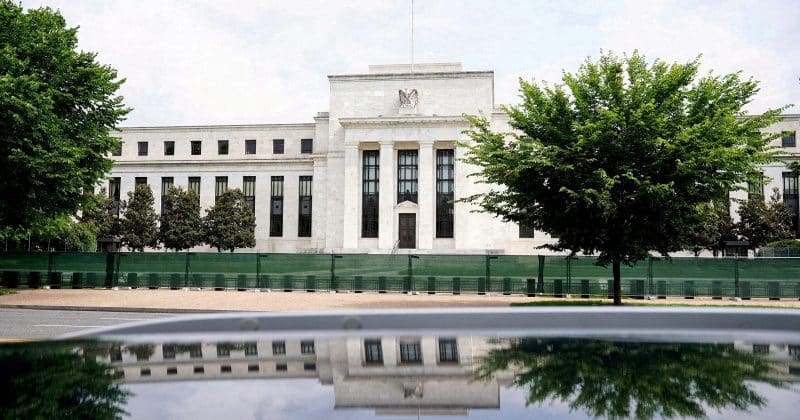
US Federal Reserve set to release 2026 stress test results for 32 major banks
The Fed's annual checkup on big banks arrives June 24, but frozen capital buffer requirements mean the results carry a different kind of weight this year.
The Federal Reserve will publish the results of its 2026 annual supervisory stress tests on June 24 at 4 p.m. EDT, covering 32 large US banks and bank holding companies with assets of $100 billion or more.
The stress capital buffer requirements for these banks are currently frozen and will remain so at least until 2027. The Fed is in the middle of reviewing and revising its stress-testing models after soliciting public feedback on transparency concerns. So while the results will tell us a lot about how prepared major banks are for economic catastrophe, they won’t trigger any immediate regulatory consequences.
What the test actually measures
The severely adverse scenario the Fed designed for this year’s tests includes commercial real estate prices collapsing by roughly 39%, house prices dropping around 30%, equity markets cratering by approximately 58%, and the VIX spiking to 72.
For context, the VIX hit around 82 during the March 2020 pandemic panic, the highest reading in the index’s history. A scenario with a VIX at 72 is essentially asking banks: could you survive a near-worst-case meltdown without needing a government lifeline?
Banks submitted their capital plans by early April 2026, and the scenarios themselves were finalized on February 4, 2026. The Fed had sought public comments on its scenario design in late 2025 as part of a broader, multi-year push toward making the stress-testing process less of a black box.
Macro, rates, and crypto—what moved markets and what matters next.
Daily. Free. Join 34,000+ readers across crypto, finance, and policy.
The crypto-shaped hole in the test
The 2026 stress tests do not explicitly model crypto or digital asset exposures. No Bitcoin price crash scenario. No stablecoin run simulation. No DeFi contagion pathway.
Multiple large banks now have exposure to cryptocurrency-related products, including Bitcoin ETFs, custody services, and lending arrangements with digital asset firms. The modeling approach for crypto-adjacent holdings remains inconsistent among institutions, according to the Fed’s own review process. Some banks may account for their Bitcoin ETF holdings under broader equity risk categories. Without a uniform methodology, the stress tests have a blind spot in an area that has grown significantly in relevance.
What this means for investors
The frozen SCB requirements create an unusual dynamic. Normally, stress test results directly influence how much capital banks must hold and, by extension, how much they can return to shareholders through dividends and buybacks. With that link temporarily severed, the June 24 release becomes more of an informational event than a regulatory trigger.
Institutions with heavy commercial real estate exposure will face the most scrutiny, given the scenario’s 39% CRE price decline. Banks that show thin capital cushions under the severely adverse scenario could see their stock prices come under pressure, even without an immediate change in regulatory requirements.