
Federal Reserve taps former Walmart CEO Doug McMillon to build real-time economic data engine
Fed Chair Kevin Warsh's new task forces aim to overhaul how the central bank measures spending, inflation, and growth, with implications that ripple well beyond traditional markets.
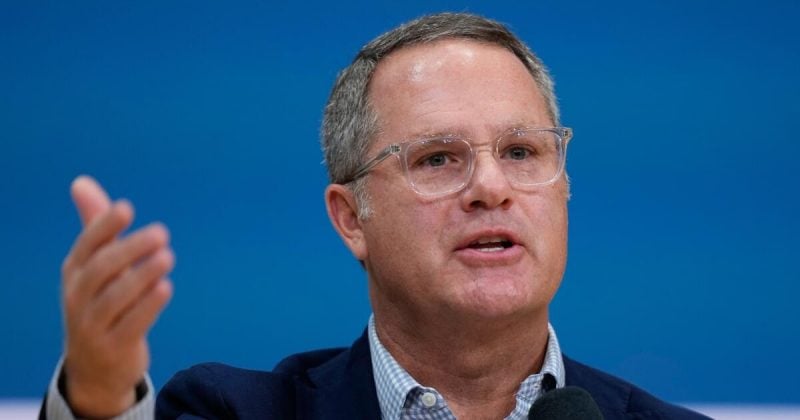
The Federal Reserve just recruited one of the most data-obsessed retail executives in American history to help it figure out what’s actually happening in the economy. On July 9, Fed Chairman Kevin Warsh announced the creation of five task forces designed to rethink how the central bank operates, and the one focused on economic data will be co-led by Doug McMillon, the former CEO of Walmart.
McMillon will be joined by Harvard economist Raj Chetty and University of Chicago economist Kevin Murphy. Their job: make the Fed’s economic indicators faster, more accurate, and more relevant.
Why a retail CEO belongs at the Fed’s data table
Here’s the thing about Walmart. It processes hundreds of millions of transactions across thousands of stores, giving its leadership a near-real-time pulse on consumer spending, price sensitivity, and regional economic health. McMillon spent over a decade running that machine. He knows what Americans are buying, what they’re cutting back on, and how quickly behavior shifts when prices move.
Chetty brings his own arsenal. He’s become famous for using anonymized credit card data, payroll records, and other private-sector datasets to track economic activity in something close to real time. His work during the pandemic demonstrated that high-frequency data could reveal economic shifts weeks before official government statistics caught up. Murphy, meanwhile, is a labor economist known for his empirical work on wages and human capital.
Together, the three co-leads represent a deliberate fusion of boardroom pattern recognition and academic methodology. The task force will operate independently and report its findings directly to the Federal Open Market Committee, the body that sets interest rates.
The news moving money, markets, and the world—before your day starts.
Daily. Free. Join 34,000+ readers across crypto, finance, and policy.
The broader overhaul
The data task force is one of five groups Warsh established as part of a comprehensive review of monetary policy operations. Other task forces will examine the Fed’s communications strategy and its inflation framework, among other areas. All five groups draw from a mix of business leaders and academics.
Bringing in a former Fortune 1 CEO to co-lead a data initiative would have been unusual under prior leadership. It suggests Warsh wants the Fed to think less like a government agency and more like an organization that competes on information speed.
What this means for crypto and digital asset markets
There’s no mention of cryptocurrencies or digital assets in the task force mandate. The task force’s embrace of private-sector, high-frequency data echoes the kind of on-chain analytics that crypto-native firms have been building for years. Blockchain networks already produce real-time, transparent economic data: transaction volumes, wallet activity, stablecoin flows, DeFi lending rates. If the Fed develops an appetite for contemporaneous data from traditional commerce, the intellectual distance between that and on-chain economic metrics shrinks.