
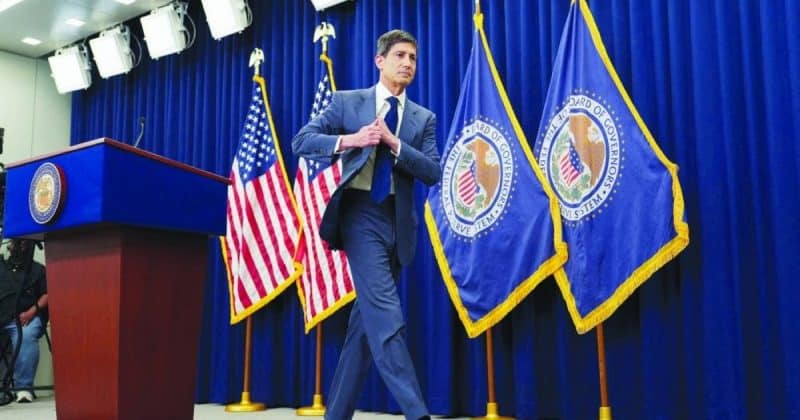
Fed’s Warsh says central bank will uphold its mandate after Cook ruling

Fed’s Warsh says central bank will uphold its mandate after Cook ruling

The Supreme Court's 5-4 decision in Trump v. Cook clears a key legal cloud over the Federal Reserve's independence, and Warsh is wasting no time signaling continuity

The Federal Reserve has a new chair, a fresh Supreme Court ruling in its corner, and a message it wants markets to hear clearly: business as usual.

Fed Chair Kevin Warsh said the central bank will continue acting on its core mandate following the Supreme Court’s June 29 decision in Trump v. Cook, which ruled 5-4 that the Trump administration failed to provide Fed Governor Lisa Cook with adequate due process before attempting to remove her from the Board of Governors.

In plain terms: the court said you cannot fire a Fed governor without following proper legal procedure, and the administration did not do that. Cook stays.

What the ruling actually says

The majority held that the administration had not met the procedural bar required to remove Cook, who holds a statutory position with protections built specifically to insulate Fed governors from political pressure.

Fed governors typically serve 14-year terms, a tenure longer than almost any elected official in Washington.

Advertisement

The 5-4 split signals the ruling was not unanimous, and the dissent likely argued for broader presidential removal authority. But for now, the majority opinion holds, and Cook remains on the board.

Warsh’s public comment following the ruling was measured. He did not celebrate, did not editorialize, and did not name the administration. He said the Fed will continue to act on its remit.

Who is Kevin Warsh and why does this matter for him specifically

Warsh was sworn in as Fed Chair on May 22, 2026, which means he stepped into the role while the Trump v. Cook litigation was already live. His term runs through May 2030.

The ruling removes that immediate overhang. Warsh can now operate with a board whose composition is settled, at least for the moment, and focus on navigating inflation, managing expectations around employment, and communicating policy clearly.

Warsh previously served as a Fed Governor from 2006 to 2011, which means he has institutional memory of the 2008 financial crisis period.

What this means for markets and monetary policy

For investors, the practical read on this ruling is fairly clean: the Fed’s independence is more legally entrenched today than it was a week ago.

The ruling does not guarantee the Fed will make the right policy calls. Warsh and the board still have to actually read the economy correctly, and inflation dynamics, labor market signals, and global growth headwinds are all live debates among serious economists.

One risk worth watching: a 5-4 ruling is not a permanent wall. A future case with a different composition of justices, or a different legal framing, could revisit the question of presidential removal authority over Fed governors.

For anyone positioning around rate expectations, the cleaner read now is that the Fed’s decision-making process is insulated enough to treat incoming economic data as the primary variable. Whether Warsh moves rates, holds, or signals a pivot will depend on what the numbers say, not on who is making calls to the Eccles Building.

Disclosure: This article was edited by Editorial Team. For more information on how we create and review content, see our Editorial Policy.

Fed’s Warsh says central bank will uphold its mandate after Cook ruling

Fed’s Warsh says central bank will uphold its mandate after Cook ruling

The Supreme Court's 5-4 decision in Trump v. Cook clears a key legal cloud over the Federal Reserve's independence, and Warsh is wasting no time signaling continuity

The Federal Reserve has a new chair, a fresh Supreme Court ruling in its corner, and a message it wants markets to hear clearly: business as usual.

Fed Chair Kevin Warsh said the central bank will continue acting on its core mandate following the Supreme Court’s June 29 decision in Trump v. Cook, which ruled 5-4 that the Trump administration failed to provide Fed Governor Lisa Cook with adequate due process before attempting to remove her from the Board of Governors.

In plain terms: the court said you cannot fire a Fed governor without following proper legal procedure, and the administration did not do that. Cook stays.

What the ruling actually says

The majority held that the administration had not met the procedural bar required to remove Cook, who holds a statutory position with protections built specifically to insulate Fed governors from political pressure.

Fed governors typically serve 14-year terms, a tenure longer than almost any elected official in Washington.

Advertisement

The 5-4 split signals the ruling was not unanimous, and the dissent likely argued for broader presidential removal authority. But for now, the majority opinion holds, and Cook remains on the board.

Warsh’s public comment following the ruling was measured. He did not celebrate, did not editorialize, and did not name the administration. He said the Fed will continue to act on its remit.

Who is Kevin Warsh and why does this matter for him specifically

Warsh was sworn in as Fed Chair on May 22, 2026, which means he stepped into the role while the Trump v. Cook litigation was already live. His term runs through May 2030.

The ruling removes that immediate overhang. Warsh can now operate with a board whose composition is settled, at least for the moment, and focus on navigating inflation, managing expectations around employment, and communicating policy clearly.

Warsh previously served as a Fed Governor from 2006 to 2011, which means he has institutional memory of the 2008 financial crisis period.

What this means for markets and monetary policy

For investors, the practical read on this ruling is fairly clean: the Fed’s independence is more legally entrenched today than it was a week ago.

The ruling does not guarantee the Fed will make the right policy calls. Warsh and the board still have to actually read the economy correctly, and inflation dynamics, labor market signals, and global growth headwinds are all live debates among serious economists.

One risk worth watching: a 5-4 ruling is not a permanent wall. A future case with a different composition of justices, or a different legal framing, could revisit the question of presidential removal authority over Fed governors.

For anyone positioning around rate expectations, the cleaner read now is that the Fed’s decision-making process is insulated enough to treat incoming economic data as the primary variable. Whether Warsh moves rates, holds, or signals a pivot will depend on what the numbers say, not on who is making calls to the Eccles Building.

Disclosure: This article was edited by Editorial Team. For more information on how we create and review content, see our Editorial Policy.