
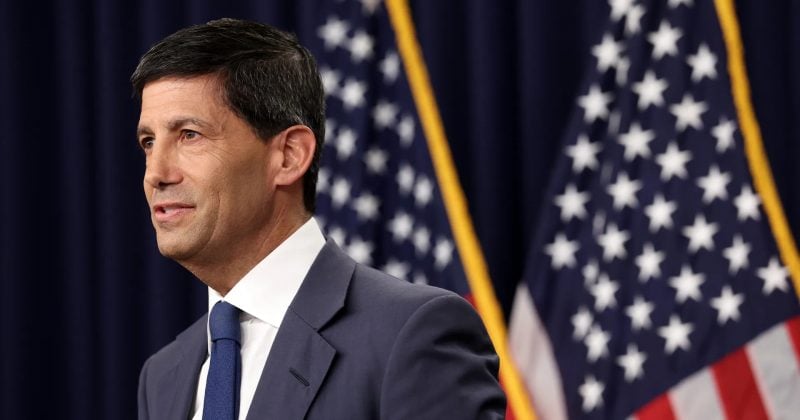
Federal Reserve Chairman Kevin Warsh defends steady interest rates amid inflation fight

Via axios.com

Federal Reserve Chairman Kevin Warsh defends steady interest rates amid inflation fight

The FOMC held rates at 3.5%-3.75% in a 9-3 vote, with three dissenters pushing for a hike as inflation remains stubbornly above the 2% target

Kevin Warsh has a message for anyone who thinks the Federal Reserve is sitting on its hands: holding rates steady is not the same as doing nothing.

The Fed Chairman, who took the reins in May 2026, defended the FOMC’s decision to keep the federal funds rate parked in the 3.5%-3.75% range at its July 29 meeting. The vote wasn’t unanimous, though. A 9-3 split saw three officials push for an outright rate hike, a sign that even inside the Fed, patience is wearing thin.

Five years of above-target inflation will do that

Inflation has been running above the Fed’s 2% target for more than five years now. The culprits are familiar at this point: supply shocks, geopolitical tensions in the Middle East, and a massive surge in demand fueled by the AI investment boom.

Warsh acknowledged as much, noting that the persistent inflationary pressures of the past half-decade can’t be fixed with short-term measures.

Advertisement

“This Fed will not waver,” Warsh stated, framing the hold as a deliberate strategic choice rather than indecision.

Context matters: from cuts to holds

The Fed executed a series of three rate cuts in late 2025, responding to what looked like a cooling economy. Then came 2026, and the cuts stopped.

The July decision marks the fifth consecutive rate hold and Warsh’s second since becoming Chair. The economy didn’t cool as expected. Growth remained strong, unemployment stayed low, and inflation refused to cooperate.

Warsh has also established task forces within the Fed to respond proactively to shifting market conditions. The three dissenters who voted for a hike represent a meaningful minority. In Fed math, 9-3 is a comfortable majority, but three hawkish votes signal genuine concern that the current rate isn’t restrictive enough to tame inflation.

What this means for crypto and risk assets

A “higher for longer” rate environment is generally unfriendly territory for speculative assets. When risk-free yields sit in the mid-3% range, the opportunity cost of holding volatile, non-yielding assets like Bitcoin goes up.

The rate hold itself was largely priced in by markets. But the 9-3 vote introduces a wrinkle that traders shouldn’t ignore. Three votes for a hike means the distribution of outcomes skews hawkish.

The AI investment boom driving some of this inflation is worth watching through a crypto lens too. Capital pouring into AI infrastructure and compute represents competition for the same pool of speculative investment dollars that might otherwise flow into digital assets.

Warsh’s task forces add another layer of uncertainty. Proactive responses to market conditions could mean anything from regulatory adjustments to emergency rate actions if something breaks.

Disclosure: This article was edited by Editorial Team. For more information on how we create and review content, see our Editorial Policy.

Federal Reserve Chairman Kevin Warsh defends steady interest rates amid inflation fight

Federal Reserve Chairman Kevin Warsh defends steady interest rates amid inflation fight

The FOMC held rates at 3.5%-3.75% in a 9-3 vote, with three dissenters pushing for a hike as inflation remains stubbornly above the 2% target

Via axios.com

Kevin Warsh has a message for anyone who thinks the Federal Reserve is sitting on its hands: holding rates steady is not the same as doing nothing.

The Fed Chairman, who took the reins in May 2026, defended the FOMC’s decision to keep the federal funds rate parked in the 3.5%-3.75% range at its July 29 meeting. The vote wasn’t unanimous, though. A 9-3 split saw three officials push for an outright rate hike, a sign that even inside the Fed, patience is wearing thin.

Five years of above-target inflation will do that

Inflation has been running above the Fed’s 2% target for more than five years now. The culprits are familiar at this point: supply shocks, geopolitical tensions in the Middle East, and a massive surge in demand fueled by the AI investment boom.

Warsh acknowledged as much, noting that the persistent inflationary pressures of the past half-decade can’t be fixed with short-term measures.

Advertisement

“This Fed will not waver,” Warsh stated, framing the hold as a deliberate strategic choice rather than indecision.

Context matters: from cuts to holds

The Fed executed a series of three rate cuts in late 2025, responding to what looked like a cooling economy. Then came 2026, and the cuts stopped.

The July decision marks the fifth consecutive rate hold and Warsh’s second since becoming Chair. The economy didn’t cool as expected. Growth remained strong, unemployment stayed low, and inflation refused to cooperate.

Warsh has also established task forces within the Fed to respond proactively to shifting market conditions. The three dissenters who voted for a hike represent a meaningful minority. In Fed math, 9-3 is a comfortable majority, but three hawkish votes signal genuine concern that the current rate isn’t restrictive enough to tame inflation.

What this means for crypto and risk assets

A “higher for longer” rate environment is generally unfriendly territory for speculative assets. When risk-free yields sit in the mid-3% range, the opportunity cost of holding volatile, non-yielding assets like Bitcoin goes up.

The rate hold itself was largely priced in by markets. But the 9-3 vote introduces a wrinkle that traders shouldn’t ignore. Three votes for a hike means the distribution of outcomes skews hawkish.

The AI investment boom driving some of this inflation is worth watching through a crypto lens too. Capital pouring into AI infrastructure and compute represents competition for the same pool of speculative investment dollars that might otherwise flow into digital assets.

Warsh’s task forces add another layer of uncertainty. Proactive responses to market conditions could mean anything from regulatory adjustments to emergency rate actions if something breaks.

Disclosure: This article was edited by Editorial Team. For more information on how we create and review content, see our Editorial Policy.