
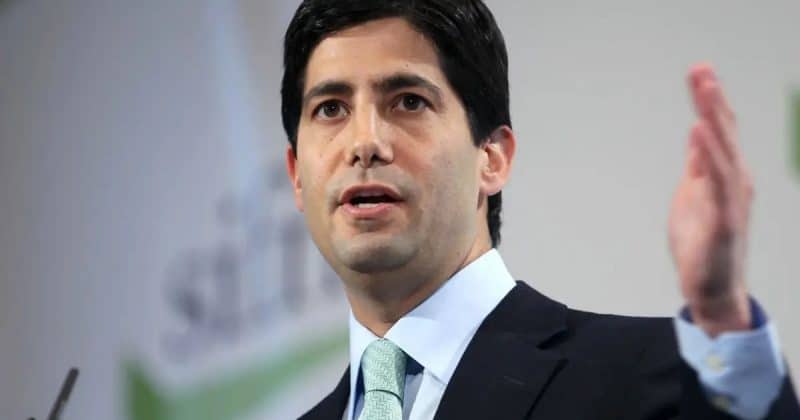
Federal Reserve’s Warsh notes decline in volatility and yields

Federal Reserve’s Warsh notes decline in volatility and yields

The new Fed chair's stripped-down communication strategy is reshaping how markets interpret monetary policy signals

Kevin Warsh took office on May 22, 2026, replacing Jerome Powell. His first Federal Open Market Committee meeting, held June 16-17, kept the fed funds rate steady at 3.50%-3.75%.

The art of saying less

The June FOMC statement clocked in at just 132 words. For context, the April statement under the previous regime ran 341 words. That’s a 61% reduction.

This isn’t accidental brevity. Warsh has made reducing forward guidance a cornerstone of his communication strategy. The philosophy is straightforward: rather than the Fed telling markets where it plans to go, markets should tell the Fed where conditions warrant action.

Advertisement

Volatility expectations vs. reality

When Warsh’s approach first became clear, the consensus view among analysts was unambiguous: expect more volatility, not less. Firms like Goldman Sachs, T. Rowe Price, and Bespoke all flagged the likelihood of heightened uncertainty across Treasury markets, equities, and digital assets.

The initial data seemed to confirm those fears. The 10-year Treasury yield spiked to 4.49% following the June FOMC meeting before pulling back.

The Fed is also managing a balance sheet that sits near $7 trillion, with plans to continue reducing it.

What this means for crypto and risk assets

Bitcoin and the broader digital asset market have felt the weight of Warsh’s hawkish positioning. When the new chair signaled a commitment to balance-sheet reduction and stepped back from forward guidance, risk assets responded predictably.

Analysts have also flagged the potential for higher consumer borrowing rates as a downstream effect of Warsh’s approach.

For crypto investors specifically, the fed funds rate sitting at 3.50%-3.75% represents a materially different environment than the near-zero rates that fueled the 2020-2021 bull run.

Disclosure: This article was edited by Editorial Team. For more information on how we create and review content, see our Editorial Policy.

Federal Reserve’s Warsh notes decline in volatility and yields

Federal Reserve’s Warsh notes decline in volatility and yields

The new Fed chair's stripped-down communication strategy is reshaping how markets interpret monetary policy signals

Kevin Warsh took office on May 22, 2026, replacing Jerome Powell. His first Federal Open Market Committee meeting, held June 16-17, kept the fed funds rate steady at 3.50%-3.75%.

The art of saying less

The June FOMC statement clocked in at just 132 words. For context, the April statement under the previous regime ran 341 words. That’s a 61% reduction.

This isn’t accidental brevity. Warsh has made reducing forward guidance a cornerstone of his communication strategy. The philosophy is straightforward: rather than the Fed telling markets where it plans to go, markets should tell the Fed where conditions warrant action.

Advertisement

Volatility expectations vs. reality

When Warsh’s approach first became clear, the consensus view among analysts was unambiguous: expect more volatility, not less. Firms like Goldman Sachs, T. Rowe Price, and Bespoke all flagged the likelihood of heightened uncertainty across Treasury markets, equities, and digital assets.

The initial data seemed to confirm those fears. The 10-year Treasury yield spiked to 4.49% following the June FOMC meeting before pulling back.

The Fed is also managing a balance sheet that sits near $7 trillion, with plans to continue reducing it.

What this means for crypto and risk assets

Bitcoin and the broader digital asset market have felt the weight of Warsh’s hawkish positioning. When the new chair signaled a commitment to balance-sheet reduction and stepped back from forward guidance, risk assets responded predictably.

Analysts have also flagged the potential for higher consumer borrowing rates as a downstream effect of Warsh’s approach.

For crypto investors specifically, the fed funds rate sitting at 3.50%-3.75% represents a materially different environment than the near-zero rates that fueled the 2020-2021 bull run.

Disclosure: This article was edited by Editorial Team. For more information on how we create and review content, see our Editorial Policy.