
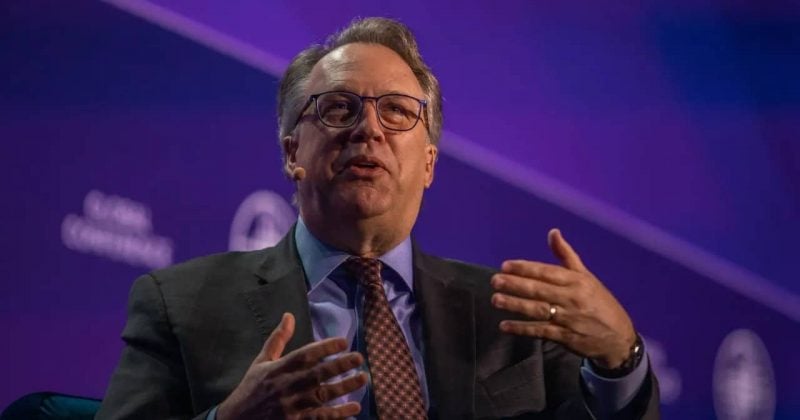
Federal Reserve Bank of New York’s Williams sees no clear path for rates
The Fed's vice chair says policy is 'well positioned' but offers zero guidance on what comes next, leaving markets to figure it out themselves.
John C. Williams, President of the Federal Reserve Bank of New York and Vice Chair of the Federal Open Market Committee, essentially told markets on May 4 that the Fed has no idea where interest rates are headed. Policy is balanced, he said. The economy has “unusual crosscurrents.” And if you were hoping for a roadmap, you’re out of luck.
The federal funds rate sits at 3.5% to 3.75%, unchanged after the FOMC’s April 28-29 meeting. Williams made clear that the committee can’t offer strong guidance on whether the next move is up, down, or nowhere at all.
A Fed that won’t commit
The dual mandate, maximum employment and stable prices, remains the guiding framework. Williams acknowledged risks on both sides of that equation. Inflation could stick around longer than expected, or the labor market could soften in ways that demand a response.
Williams expressed an expectation that inflation will stabilize around 2% over the medium term as near-term pressures fade.
Geopolitical tensions, particularly in the Middle East including Iran-related developments, are adding another layer of fog. These uncertainties are directly limiting the Fed’s ability to provide forward guidance.
The rate freeze and what it signals
The decision to hold rates at 3.5% to 3.75% wasn’t surprising. Throughout 2026, Williams has consistently described the Fed’s stance as balanced yet modestly restrictive.
The news moving money, markets, and the world—before your day starts.
Daily. Free. Join 34,000+ readers across crypto, finance, and policy.
Williams offered no directional signaling. The FOMC is apparently unable to provide strong guidance regarding future adjustments. The internal debate is genuinely unresolved, not just publicly guarded.
The commitment to data dependence and risk management means every single economic data release between now and the next FOMC meeting becomes a potential market-moving event. Employment numbers, CPI prints, consumer spending data: all of it carries outsized weight when the Fed is publicly admitting it doesn’t know what to do next.
What this means for crypto and risk assets
Interest rates at 3.5% to 3.75% represent a moderately restrictive environment. That means borrowing costs remain elevated, traditional savings instruments still offer decent returns, and the opportunity cost of holding volatile, non-yielding assets like Bitcoin stays meaningful.
Williams’ comments about geopolitical risks add another dimension for crypto investors to consider. Middle East tensions can drive oil prices higher, which feeds into inflation expectations, which could push the Fed toward maintaining or even raising rates.
If inflation does drift toward the 2% target as Williams expects, and if geopolitical tensions cool, the door to rate cuts opens.