
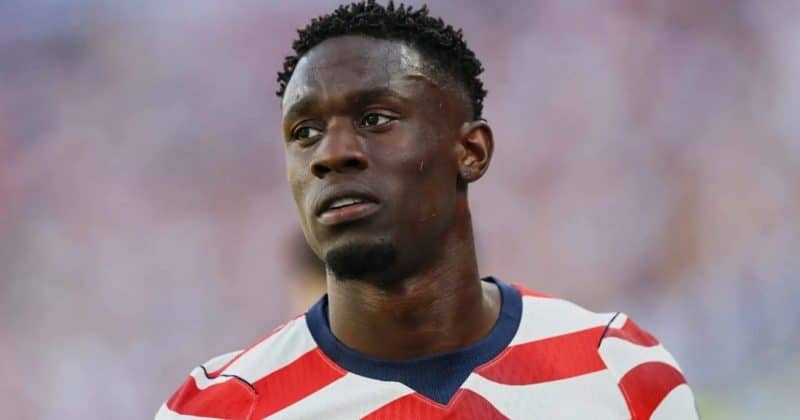
FIFA lifts Balogun’s red card suspension after Trump calls Infantino directly
The unprecedented reversal raises uncomfortable questions about political influence over global sports governance, and what it means when the host nation's president picks up the phone.
FIFA just did something it almost never does: reversed a red card suspension during a World Cup. And it did so after the President of the United States reportedly called FIFA President Gianni Infantino to lobby for the decision.
Folarin Balogun, the US men’s national team striker who had been leading his squad in goals during the 2026 World Cup, is now cleared to play in the round-of-16 match against Belgium. Three days ago, that seemed impossible.
What happened on the pitch
Balogun received a straight red card in the 64th minute of the US team’s 2-0 victory over Bosnia and Herzegovina on July 2. The foul, a challenge on Tarik Muharemovic, triggered an automatic one-match suspension under FIFA’s disciplinary rules.
Here’s the thing about automatic suspensions for straight red cards in FIFA tournaments: they’re supposed to be non-appealable. That’s not a gray area. It’s baked into the rulebook as a feature, not a bug, designed to keep the disciplinary process clean and consistent across all 48 teams competing.
Then, on July 5, FIFA announced it had lifted the suspension entirely. The governing body cited Article 27 of its Disciplinary Code in justifying the reversal.
The news moving money, markets, and the world—before your day starts.
Daily. Free. Join 34,000+ readers across crypto, finance, and policy.
President Trump took to social media to thank FIFA for the decision. Behind the scenes, the effort involved more than a thank-you post. Trump reportedly contacted Infantino directly, and Secretary of State Marco Rubio also weighed in publicly advocating for Balogun’s eligibility.
Why this is unprecedented
The combination of a host nation’s head of state personally intervening, a reversal of what was explicitly described as a non-appealable punishment, and the speed at which it happened, just three days, makes this unlike anything in recent World Cup history.
The United States is the host nation of the 2026 World Cup. FIFA’s revenue during a World Cup is overwhelmingly tied to the host country’s infrastructure, broadcast deals, and sponsorship ecosystem. When the person who controls that country’s regulatory and political apparatus asks you for a favor, the power dynamic is not exactly balanced.
The Article 27 question
FIFA pointed to Article 27 of its Disciplinary Code as the legal basis for the reversal. That article provides the FIFA Disciplinary Committee with some discretionary authority in exceptional circumstances, but it was never designed to serve as an override switch for automatic suspensions triggered by on-field red cards.
What this means for the tournament and beyond
For the US team specifically, getting Balogun back is enormous. He was their top scorer in the group stage, and Belgium represents the kind of opponent where you need every available weapon.