
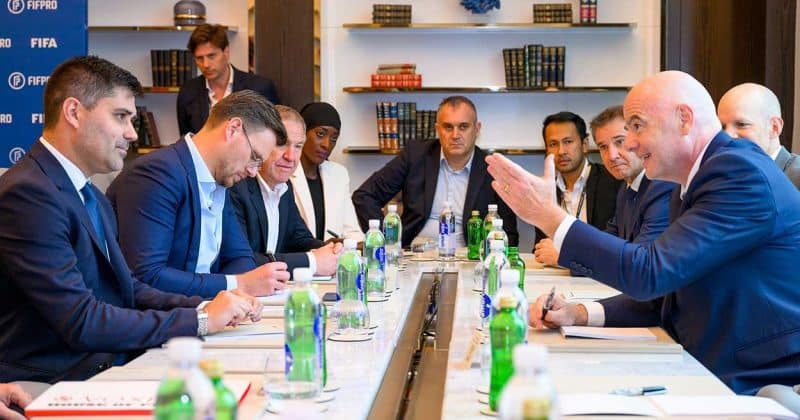
FIFA and FIFPRO sign landmark deal giving players a seat at football’s decision-making table
The memorandum of understanding runs through 2031 and could reshape how player data and likeness are licensed across Web3 platforms
Football players just got something they’ve been pushing for decades: a real voice in how the sport is governed. FIFA and FIFPRO, the global players’ union representing over 70,000 professional footballers across 70 national unions, signed a Memorandum of Understanding that formally embeds player representation into the decision-making machinery of world football.
The deal, signed on June 9-10, 2026, will remain in force until December 31, 2031. The MoU establishes a Global Social Dialogue Platform, chaired by FIFA, where FIFPRO gets equal input on transfer regulations, player welfare standards, and broader policy decisions that shape the professional game.
What the deal actually changes
FIFPRO will now hold what amounts to veto-like influence in certain areas concerning player welfare and transfer reforms. The MoU builds on a prior cooperation pact established in 2017, but represents a significant evolution from that earlier framework. A FIFPRO Europe representative has already been appointed to the UEFA executive committee starting in May 2025, signaling that integration is already underway at the continental level.
Where blockchain and digital collectibles enter the picture
FIFA has been steadily expanding its blockchain footprint. Its digital collectibles platform, FIFA Collect, runs on Avalanche-based infrastructure after transitioning from Algorand. FIFPRO itself has previously collaborated on blockchain gaming initiatives like Matchday, which creates licensed player cards as digital assets.
Now consider what happens when the union representing those players gains formal authority over how player data, images, and intellectual property are licensed. Every digital collectible, every fan token, every blockchain-based game that uses a player’s likeness becomes subject to a governance framework where players have genuine negotiating power. With FIFPRO seated at the table during policy discussions, the terms under which Web3 platforms access player IP could shift substantially.
The news moving money, markets, and the world—before your day starts.
Daily. Free. Join 34,000+ readers across crypto, finance, and policy.
For Avalanche, the blockchain powering FIFA’s digital initiatives, AVAX, the network’s native token, benefits directly from FIFA’s continued commitment to the platform.
What this means for crypto investors
Governance agreements create predictability. When the rules around player IP licensing are negotiated through formal structures rather than ad hoc deals, platforms building on that IP get clearer regulatory footing.
Stronger player representation could mean higher licensing costs for blockchain platforms that use player likenesses. If FIFPRO successfully negotiates better compensation terms for its members, the margins for digital collectible platforms and blockchain games could tighten.
The transition from Algorand to Avalanche for FIFA Collect already demonstrated that platform allegiances in sports aren’t permanent. The 2026 World Cup, arriving alongside this freshly signed agreement, provides an obvious catalyst for increased digital engagement and potential new product launches.