
Nexo Earn with Nexo
Fans defy FIFA’s ban on Iranian flags at World Cup, lawsuit filed in Los Angeles

Fans defy FIFA’s ban on Iranian flags at World Cup, lawsuit filed in Los Angeles

A California nonprofit is suing FIFA over its decision to ban the pre-revolutionary Lion and Sun flag, calling it a violation of free speech protections

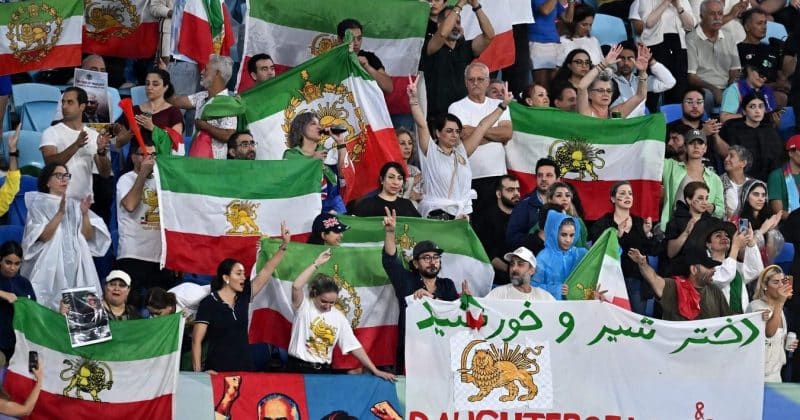
FIFA told fans they couldn’t bring a flag into World Cup stadiums. The fans brought it anyway.

The pre-1979 Iranian “Lion and Sun” flag, a symbol that predates the Islamic Revolution and carries deep significance for millions of Iranians in the diaspora, has become the unlikely flashpoint of the 2026 World Cup. FIFA classified it as a political symbol and added it to its list of prohibited items at stadiums. Protesters have responded by waving it outside SoFi Stadium and other venues, while a lawsuit filed in Los Angeles County Superior Court is testing whether FIFA’s rules can override California’s constitutional free speech protections.

The lawsuit challenging FIFA’s stadium code

The Institute for Voices of Liberty, a California nonprofit, along with plaintiff Sam Kermanian, filed suit against FIFA on June 10-11, 2026. The case landed in Los Angeles County Superior Court, which makes geographic sense given that several World Cup matches are being hosted in the region.

The core argument is straightforward. FIFA is operating events on American soil, and California has some of the strongest free speech protections in the country. The plaintiffs contend that banning the Lion and Sun flag amounts to viewpoint discrimination, particularly when other national and cultural flags have been permitted at previous tournaments without issue.

Advertisement

A preliminary injunction hearing is scheduled for June 15-16, 2026. That timing is not accidental. Iran’s opening World Cup match against New Zealand follows shortly after, making the hearing a de facto deadline for any legal relief.

Why this flag matters

The Lion and Sun emblem served as Iran’s national symbol for centuries before the 1979 Islamic Revolution replaced it with the current emblem of the Islamic Republic. For many Iranians living outside Iran, particularly those who fled the revolution or whose families did, it represents a connection to a pre-revolutionary identity.

It’s also widely used by Iranian opposition groups, which is precisely why FIFA categorized it as political. The Iranian government views the flag as a symbol of dissent. FIFA, in banning it, effectively sided with that interpretation.

The viewpoint discrimination argument in the lawsuit hinges on exactly this asymmetry. If FIFA allows the current Iranian national flag, which itself carries political meaning given the regime it represents, then banning the historical alternative isn’t a neutral policy. It’s a choice about which political reality gets recognized.

Protests outside the stadiums

Despite the ban, fans have not been subtle about their disagreement. Protests featuring the Lion and Sun flag have erupted outside SoFi Stadium and other World Cup venues. Some fans have attempted to bring the banners inside, testing FIFA’s enforcement mechanisms in real time.

FIFA has not reversed its position despite the growing backlash. The stadium code still explicitly lists the Lion and Sun flag among prohibited items, and there’s no indication the organization plans to make an exception ahead of the preliminary injunction hearing.

What this means for the intersection of sports and speech

This case matters beyond the specific flag in question. It’s a test of whether international sports governing bodies can impose speech restrictions that conflict with the laws of their host countries. California’s constitution provides free speech protections that in some respects go further than the First Amendment, extending to certain private spaces that function as public forums. Whether World Cup stadiums qualify under that framework is one of the key questions the court will need to address.

Disclosure: This article was edited by Editorial Team. For more information on how we create and review content, see our Editorial Policy.

Fans defy FIFA’s ban on Iranian flags at World Cup, lawsuit filed in Los Angeles

Fans defy FIFA’s ban on Iranian flags at World Cup, lawsuit filed in Los Angeles

A California nonprofit is suing FIFA over its decision to ban the pre-revolutionary Lion and Sun flag, calling it a violation of free speech protections

FIFA told fans they couldn’t bring a flag into World Cup stadiums. The fans brought it anyway.

The pre-1979 Iranian “Lion and Sun” flag, a symbol that predates the Islamic Revolution and carries deep significance for millions of Iranians in the diaspora, has become the unlikely flashpoint of the 2026 World Cup. FIFA classified it as a political symbol and added it to its list of prohibited items at stadiums. Protesters have responded by waving it outside SoFi Stadium and other venues, while a lawsuit filed in Los Angeles County Superior Court is testing whether FIFA’s rules can override California’s constitutional free speech protections.

The lawsuit challenging FIFA’s stadium code

The Institute for Voices of Liberty, a California nonprofit, along with plaintiff Sam Kermanian, filed suit against FIFA on June 10-11, 2026. The case landed in Los Angeles County Superior Court, which makes geographic sense given that several World Cup matches are being hosted in the region.

The core argument is straightforward. FIFA is operating events on American soil, and California has some of the strongest free speech protections in the country. The plaintiffs contend that banning the Lion and Sun flag amounts to viewpoint discrimination, particularly when other national and cultural flags have been permitted at previous tournaments without issue.

Advertisement

A preliminary injunction hearing is scheduled for June 15-16, 2026. That timing is not accidental. Iran’s opening World Cup match against New Zealand follows shortly after, making the hearing a de facto deadline for any legal relief.

Why this flag matters

The Lion and Sun emblem served as Iran’s national symbol for centuries before the 1979 Islamic Revolution replaced it with the current emblem of the Islamic Republic. For many Iranians living outside Iran, particularly those who fled the revolution or whose families did, it represents a connection to a pre-revolutionary identity.

It’s also widely used by Iranian opposition groups, which is precisely why FIFA categorized it as political. The Iranian government views the flag as a symbol of dissent. FIFA, in banning it, effectively sided with that interpretation.

The viewpoint discrimination argument in the lawsuit hinges on exactly this asymmetry. If FIFA allows the current Iranian national flag, which itself carries political meaning given the regime it represents, then banning the historical alternative isn’t a neutral policy. It’s a choice about which political reality gets recognized.

Protests outside the stadiums

Despite the ban, fans have not been subtle about their disagreement. Protests featuring the Lion and Sun flag have erupted outside SoFi Stadium and other World Cup venues. Some fans have attempted to bring the banners inside, testing FIFA’s enforcement mechanisms in real time.

FIFA has not reversed its position despite the growing backlash. The stadium code still explicitly lists the Lion and Sun flag among prohibited items, and there’s no indication the organization plans to make an exception ahead of the preliminary injunction hearing.

What this means for the intersection of sports and speech

This case matters beyond the specific flag in question. It’s a test of whether international sports governing bodies can impose speech restrictions that conflict with the laws of their host countries. California’s constitution provides free speech protections that in some respects go further than the First Amendment, extending to certain private spaces that function as public forums. Whether World Cup stadiums qualify under that framework is one of the key questions the court will need to address.

Disclosure: This article was edited by Editorial Team. For more information on how we create and review content, see our Editorial Policy.