
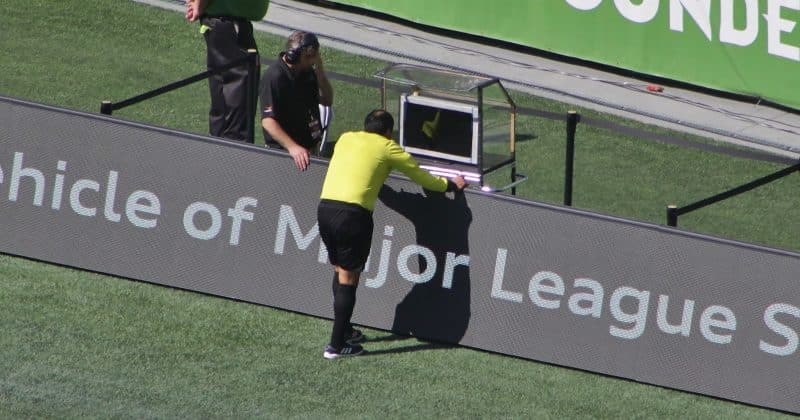
FIFA discrimination monitor calls for VAR official’s removal over hand gesture at World Cup
The Fare network says Australian video review official Shaun Evans made a gesture linked to white supremacist movements during Germany's match against Curaçao
FIFA’s anti-discrimination monitoring partner wants a video assistant referee pulled from the 2026 World Cup after he appeared to make a hand gesture associated with far-right extremism during a group stage match.
The Fare network, which serves as FIFA’s official discrimination monitor at the tournament, called for Australian VAR official Shaun Evans to be immediately removed from officiating duties. The request came on June 15, one day after the alleged incident during Germany’s 7-1 victory over Curaçao.
What happened and why it matters
During the June 14 match, Evans reportedly made an upside-down “OK” hand gesture. The Anti-Defamation League designated the OK gesture as a hate symbol in 2019. The gesture was notably associated with the perpetrator of the 2019 Christchurch mosque attacks in New Zealand.
In their statement, the Fare network said the gesture is recognized as a hate symbol within global far-right circles and that Evans is unfit to continue working at the tournament.
The broader context of discrimination monitoring
The 2026 World Cup represents the first edition of the tournament with expanded anti-discrimination monitoring protocols. The Fare network, a London-based organization that has worked with FIFA and UEFA for years to combat discrimination in football, had monitors in place specifically watching for these kinds of signals. The Fare network has collaborated with FIFA since 2015 to monitor anti-discrimination efforts at major football tournaments.
The news moving money, markets, and the world—before your day starts.
Daily. Free. Join 34,000+ readers across crypto, finance, and policy.
FIFA has acknowledged the incident but has not publicly detailed what steps, if any, it plans to take regarding Evans. Neither Evans nor Football Australia, the governing body that would oversee his officiating career domestically, have responded publicly.
The gesture debate
The ADL’s 2019 designation acknowledged that the vast majority of uses of the OK gesture are entirely innocent. But when the gesture appears in specific contexts, with specific orientations (inverted, for instance), and in settings where no obvious “OK” communication is needed, the calculus changes.
A VAR booth during a World Cup match is one of those settings where an inverted OK sign doesn’t have an obvious benign explanation. VAR officials communicate through headsets and digital systems, not hand signals to people across a stadium.