
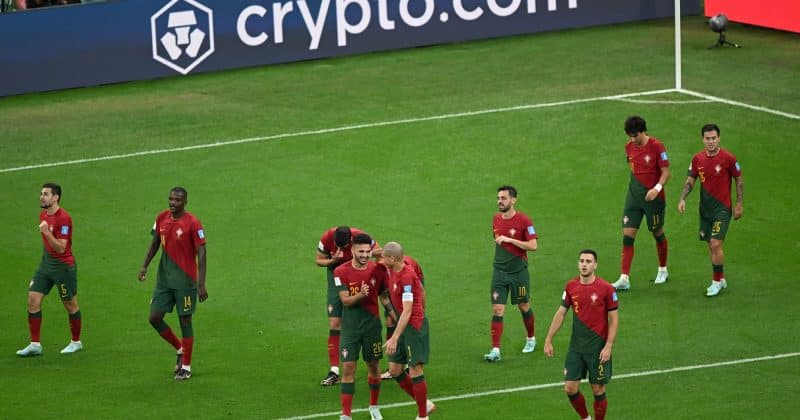
FIFA’s World Cup officiating picks highlight crypto’s growing role in global sports

FIFA’s World Cup officiating picks highlight crypto’s growing role in global sports

As FIFA appoints referees for Round of 16 matches, its partnership with Kraken and the rise of fan tokens reveal how deeply crypto has embedded itself in the world's biggest sporting event.

FIFA announced match officials for World Cup matches 93 and 94, a pair of Round of 16 contests scheduled for July 6, 2026. The 2026 World Cup features 48 teams, up from 32, and a total of 104 matches.

Kraken enters the pitch

On June 9, 2026, FIFA named Kraken as the Official Crypto Exchange Supporter of the tournament. The partnership is designed to enhance fan engagement and modernize how supporters interact with the tournament.

Advertisement

Fan tokens and the sentiment trade

FIFA itself hasn’t launched a dedicated token or blockchain protocol for the 2026 World Cup. No official FIFA coin, no NFT ticketing initiative, no on-chain voting for the Golden Ball award.

National-team fan tokens continue to trade actively on Socios.com, a platform built on the Chiliz blockchain. Teams like Argentina and Portugal have tokens that let holders participate in polls, access exclusive content, and signal their allegiance in a way that’s part fandom, part financial speculation.

These tokens are fundamentally sentiment-driven assets. When a team wins, its token tends to pump. When a team gets knocked out, holders are, well, not thrilled.

What this means for crypto investors

Fan tokens are thin markets compared to Bitcoin or Ethereum. Liquidity can evaporate quickly, especially for teams that get eliminated early.

FIFA’s decision to partner with a crypto exchange rather than launch its own token suggests that major sports organizations are converging on a model where they monetize crypto partnerships without taking on the regulatory and reputational risk of issuing their own digital assets.

Disclosure: This article was edited by Editorial Team. For more information on how we create and review content, see our Editorial Policy.

FIFA’s World Cup officiating picks highlight crypto’s growing role in global sports

FIFA’s World Cup officiating picks highlight crypto’s growing role in global sports

As FIFA appoints referees for Round of 16 matches, its partnership with Kraken and the rise of fan tokens reveal how deeply crypto has embedded itself in the world's biggest sporting event.

FIFA announced match officials for World Cup matches 93 and 94, a pair of Round of 16 contests scheduled for July 6, 2026. The 2026 World Cup features 48 teams, up from 32, and a total of 104 matches.

Kraken enters the pitch

On June 9, 2026, FIFA named Kraken as the Official Crypto Exchange Supporter of the tournament. The partnership is designed to enhance fan engagement and modernize how supporters interact with the tournament.

Advertisement

Fan tokens and the sentiment trade

FIFA itself hasn’t launched a dedicated token or blockchain protocol for the 2026 World Cup. No official FIFA coin, no NFT ticketing initiative, no on-chain voting for the Golden Ball award.

National-team fan tokens continue to trade actively on Socios.com, a platform built on the Chiliz blockchain. Teams like Argentina and Portugal have tokens that let holders participate in polls, access exclusive content, and signal their allegiance in a way that’s part fandom, part financial speculation.

These tokens are fundamentally sentiment-driven assets. When a team wins, its token tends to pump. When a team gets knocked out, holders are, well, not thrilled.

What this means for crypto investors

Fan tokens are thin markets compared to Bitcoin or Ethereum. Liquidity can evaporate quickly, especially for teams that get eliminated early.

FIFA’s decision to partner with a crypto exchange rather than launch its own token suggests that major sports organizations are converging on a model where they monetize crypto partnerships without taking on the regulatory and reputational risk of issuing their own digital assets.

Disclosure: This article was edited by Editorial Team. For more information on how we create and review content, see our Editorial Policy.