
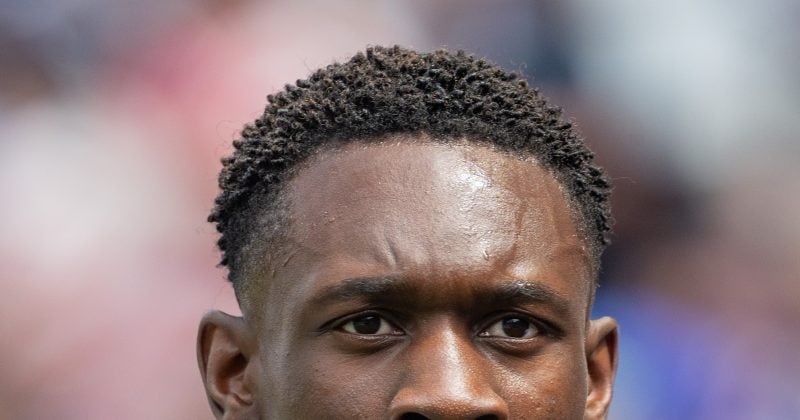
Folarin Balogun’s World Cup rise puts birthright citizenship back in the spotlight
The USMNT striker's red card controversy has made him the tournament's most talked-about player, and it has nothing to do with his goals.
Folarin Balogun was born in Brooklyn on July 3, 2001, more or less by accident. His family was visiting from England. That stopover made him an American citizen, and 25 years later, that citizenship is at the center of one of the biggest stories at the 2026 World Cup.
From Brooklyn birthright to World Cup breakout
Balogun’s World Cup debut was, by any measure, spectacular. He scored twice in a 4-1 victory over Paraguay, becoming the first U.S. player to score multiple goals in a single World Cup match since 1930.
Then came Bosnia-Herzegovina, and the red card. Balogun received a straight dismissal during the group-stage match, earning a one-game suspension and triggering a wave of scrutiny that spread well beyond the soccer world. The debate split into two distinct lanes: whether FIFA’s officiating and VAR protocols are consistently applied, and whether birthright citizenship, the legal mechanism that made Balogun American in the first place, is a concept worth revisiting.
The citizenship angle that nobody planned for
Birthright citizenship, the principle that anyone born on U.S. soil is automatically a citizen, is enshrined in the 14th Amendment. Balogun’s story did not create that tension, but it handed commentators a very visible, very convenient example to argue around.
The news moving money, markets, and the world—before your day starts.
Daily. Free. Join 34,000+ readers across crypto, finance, and policy.
FIFA allows players to switch national team allegiances under specific conditions, and dual-nationality players choosing between countries is a routine feature of the modern game. Balogun is not unusual in a global football context. He is unusual in an American political context.
What the VAR debate actually reveals
The straight red card issued against Balogun has become a focal point for broader frustration with how FIFA applies its officiating standards across the tournament. The suspension that kept Balogun out of a subsequent match gave that frustration a specific, named target.
Two goals in a World Cup debut, on the biggest stage the sport offers, is not a birthright. That part he earned.