
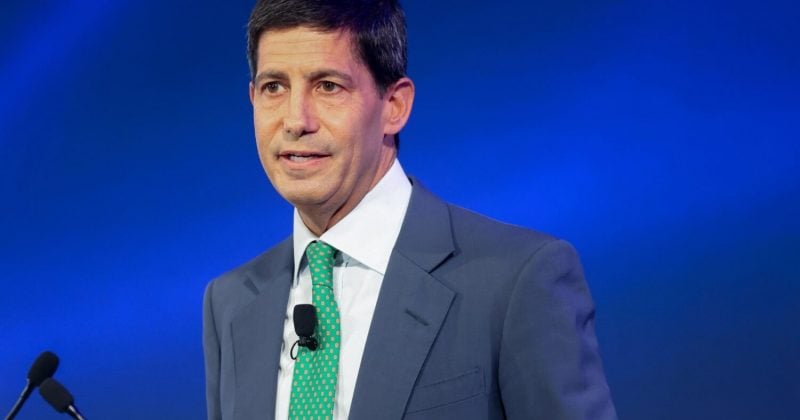
FOMC Chair Kevin Warsh’s 8-word statement could shift Wall Street and crypto markets
The new Fed chair's stripped-down policy statement signals a hawkish pivot that's already rattling risk assets, including Bitcoin
Eight words. That’s all it took to rattle Wall Street, spook crypto traders, and redefine the Federal Reserve’s communication playbook. New Fed Chair Kevin Warsh’s inaugural FOMC statement included a line that reads less like central bank boilerplate and more like a warning shot: “The Committee will deliver price stability.”
The June 16-17 meeting, Warsh’s first at the helm after succeeding Jerome Powell on May 22, 2026, kept the federal funds rate steady at 3.5%-3.75%. But the real story wasn’t the rate decision. It was everything the statement didn’t say.
A statement that says more by saying less
The April FOMC statement ran 341 words. Warsh’s June version? Just 132 words. That’s a 61% reduction in word count. More importantly, the new statement was stripped entirely of forward guidance, the Fed’s long-standing practice of telegraphing its next moves to help markets prepare.
This wasn’t accidental. Warsh has been a vocal critic of forward guidance for years, arguing that it boxes the Fed into policy corners and reduces its flexibility. As a former Fed governor during the 2008 financial crisis, he’s seen firsthand how markets can become overly dependent on central bank hand-holding.
What this means for crypto and risk assets
Bitcoin and the broader crypto market sold off immediately following the June meeting. When the Fed signals that it’s willing to keep interest rates elevated for as long as it takes to crush inflation, risk assets tend to suffer.
The news moving money, markets, and the world—before your day starts.
Daily. Free. Join 34,000+ readers across crypto, finance, and policy.
There’s a nuance worth noting, though. Warsh has publicly acknowledged that digital assets are already integrated into the US financial system. At the same time, he’s been explicit that a Central Bank Digital Currency represents a “bad policy choice.”
The bigger picture for investors
Warsh’s communication overhaul represents the most significant shift in Fed messaging strategy in over a decade. Under both Janet Yellen and Jerome Powell, the Fed leaned heavily into transparency, offering detailed projections, dot plots, and press conferences designed to minimize market surprises.
The Fed’s substantive review of its monetary policy tools, which Warsh has initiated, could also introduce structural changes that affect how liquidity flows through the financial system.
Traders should watch the incoming inflation data carefully, because Warsh has made it clear he’ll let the numbers, not market expectations, dictate policy.