
Nexo Earn with Nexo
Foreign investors own record 19% of US stocks, and crypto isn’t on their radar

Foreign investors own record 19% of US stocks, and crypto isn’t on their radar

International capital keeps flooding into American equities while digital assets remain an afterthought for sovereign and institutional foreign buyers.

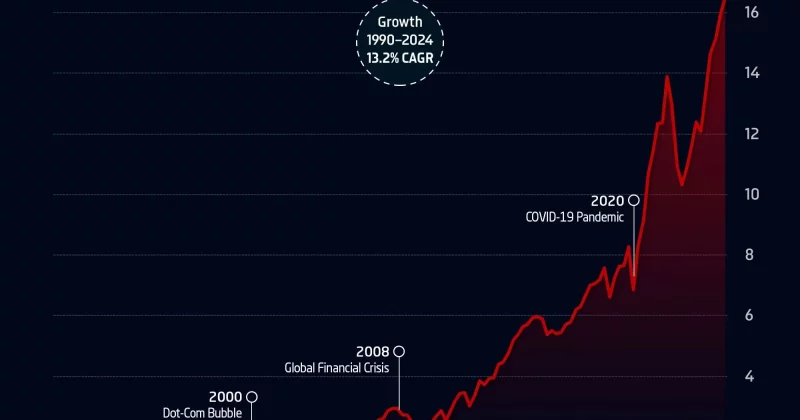
International investors now hold roughly 18% of all US equities, a record share that hasn’t been seen since at least 1945. In dollar terms, that translates to somewhere around $18 to $20 trillion worth of American stocks sitting in foreign hands.

Here’s the thing: this isn’t just a story about foreigners buying more shares. A big chunk of the increase comes from valuation gains, meaning the stocks they already owned simply got more expensive. But the buying hasn’t stopped either. Record foreign private inflows into US stocks hit $646.7 billion in the 12 months through September 2025, according to US Treasury International Capital data.

Who’s buying and why it matters

The usual suspects dominate foreign ownership of American equities. Advanced economies, particularly the UK, Canada, and Japan, hold the lion’s share. Emerging market investors, by contrast, tend to park their money in safer instruments like US Treasuries rather than betting on equities.

Advertisement

US equities now make up a massive portion of foreign investors’ total US financial assets, ranging from roughly 30% to 61% depending on the measurement.

The Federal Reserve’s own data series pegs foreign equity holdings at $18.6 trillion for 2025.

What this means for markets and liquidity

More foreign capital means deeper liquidity pools, which generally helps keep bid-ask spreads tight and transaction costs low. But it also means the market becomes more sensitive to geopolitical shocks, currency fluctuations, and policy changes in countries thousands of miles from Wall Street.

Crypto’s conspicuous absence from the conversation

Despite billions flowing into US financial assets from abroad, there’s essentially no indication that foreign institutional and sovereign investors are directing meaningful capital toward digital assets.

The $646.7 billion in annual foreign inflows flowing into US stocks represents a pool of capital that crypto has barely begun to tap.

Disclosure: This article was edited by Editorial Team. For more information on how we create and review content, see our Editorial Policy.

Foreign investors own record 19% of US stocks, and crypto isn’t on their radar

Foreign investors own record 19% of US stocks, and crypto isn’t on their radar

International capital keeps flooding into American equities while digital assets remain an afterthought for sovereign and institutional foreign buyers.

International investors now hold roughly 18% of all US equities, a record share that hasn’t been seen since at least 1945. In dollar terms, that translates to somewhere around $18 to $20 trillion worth of American stocks sitting in foreign hands.

Here’s the thing: this isn’t just a story about foreigners buying more shares. A big chunk of the increase comes from valuation gains, meaning the stocks they already owned simply got more expensive. But the buying hasn’t stopped either. Record foreign private inflows into US stocks hit $646.7 billion in the 12 months through September 2025, according to US Treasury International Capital data.

Who’s buying and why it matters

The usual suspects dominate foreign ownership of American equities. Advanced economies, particularly the UK, Canada, and Japan, hold the lion’s share. Emerging market investors, by contrast, tend to park their money in safer instruments like US Treasuries rather than betting on equities.

Advertisement

US equities now make up a massive portion of foreign investors’ total US financial assets, ranging from roughly 30% to 61% depending on the measurement.

The Federal Reserve’s own data series pegs foreign equity holdings at $18.6 trillion for 2025.

What this means for markets and liquidity

More foreign capital means deeper liquidity pools, which generally helps keep bid-ask spreads tight and transaction costs low. But it also means the market becomes more sensitive to geopolitical shocks, currency fluctuations, and policy changes in countries thousands of miles from Wall Street.

Crypto’s conspicuous absence from the conversation

Despite billions flowing into US financial assets from abroad, there’s essentially no indication that foreign institutional and sovereign investors are directing meaningful capital toward digital assets.

The $646.7 billion in annual foreign inflows flowing into US stocks represents a pool of capital that crypto has barely begun to tap.

Disclosure: This article was edited by Editorial Team. For more information on how we create and review content, see our Editorial Policy.