
G7 countries set 60% import limit on critical minerals by 2030
The world's wealthiest democracies want to break their dependence on any single supplier for the minerals powering everything from EVs to semiconductors
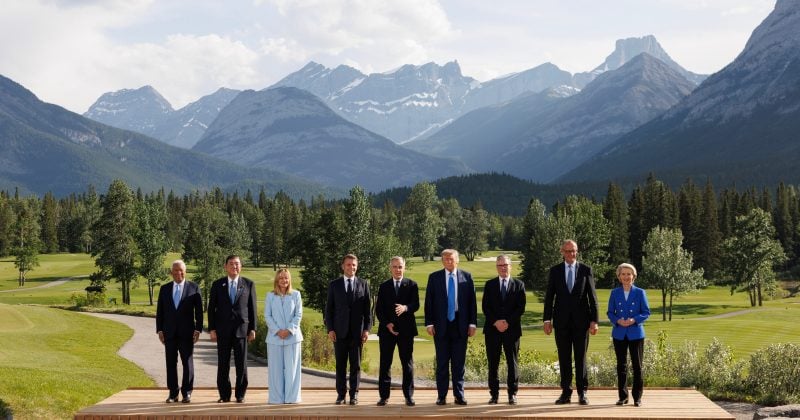
The G7 just drew a line in the sand on critical minerals. During the summit in Kananaskis, Canada, leaders unveiled the Critical Minerals Action Plan, a coordinated effort to ensure no single country supplies more than 60% of any member nation’s critical mineral imports.
China currently commands over 60% of the global market for key minerals like rare earths, lithium, and cobalt processing. The G7 is trying to build an insurance policy against the world’s most dominant mineral supplier.
What the plan actually does
The Action Plan, launched on June 17, 2025, builds on the Five-Point Plan for Critical Minerals Security that G7 nations introduced in 2023. It focuses on three pillars: diversifying supply chains, investing in responsible production, and ensuring traceability of critical minerals from mine to manufacturer.
The approach leans more toward standards and market incentives than hard quotas. A Roadmap to Promote Standards-based Markets is expected in October 2025, which will outline the specific mechanisms for achieving these diversification goals.
There’s real money behind the rhetoric. The G7 has announced $6.4 billion in critical mineral projects, spanning 26 investments designed to stand up alternative supply chains outside of Chinese dominance.
Individual nations are also moving on their own timelines. The UK’s Vision 2035 strategy targets ensuring no single country supplies more than 60% of its critical mineral demand by 2035.
Why this matters beyond geopolitics
Critical minerals are the building blocks of the energy transition, the semiconductor industry, and the defense sector. Lithium goes into EV batteries. Rare earths power wind turbines and fighter jet engines. Cobalt is essential for rechargeable batteries of all kinds.
China has shown willingness to use mineral exports as leverage. Export restrictions on gallium and germanium in 2023 sent a clear signal to Western governments that supply chain dependence could become a strategic liability.
What this means for investors
When the seven largest advanced economies collectively decide to redirect billions toward a specific sector, it creates gravitational pull for capital markets. Mining companies with operations outside of China, particularly those focused on lithium, cobalt, and rare earth extraction, stand to benefit from what amounts to a guaranteed demand floor backed by government policy.
The emphasis on responsible sourcing and traceability also creates a moat for companies that can demonstrate clean supply chains. ESG-compliant miners and processors may find themselves with a structural advantage as G7 procurement standards tighten.
The October 2025 roadmap will be the next major catalyst to watch. It should clarify how G7 nations plan to enforce or incentivize the 60% threshold, whether through trade policy, procurement rules, or financial mechanisms.