
Nexo Earn with Nexo
Gemini unveils Neural Expressive design language at Google I/O 2026

Gemini unveils Neural Expressive design language at Google I/O 2026

Google's AI assistant gets a visual overhaul with fluid animations, haptic feedback, and dynamic visuals, reaching over 900 million monthly users.

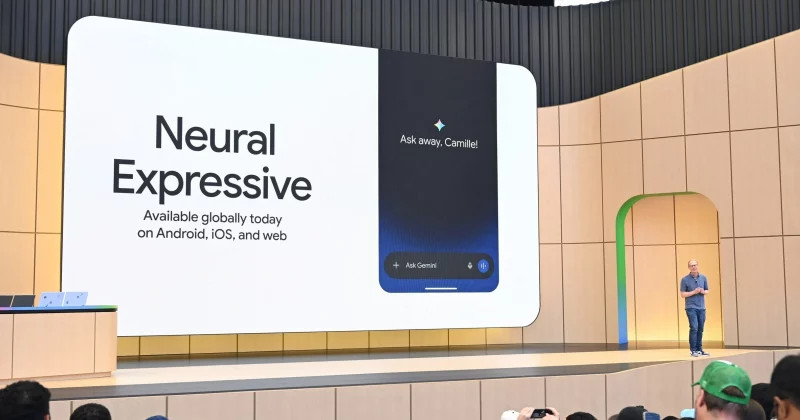
Google just gave its Gemini AI app a full makeover. At Google I/O 2026 on May 19, the company introduced Neural Expressive, a new design language that replaces the traditional wall-of-text AI interface with something that actually moves, responds, and feels alive.

The rollout started immediately across web, Android, and iOS. For an app that now serves over 900 million monthly active users, that’s not a minor cosmetic tweak.

What Neural Expressive actually does

The design language introduces fluid animations, vibrant color schemes, and haptic feedback that lets users physically feel the AI’s responses through their devices. But the bigger shift is in how Gemini delivers information itself.

Advertisement

Instead of dumping text, the app can now generate rich visual responses in real time. Interactive timelines, narrated videos, and dynamic visual elements replace what used to be static blocks of words.

“We’ve completely redesigned the entire experience with Neural Expressive,” said the Gemini VP.

Google’s VP of UX Design described it as a vibrant, dynamic language built specifically for the AI era.

The design update arrived alongside several other announcements, including the Gemini 3.5 Flash model and new features branded as Gemini Spark and Gemini Omni.

What this means for investors

Google’s announcements at I/O 2026 contained zero mentions of cryptocurrency tokens, blockchain protocols, or digital assets. That’s worth noting explicitly because the Gemini branding inevitably creates confusion with the Gemini crypto exchange founded by the Winklevoss twins. These are entirely unrelated products from entirely unrelated companies.

Neural Expressive raises the design bar for what users expect from an AI interface. Any Web3 project offering an AI chatbot or assistant that still responds with plain text is now competing against an experience that includes animations, haptics, and dynamic visuals.

Disclosure: This article was edited by Editorial Team. For more information on how we create and review content, see our Editorial Policy.

Gemini unveils Neural Expressive design language at Google I/O 2026

Gemini unveils Neural Expressive design language at Google I/O 2026

Google's AI assistant gets a visual overhaul with fluid animations, haptic feedback, and dynamic visuals, reaching over 900 million monthly users.

Google just gave its Gemini AI app a full makeover. At Google I/O 2026 on May 19, the company introduced Neural Expressive, a new design language that replaces the traditional wall-of-text AI interface with something that actually moves, responds, and feels alive.

The rollout started immediately across web, Android, and iOS. For an app that now serves over 900 million monthly active users, that’s not a minor cosmetic tweak.

What Neural Expressive actually does

The design language introduces fluid animations, vibrant color schemes, and haptic feedback that lets users physically feel the AI’s responses through their devices. But the bigger shift is in how Gemini delivers information itself.

Advertisement

Instead of dumping text, the app can now generate rich visual responses in real time. Interactive timelines, narrated videos, and dynamic visual elements replace what used to be static blocks of words.

“We’ve completely redesigned the entire experience with Neural Expressive,” said the Gemini VP.

Google’s VP of UX Design described it as a vibrant, dynamic language built specifically for the AI era.

The design update arrived alongside several other announcements, including the Gemini 3.5 Flash model and new features branded as Gemini Spark and Gemini Omni.

What this means for investors

Google’s announcements at I/O 2026 contained zero mentions of cryptocurrency tokens, blockchain protocols, or digital assets. That’s worth noting explicitly because the Gemini branding inevitably creates confusion with the Gemini crypto exchange founded by the Winklevoss twins. These are entirely unrelated products from entirely unrelated companies.

Neural Expressive raises the design bar for what users expect from an AI interface. Any Web3 project offering an AI chatbot or assistant that still responds with plain text is now competing against an experience that includes animations, haptics, and dynamic visuals.

Disclosure: This article was edited by Editorial Team. For more information on how we create and review content, see our Editorial Policy.