
General Fusion Group surges on first day of trading after merger with blank-check firm

General Fusion Group surges on first day of trading after merger with blank-check firm

The first publicly traded pure-play nuclear fusion company debuted on Nasdaq under ticker GFUZ, marking a milestone for an industry that's been promising unlimited clean energy for decades

General Fusion Group Ltd. had a strong opening day on Nasdaq after completing its merger with Spring Valley Acquisition Corp. III, becoming the first publicly traded company focused exclusively on nuclear fusion energy. The stock, trading under the ticker GFUZ, surged as investors rushed to get exposure to what might be the energy industry’s longest-running “we’re almost there” story.

The merger was first announced back on January 22, 2026, with a pro-forma equity value pegged at approximately $1 billion for the combined entity. The business combination closed in early July, with trading kicking off on July 13.

Advertisement

The financial structure backing this debut is notable. General Fusion secured a committed private investment in public equity, or PIPE, in the range of $105 to $108 million. That PIPE was oversubscribed. On top of the PIPE, the company had access to roughly $230 million sitting in Spring Valley’s trust capital. The net result: General Fusion entered public markets with approximately $150 million in cash to advance its technology.

The Vancouver-based company has spent more than two decades developing what it calls Magnetized Target Fusion, or MTF. Think of it as a middle path between the two dominant approaches to fusion: magnetic confinement (the giant donut-shaped tokamaks) and inertial confinement (blasting fuel pellets with lasers).

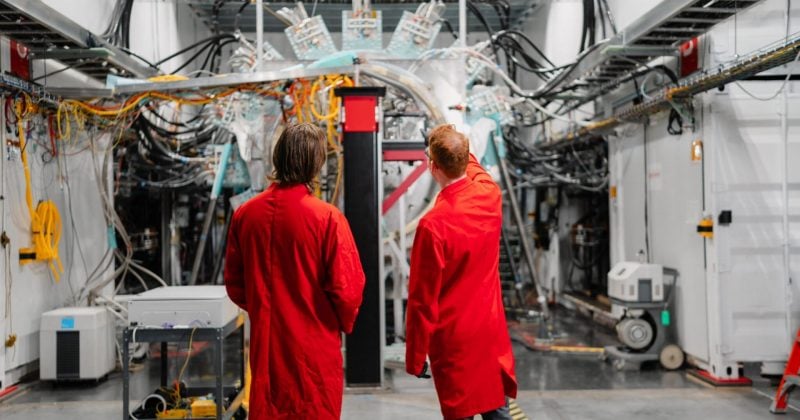
The company’s LM26 machine represents its current flagship technology platform, with key milestones planned through 2028 that are expected to pave the way toward commercial fusion by the mid-2030s.

General Fusion has no revenue from commercial fusion operations. The company’s technology, while promising, has not yet demonstrated the kind of sustained net energy gain that would prove commercial viability. The $150 million cash position gives the company runway, but if key milestones slip, or if the technology encounters unforeseen obstacles, dilution through future capital raises becomes almost inevitable.

Disclosure: This article was edited by Editorial Team. For more information on how we create and review content, see our Editorial Policy.

General Fusion Group surges on first day of trading after merger with blank-check firm

General Fusion Group surges on first day of trading after merger with blank-check firm

The first publicly traded pure-play nuclear fusion company debuted on Nasdaq under ticker GFUZ, marking a milestone for an industry that's been promising unlimited clean energy for decades

General Fusion Group Ltd. had a strong opening day on Nasdaq after completing its merger with Spring Valley Acquisition Corp. III, becoming the first publicly traded company focused exclusively on nuclear fusion energy. The stock, trading under the ticker GFUZ, surged as investors rushed to get exposure to what might be the energy industry’s longest-running “we’re almost there” story.

The merger was first announced back on January 22, 2026, with a pro-forma equity value pegged at approximately $1 billion for the combined entity. The business combination closed in early July, with trading kicking off on July 13.

Advertisement

The financial structure backing this debut is notable. General Fusion secured a committed private investment in public equity, or PIPE, in the range of $105 to $108 million. That PIPE was oversubscribed. On top of the PIPE, the company had access to roughly $230 million sitting in Spring Valley’s trust capital. The net result: General Fusion entered public markets with approximately $150 million in cash to advance its technology.

The Vancouver-based company has spent more than two decades developing what it calls Magnetized Target Fusion, or MTF. Think of it as a middle path between the two dominant approaches to fusion: magnetic confinement (the giant donut-shaped tokamaks) and inertial confinement (blasting fuel pellets with lasers).

The company’s LM26 machine represents its current flagship technology platform, with key milestones planned through 2028 that are expected to pave the way toward commercial fusion by the mid-2030s.

General Fusion has no revenue from commercial fusion operations. The company’s technology, while promising, has not yet demonstrated the kind of sustained net energy gain that would prove commercial viability. The $150 million cash position gives the company runway, but if key milestones slip, or if the technology encounters unforeseen obstacles, dilution through future capital raises becomes almost inevitable.

Disclosure: This article was edited by Editorial Team. For more information on how we create and review content, see our Editorial Policy.