
Nexo Earn with Nexo
Germany scraps joint fighter jet program with France, straining defense ties

Germany scraps joint fighter jet program with France, straining defense ties

The collapse of the €100 billion FCAS program marks one of the biggest failures in European defense cooperation, with geopolitical implications that extend far beyond aviation.

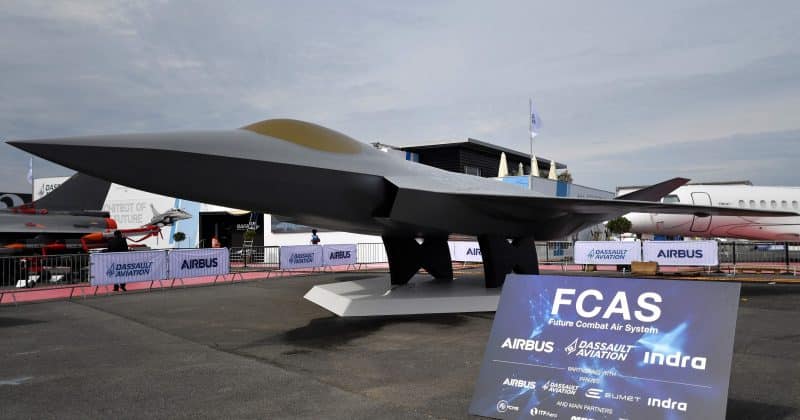
Europe’s most ambitious defense project is dead. Germany and France have officially pulled the plug on the Future Combat Air System, a €100 billion ($116 billion) initiative that was supposed to produce a sixth-generation fighter jet by 2040 and serve as the crown jewel of European military integration.

The announcement came on June 8, 2026, after German Chancellor Friedrich Merz and French President Emmanuel Macron concluded at a summit in Montenegro that the differences between the program’s two main contractors, Dassault Aviation and Airbus, were simply irreconcilable.

How a flagship program fell apart

The FCAS project launched in 2017, back when Macron was still fresh in office and Angela Merkel was still running Germany. The vision was straightforward, at least on paper: build a next-generation combat aircraft to replace France’s Rafale jets and the Eurofighter Typhoons flown by Germany and Spain.

Advertisement

The disputes centered on leadership roles, work distribution, and technical specifications. Both sides wanted to be the boss, both sides wanted the lucrative manufacturing contracts, and both sides had different ideas about what the plane should actually do. Industrial rivalries had stalled meaningful progress for months before the formal collapse.

The preceding week’s EU-Western Balkans summit provided the backdrop for the final discussions between Merz and Macron.

What survives, and what doesn’t

Not everything under the FCAS umbrella has been scrapped. Some non-fighter components, including a so-called “combat cloud” networking system, may continue development.

But the core of the initiative, the actual next-generation fighter jet, is gone. France and Germany now face the uncomfortable reality of developing replacement platforms independently or finding new partners, a process that would likely push any operational capability well past the original 2040 target.

Spain, the third partner in FCAS, is left in an awkward position as well. Madrid had joined the program to secure its role in European defense manufacturing and now must recalibrate its strategic planning.

What this means for European defense

The FCAS collapse sends a damaging signal at a moment when European leaders have spent the last several years calling for greater military self-reliance, driven by concerns about the durability of the transatlantic security relationship and rising geopolitical tensions on the continent’s eastern flank.

The FCAS failure will inevitably draw comparisons to the UK-led Global Combat Air Programme, known as GCAP, which brings together Britain, Italy, and Japan to develop their own next-generation fighter. That project has had its own complications, but it remains intact.

Disclosure: This article was edited by Editorial Team. For more information on how we create and review content, see our Editorial Policy.

Germany scraps joint fighter jet program with France, straining defense ties

Germany scraps joint fighter jet program with France, straining defense ties

The collapse of the €100 billion FCAS program marks one of the biggest failures in European defense cooperation, with geopolitical implications that extend far beyond aviation.

Europe’s most ambitious defense project is dead. Germany and France have officially pulled the plug on the Future Combat Air System, a €100 billion ($116 billion) initiative that was supposed to produce a sixth-generation fighter jet by 2040 and serve as the crown jewel of European military integration.

The announcement came on June 8, 2026, after German Chancellor Friedrich Merz and French President Emmanuel Macron concluded at a summit in Montenegro that the differences between the program’s two main contractors, Dassault Aviation and Airbus, were simply irreconcilable.

How a flagship program fell apart

The FCAS project launched in 2017, back when Macron was still fresh in office and Angela Merkel was still running Germany. The vision was straightforward, at least on paper: build a next-generation combat aircraft to replace France’s Rafale jets and the Eurofighter Typhoons flown by Germany and Spain.

Advertisement

The disputes centered on leadership roles, work distribution, and technical specifications. Both sides wanted to be the boss, both sides wanted the lucrative manufacturing contracts, and both sides had different ideas about what the plane should actually do. Industrial rivalries had stalled meaningful progress for months before the formal collapse.

The preceding week’s EU-Western Balkans summit provided the backdrop for the final discussions between Merz and Macron.

What survives, and what doesn’t

Not everything under the FCAS umbrella has been scrapped. Some non-fighter components, including a so-called “combat cloud” networking system, may continue development.

But the core of the initiative, the actual next-generation fighter jet, is gone. France and Germany now face the uncomfortable reality of developing replacement platforms independently or finding new partners, a process that would likely push any operational capability well past the original 2040 target.

Spain, the third partner in FCAS, is left in an awkward position as well. Madrid had joined the program to secure its role in European defense manufacturing and now must recalibrate its strategic planning.

What this means for European defense

The FCAS collapse sends a damaging signal at a moment when European leaders have spent the last several years calling for greater military self-reliance, driven by concerns about the durability of the transatlantic security relationship and rising geopolitical tensions on the continent’s eastern flank.

The FCAS failure will inevitably draw comparisons to the UK-led Global Combat Air Programme, known as GCAP, which brings together Britain, Italy, and Japan to develop their own next-generation fighter. That project has had its own complications, but it remains intact.

Disclosure: This article was edited by Editorial Team. For more information on how we create and review content, see our Editorial Policy.