
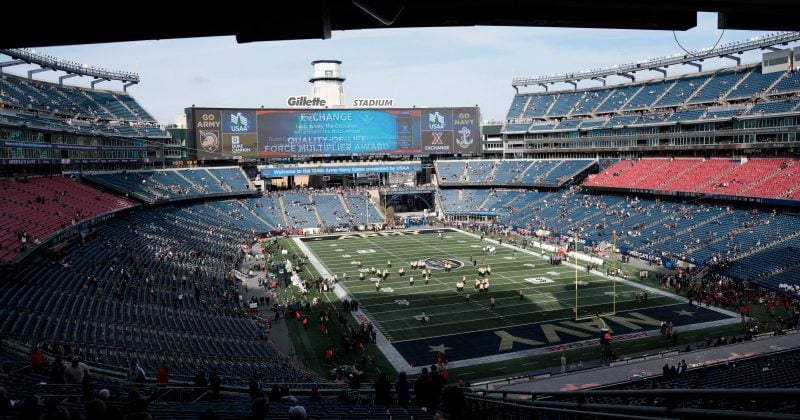
Gillette Stadium covers sponsor names on every seat for FIFA compliance
FIFA's clean venue policy forces NFL stadiums to strip all non-official branding ahead of the 2026 World Cup, creating a rare opening for crypto sponsors like Kraken.
Every single seat in Gillette Stadium now has its sponsor branding covered up. Not just the big signs. Not just the jumbotron. The seats themselves.
FIFA’s “clean venue” policy for the 2026 World Cup turns out to be far more granular than most people expected. The governing body of international soccer doesn’t just want stadium names scrubbed. It wants every last trace of non-official commercial branding erased from the premises, down to surfaces most fans would never consciously notice.
Gillette Stadium in Foxborough, Massachusetts, has been temporarily rechristened “Boston Stadium” for the duration of the tournament. White tarps and coverings now obscure corporate logos across the venue, a process that began in early May and continued through mid-June ahead of the World Cup’s June 8 kickoff.
The branding blackout goes deeper than you think
The obligation extends well beyond simply redacting names like “Levi’s” or “AT&T” or “Mercedes-Benz” from stadium facades. Payment terminals, concession signage, seat logos, and virtually any surface carrying non-FIFA-partner branding has to be neutralized.
Gillette Stadium isn’t alone in this corporate identity crisis. Levi’s Stadium is now operating as “San Francisco Bay Area Stadium.” AT&T Stadium has undergone a similar renaming. Mercedes-Benz Stadium has also been stripped of its namesake branding. Every US host venue is going through the same process.
In a move that’s equal parts savvy and self-aware, some displaced sponsors are leaning into the absurdity. Levi’s has been promoting its temporary eviction on social media, referencing the new venue name with the energy of someone who knows they’ll get their sign back in a few weeks.
The news moving money, markets, and the world—before your day starts.
Daily. Free. Join 34,000+ readers across crypto, finance, and policy.
One notable exception: Super Bowl championship banners at Gillette Stadium remain uncovered. Apparently, FIFA draws the line at erasing actual sporting history.
Why FIFA does this, and who benefits
The logic behind the clean venue policy is straightforward economics. FIFA’s official sponsorship deals are worth hundreds of millions of dollars. Those partners are paying for exclusivity during the most-watched sporting event on the planet. If Coca-Cola is an official FIFA sponsor, the last thing FIFA wants is a Pepsi logo visible on Row 42, Seat 7.
That dynamic matters for crypto. Kraken has been identified as FIFA’s Official Crypto Exchange Partner for 2026. In a world where every non-FIFA sponsor is literally covered with white tarps, that partnership buys something money can’t usually purchase in sports marketing: zero competition for eyeballs.
What this means for crypto investors
The broader question for crypto markets is whether this kind of mainstream sports visibility translates into measurable user acquisition or trading volume. Historical precedent is mixed. Crypto.com’s naming rights deal for the former Staples Center in Los Angeles generated enormous brand awareness but coincided with a brutal bear market that made the timing look unfortunate. FTX’s naming rights for the Miami Heat arena became a cautionary tale for entirely different reasons.
Kraken’s FIFA partnership operates in a fundamentally different environment, though. The exchange isn’t buying permanent naming rights to a venue that will carry its brand through bull and bear cycles alike. It’s buying a concentrated burst of exclusive visibility during a defined event window, which limits downside exposure while maximizing the intensity of the marketing push.